



Homemade Miso Soup is what I make when I’m craving takeout but still want something truly nourishing. I use fermented white miso, a simple bonito flake dashi, silken tofu, and nori, and it all comes together on the stovetop in about 15 minutes. It gives us that traditional, mineral-rich broth and deep fermented flavor right at home - no restaurant version needed.
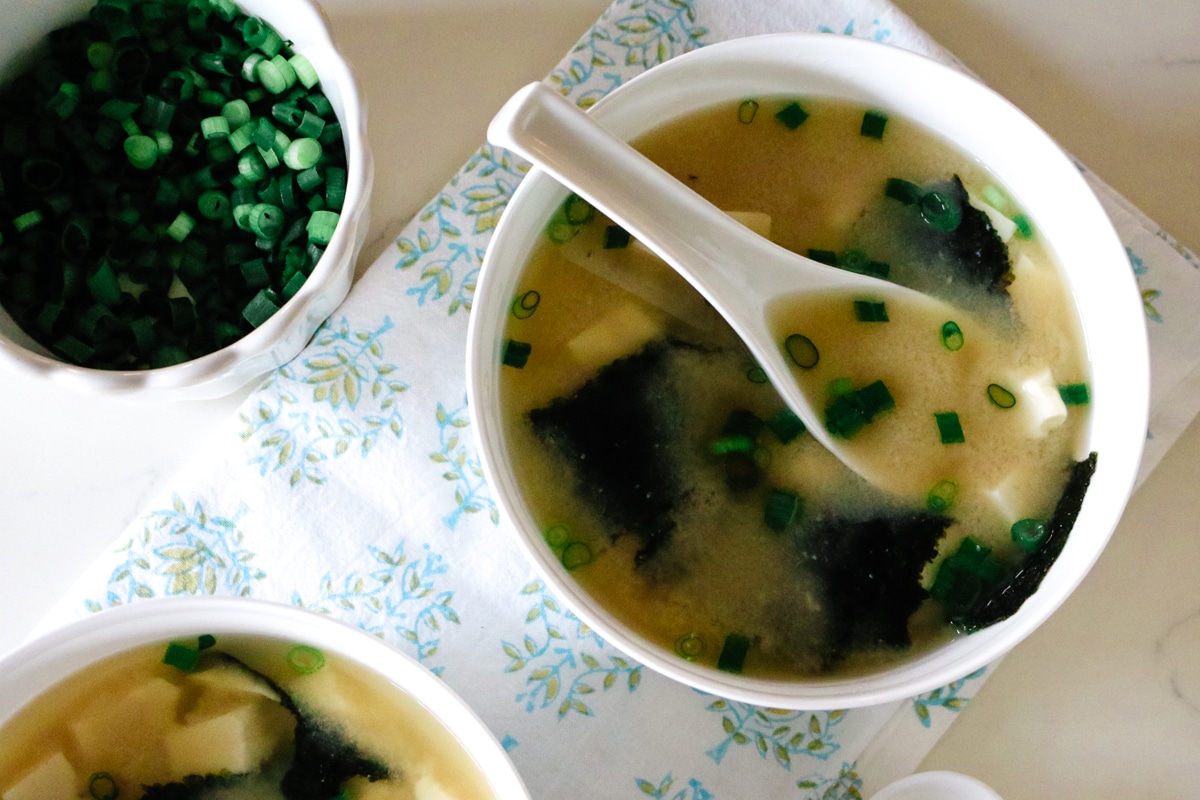
Watch me make this on YouTube!
Check out my YouTube video where I show you how to I make this miso soup as part of a complete meal with Ahi Tuna Poke.
Jump to:
💡Recipe Overview
- Prep and Cook Time: 5 minutes to prep and 15 minutes to bake
- Cooking Method: Stove-top
- Dietary Info: Ancestral diet
- Skill Level: Easy
What is an ancestral diet? Read my post on what nourishing foods are based on the traditional dietary principles of the Weston A. Price Foundation.
How I started making it at home
I learned a while ago that almost everything we’re tempted to order out can be made at home with clean, real food ingredients - and miso soup was one of those turning points for me.
Once I realized I could build real dashi (miso broth) with bonito flakes and use properly fermented miso from the fridge, it stopped feeling like “restaurant food” and started feeling completely doable.
I make this often when we’re having poke bowls or sushi bake because it rounds out the meal without much extra work. It takes about 15 minutes, uses simple ingredients, and gives us that traditional, nourishing side without relying on takeout.
I’ve made it enough times now that it feels automatic and you most certainly, don't need to be precise with ingredients or amounts. Like most things in the kitchen, measure with your heart and enjoy! May this "recipe" earn a place in your cooking routine.

Ingredients for Homemade Miso Soup
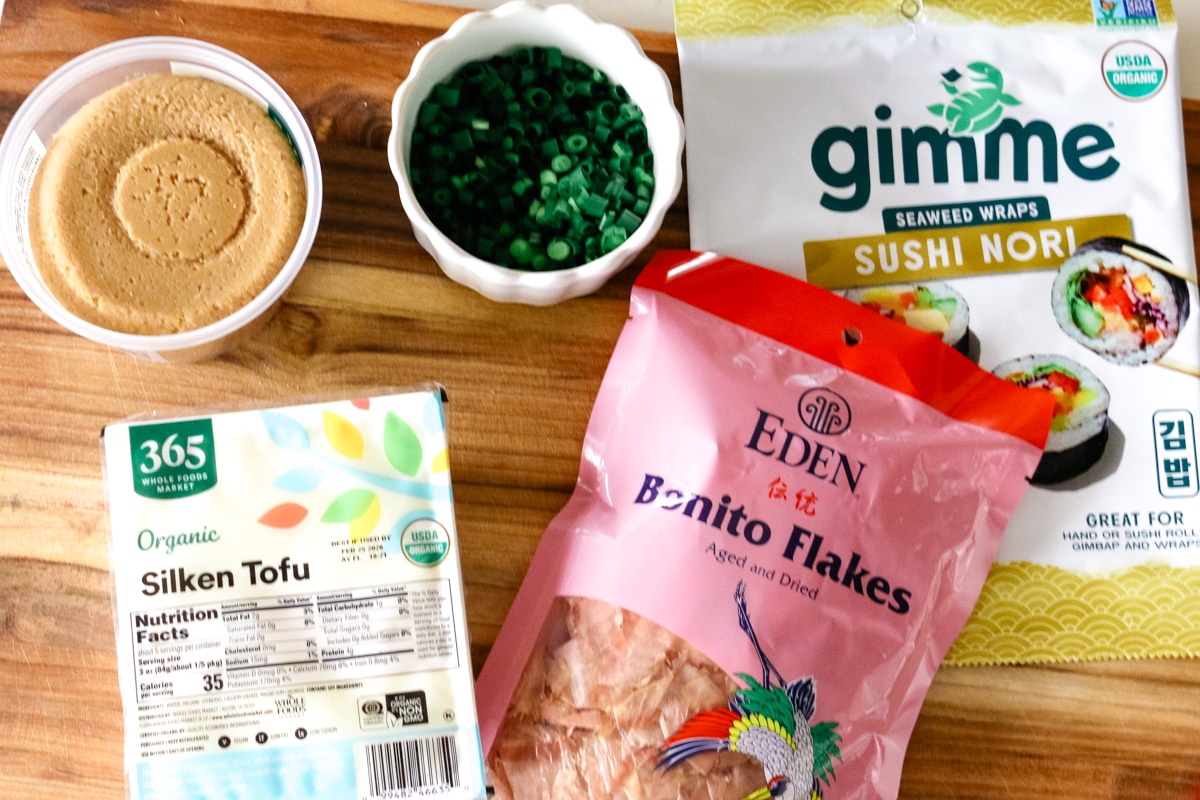
- Bonito flakes - This will be the base of the Dashi (miso soup broth). Bonito flakes are dried, shaved fish flakes that create a traditional Japanese dashi. They provide depth and umami. Look for them in the international aisle, at Asian markets, or online; fresher flakes have better aroma and stronger flavor.
- White miso paste - Fermented soybean paste that gives the soup its signature salty, savory flavor. Choose refrigerated miso with minimal additives.
- Silken tofu - Dice carefully since silken tofu is delicate. Drain excess liquid before adding to the soup. If you prefer a slightly firmer texture, soft tofu can be used, but silken keeps it traditional and tender.
- Nori sushi - Adds mineral depth and mild ocean flavor. Cut into thin strips so it disperses evenly. While wakame is more traditionally used in miso soup, nori is widely available and easy to find in most grocery stores.
- Green onions- Added at the end for freshness and a light bite. Slice thinly so they distribute evenly in each bowl.
Substitutions and Variations
- Kombu (for deeper traditional dashi) - A small strip of dried kombu can be added to the water before the bonito flakes to build a more traditional dashi with added mineral depth. This is common in Japanese cooking and is easy to find at Asian markets or online.
- Wakame (instead of nori) - Wakame is the seaweed more traditionally used in miso soup. It rehydrates quickly in hot broth and has a softer texture than nori. Use a small amount since it expands significantly as it hydrates.
- Soft tofu (instead of silken) - If silken tofu feels too delicate to work with, soft tofu can be used for slightly more structure while keeping the soup gentle and traditional.

Make it Ancestral
Miso soup has been part of traditional Japanese home cooking for generations. It’s a simple combination of real dashi, fermented miso, tofu, and sea vegetables served alongside everyday meals. When you prepare it this way - with quality bonito, mineral-rich kombu, naturally fermented miso, and real seaweed like wakame - you’re keeping it close to its roots.
Made with good ingredients, this soup provides fermented foods, mineral-rich broth, and simple protein in a balanced, traditional form. It’s a simple, time-tested nourishment that's so quick and easy to make.
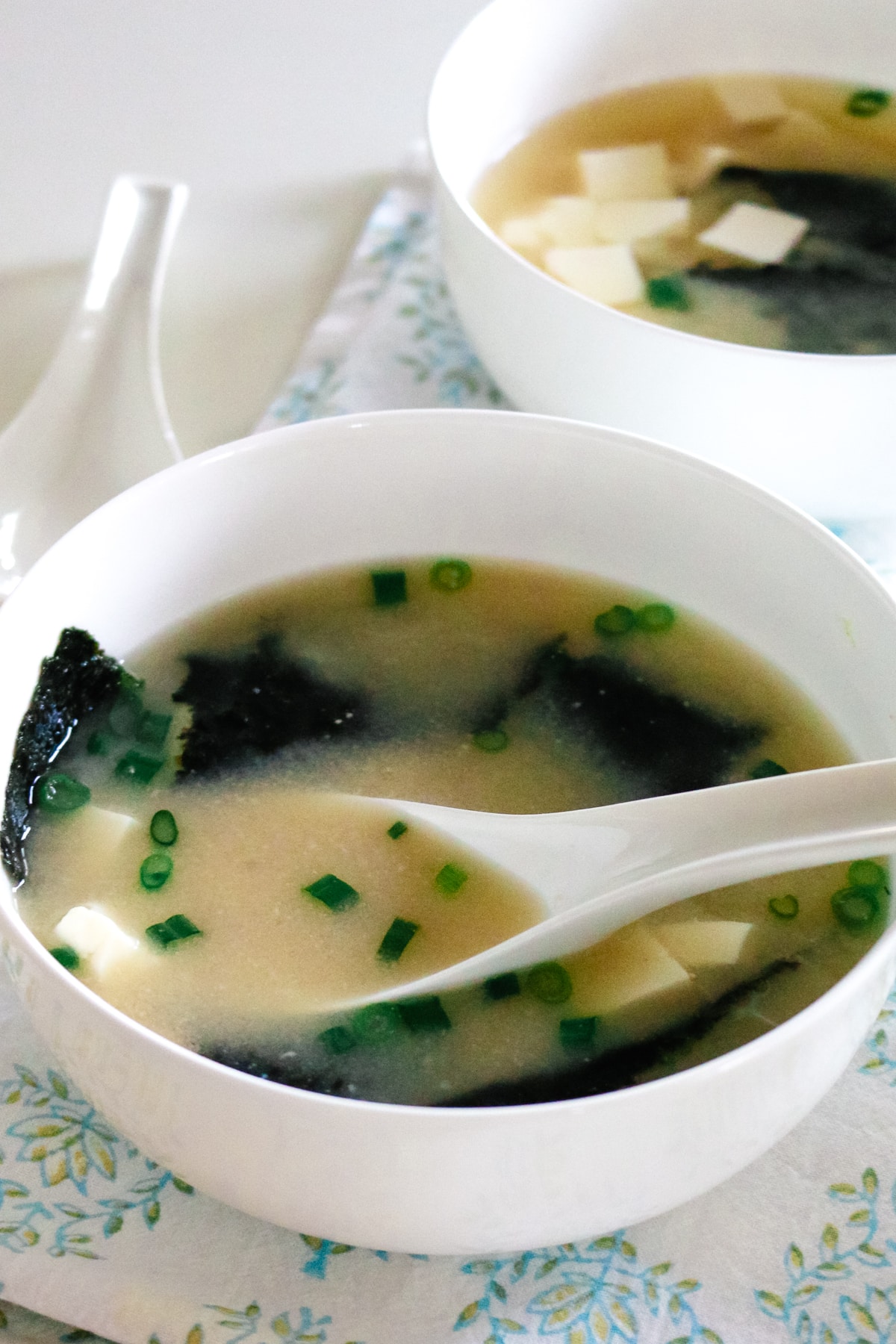
How to Make Homemade Miso Soup
The complete printable recipe is below in the recipe card for your convenience. Follow these simple step-by-step instructions for the best results.
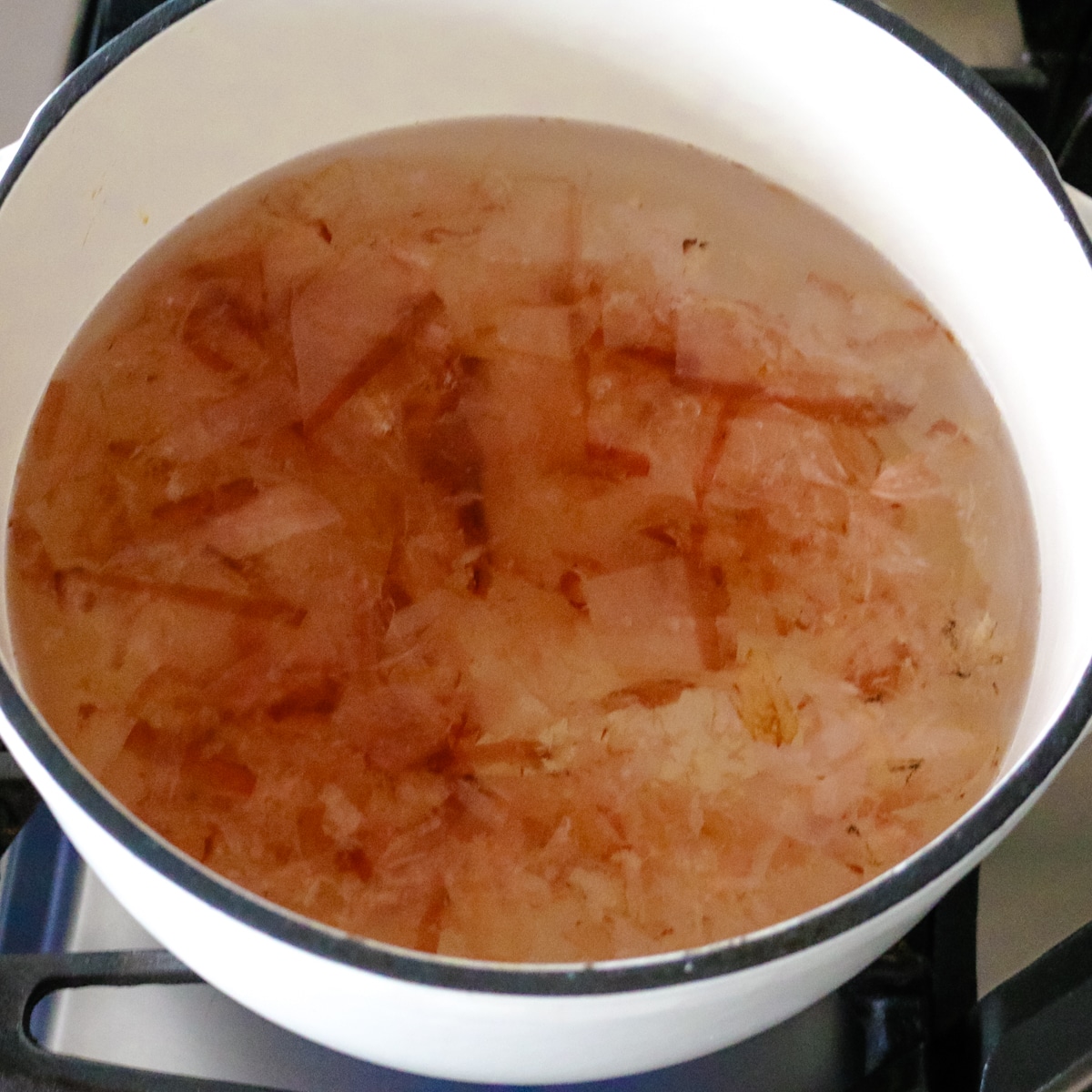
Step 1.
Add bonito flakes and water to a medium saucepan. Bring to a gentle boil over medium heat, then reduce heat and simmer softly for 3-5 minutes. Strain through a sieve.
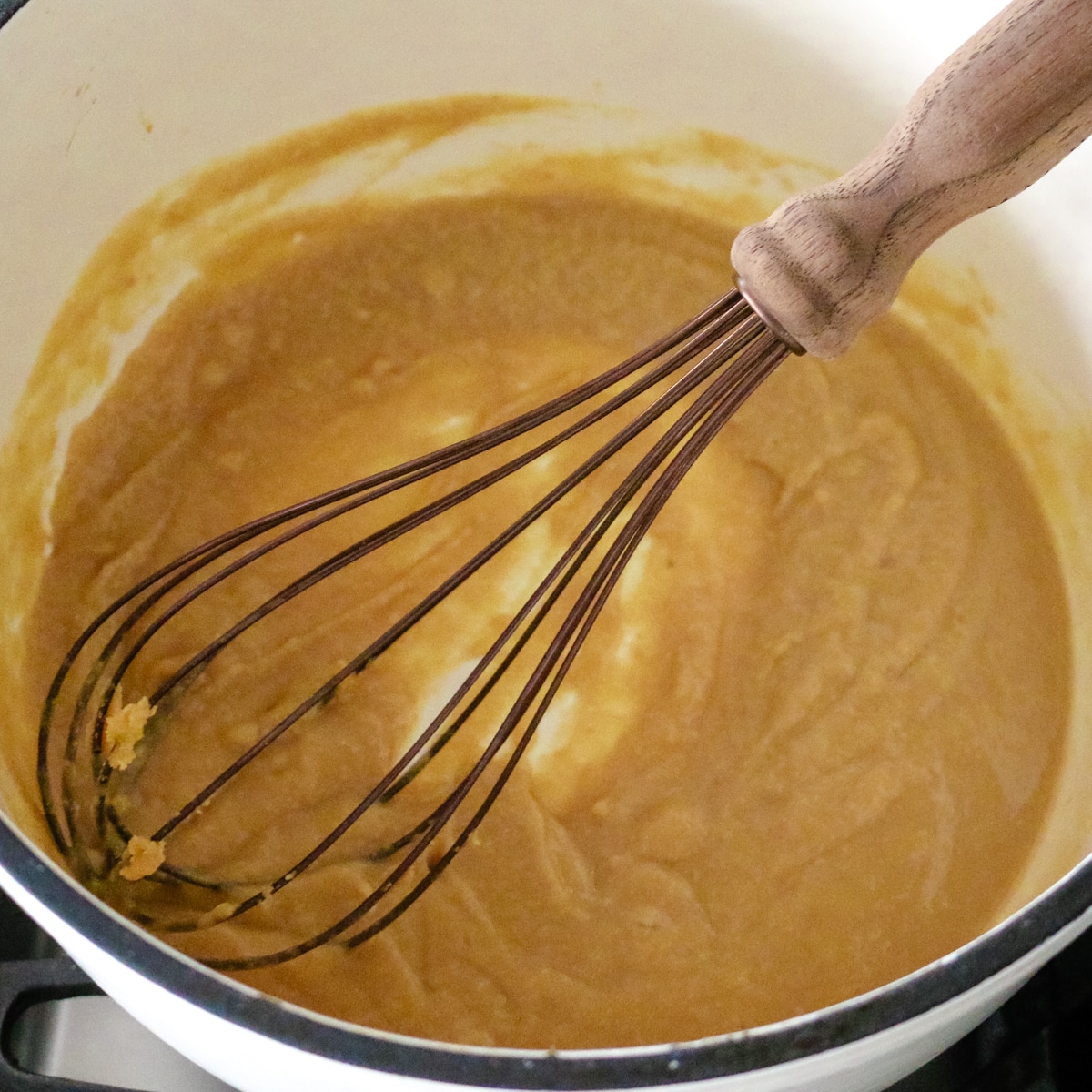
Step 2.
Scoop out about a cup of the hot dashi and whisk it directly in the pot with white miso paste until completely smooth. Once dissolved, add the remaining dashi back in and bring the soup to a rolling boil.
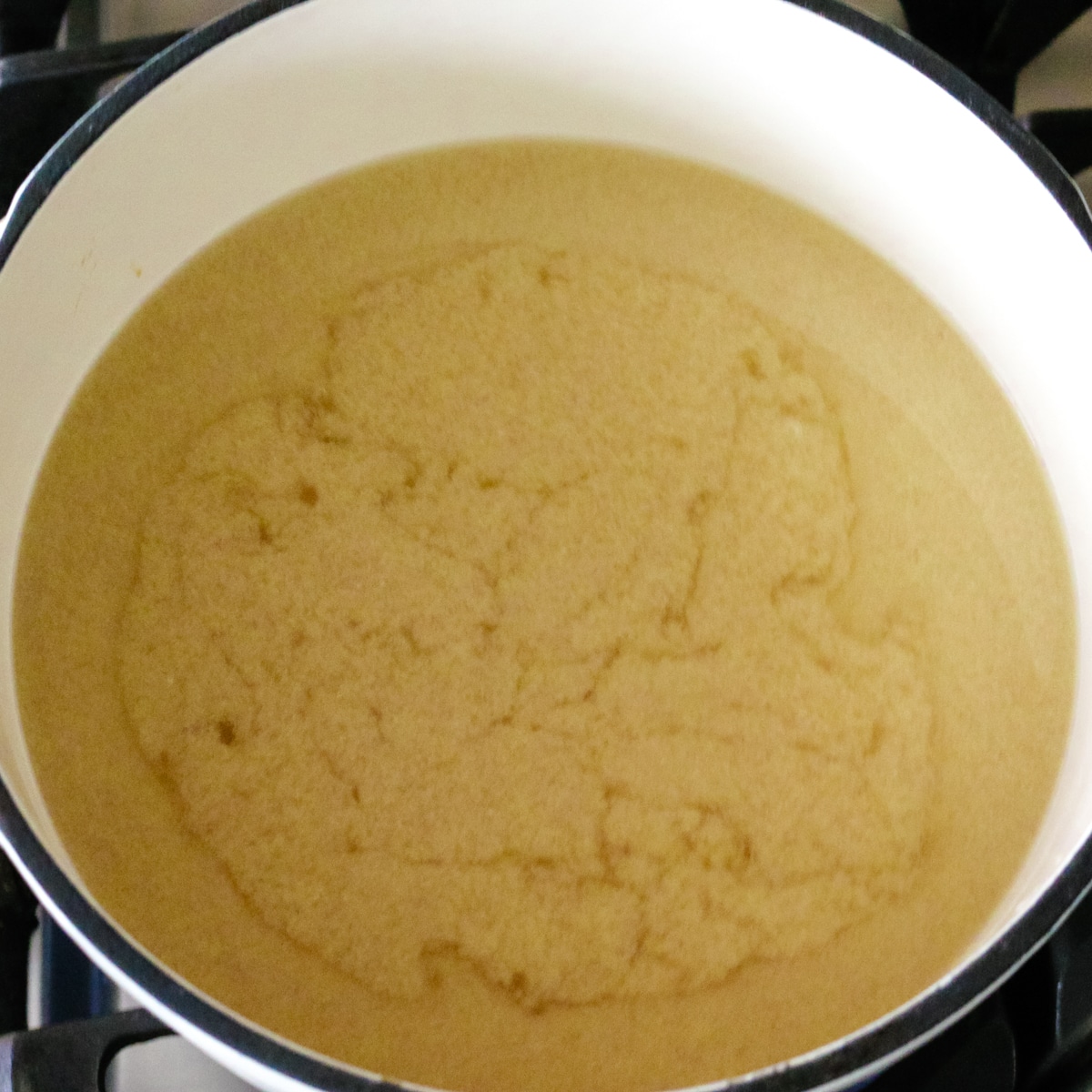
Step 3.
Add remaining dashi or broth into the pot and bring gently to a rolling boil.
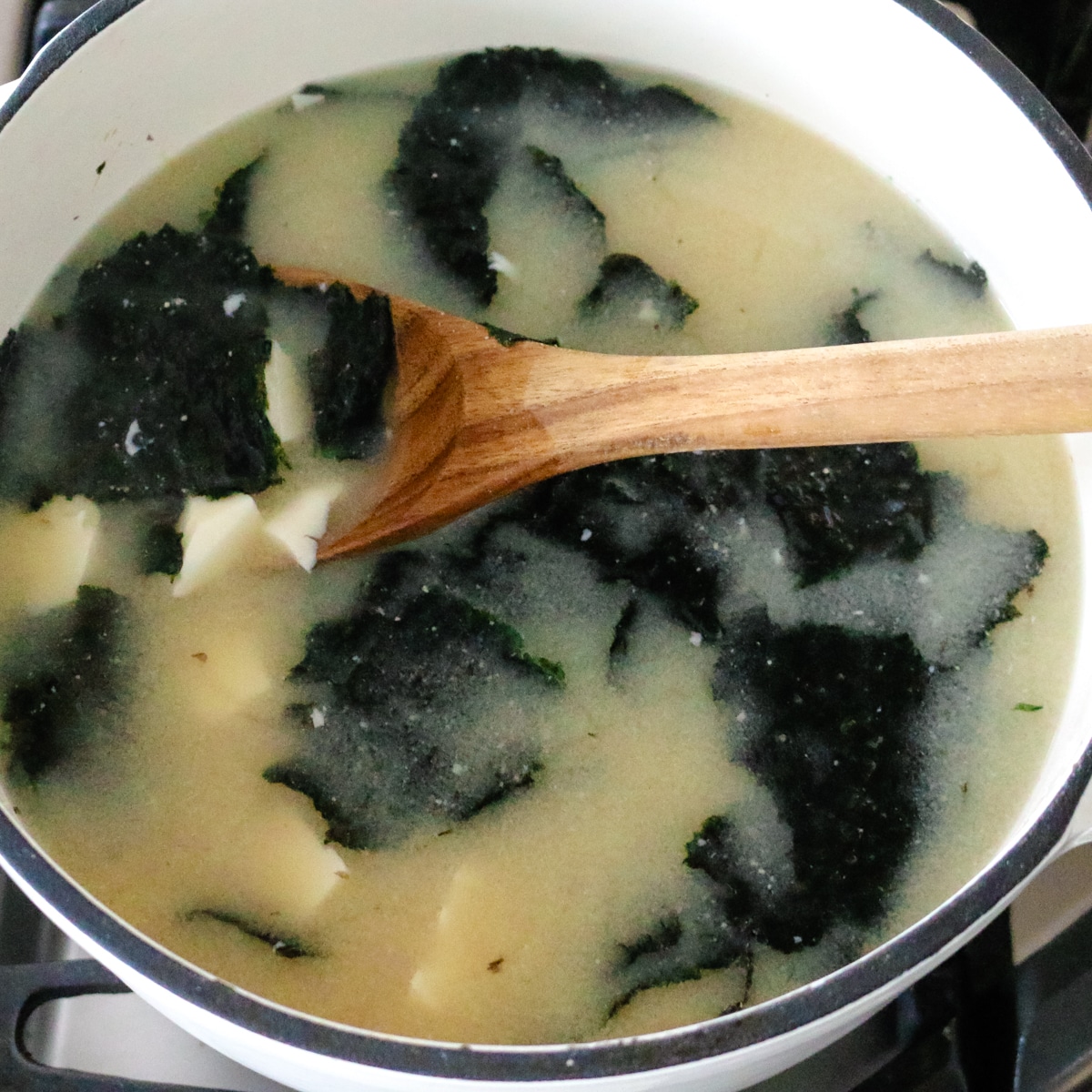
Step 4.
Add diced tofu and nori pieces to the boiling soup. Let cook for 1-2 minutes, just until the tofu is heated through and the nori softens.
Helpful Tips
- Taste before adding tofu. After dissolving the miso and bringing it to a boil, taste the broth before adding tofu and nori; if it tastes flat, dissolve an extra tablespoon of miso in a little hot dashi first, then stir it in so it blends smoothly without clumping.
- If the tofu breaks apart. Reduce the heat immediately and stir by gently lifting from the bottom with a spoon rather than stirring in circles.
- For deeper traditional flavor. Kombu (dried kelp) is traditionally used alongside bonito to make dashi, and wakame is more commonly used in miso soup than nori; both provide a softer texture and subtle mineral depth.
Serving Suggestions
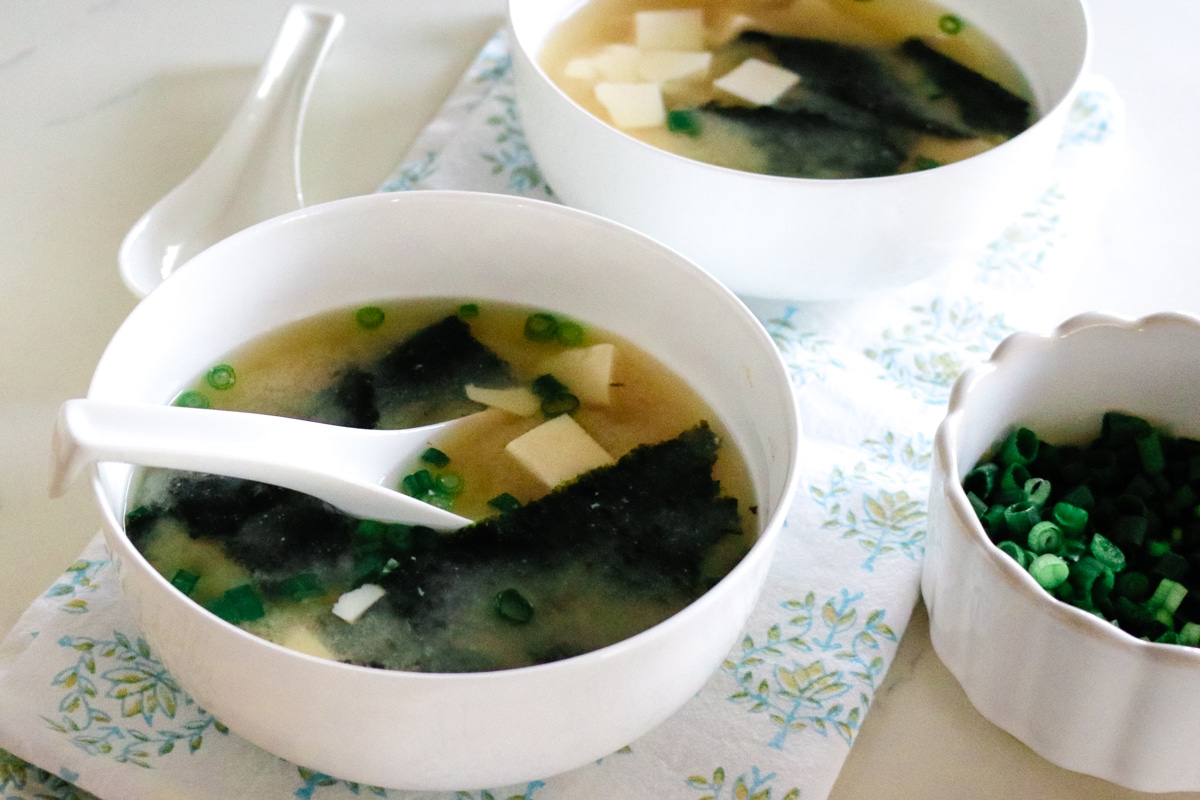
Miso soup is traditionally served as a light starter alongside rice and a simple protein. I treat it the same way at home - not as the main dish, but as something that makes the meal feel more complete.
If you're looking for a poke-style meal to pair this with, try ahi tuna poke bowls, smoked salmon poke bowl, or salmon poke bowl.
It also works really well with a sushi bake when I’m feeding a group and want something warm on the side that doesn't take too much time. Really, anytime you want a light soup with an Asian flare, this homemade miso soup is your answer!
Miso soup pairing suggestions:
- Smoked Salmon Poke Bowl15 Minutes
- Simple Ahi Tuna Poke Recipe30 Minutes
- Salmon Sushi Bake Recipe40 Minutes
- Salmon Poke Bowl (Paleo, Whole30, Low Carb)




Frequently Asked Questions
Store in an airtight container for up to 3 days. To reheat, pour into a small saucepan and warm over low heat just until steaming, but avoid vigorously boiling. A rolling boil after storage can cause the tofu to break apart and the nori to over-soften; gentle heat preserves texture and flavor. I like to store soup in wide-mouth mason jars.
It’s not recommended. Silken tofu becomes watery and spongy after thawing, and the seaweed texture changes significantly.
Silken tofu is delicate. Keep the heat moderate and stir gently by lifting with a spoon rather than stirring vigorously.
Did you make this Homemade Miso Soup Recipe? Please leave a ⭐⭐⭐⭐⭐ recipe rating in the recipe card below and leave a review in the comments. Thank you!💚
Printable Recipe

Homemade Miso Soup
Ingredients
- 1 cup bonito flakes
- 6 cups water
- ⅓ cup white miso paste
- 6 ounces silken tofu cut into small cubes
- 2 sheets nori sushi cut into small pieces
- 2 green onions thinly sliced
Instructions
- Add 1 cup bonito flakes and 6 cups water to a medium saucepan. Bring to a gentle boil over medium heat, then reduce heat and simmer softly for 3-5 minutes.
- Remove from heat and strain through a fine mesh sieve into a clean pot, pressing lightly to extract flavor. Discard the bonito flakes.
- Scoop out about 1 cup of the hot dashi and whisk it directly in the pot with ⅓ cup white miso paste until completely smooth. Once dissolved, add the remaining dashi back in and bring the soup to a rolling boil.
- Add diced 6 ounces silken tofu and sliced 2 sheets nori sushi to the boiling soup. Let cook for 1-2 minutes, just until the tofu is heated through and the nori softens.
- Garnish with 2 green onions and serve.
Video
Notes
- Taste before adding tofu. After dissolving the miso and bringing it to a boil, taste the broth before adding tofu and nori; if it tastes flat, dissolve an extra tablespoon of miso in a little hot dashi first, then stir it in so it blends smoothly without clumping.
- If the tofu breaks apart. Reduce the heat immediately and stir by gently lifting from the bottom with a spoon rather than stirring in circles.
- For deeper traditional flavor. Kombu (dried kelp) is traditionally used alongside bonito to make dashi, and wakame is more commonly used in miso soup than nori; both provide a softer texture and subtle mineral depth.





Leave a Reply