



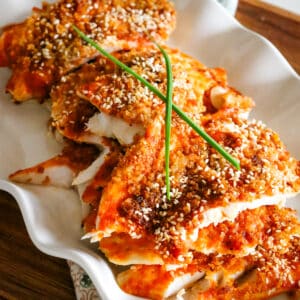
Gochujang panko-crusted spicy fish is a weeknight sheet pan dinner that comes together fast with just a handful of ingredients. Rockfish fillets (or another mild white fish) are brushed with a savory, slightly spicy mayo glaze made from gochujang and soy sauce, topped with panko and sesame seeds, and broiled until tender and the fish flakes easily.
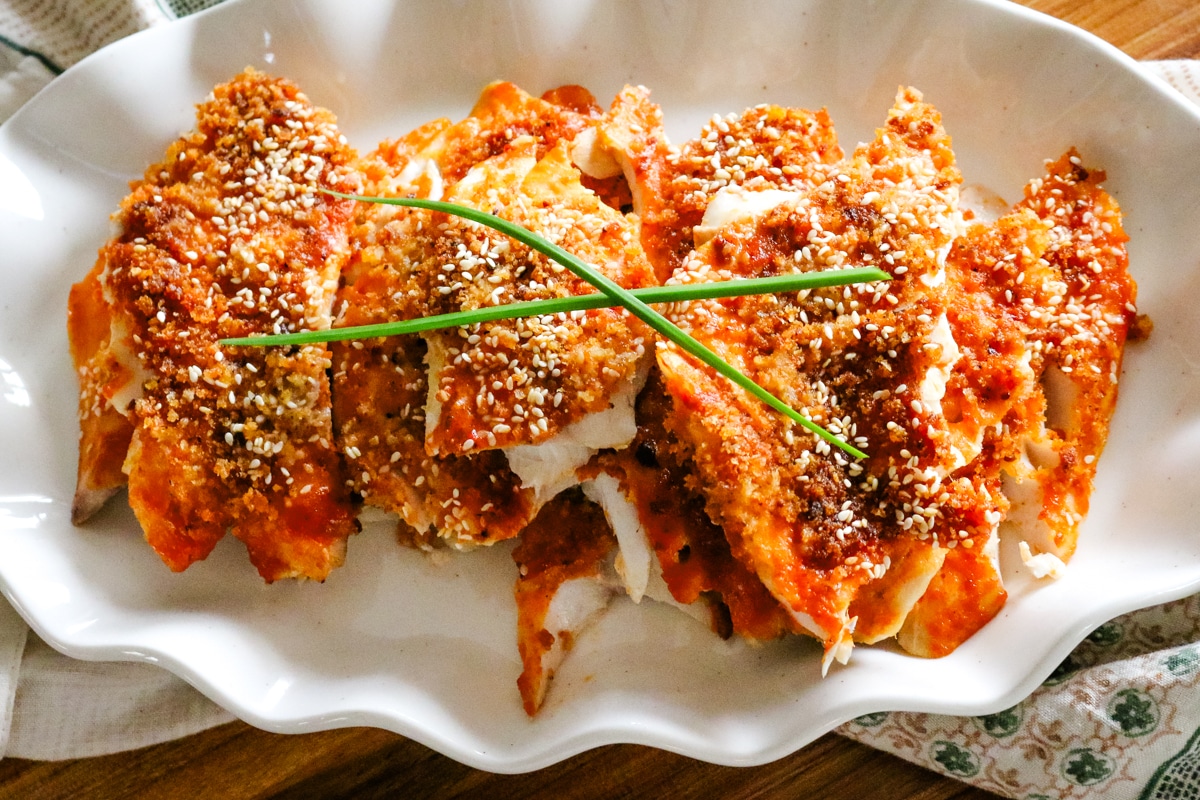
This spicy fish came together the same night as the miso pasta and the shaved carrot salad. Basically, a fridge clean-out dinner that needed a protein.
Rockfish fillets (or any other mild white fish), a tub of gochujang, mayonnaise, and panko. The glaze takes two minutes to stir together, the broiler does the rest, and the whole thing is on the table in under 20 minutes.
Jump to:
💡Recipe Overview
- Prep and Cook Time: 10 minutes to prep and 8 minutes to bake
- Cooking Method: Oven-baked
- Who this recipe is for: Anyone who wants a fast, high-flavor weeknight fish that doesn't require a lot of complicated technique. If broiled fish sounds intimidating, this one will change that.
- Skill Level: Easy
What is an ancestral diet? Read my post on what nourishing foods are based on the traditional dietary principles of the Weston A. Price Foundation.
Crispy Panko Crust Without Deep Frying - Spicy Fish!!!
I'll be honest, rockfish is not the fish that gets the fanfare. Salmon gets the Instagram posts, the fancy dinners, the "omega-3 rich superfood" headlines. Amiright?
Rockfish just sits there at Costco in its plastic-sealed styrofoam tray, quietly being wild-caught, mild, versatile, and a fraction of the price. I grab a package almost every run. If not for my Cajun Fish Tacos, then a sheet pan spicy fish situation like this one.
It's the fish that works with everything -- a bold gochujang glaze, a squeeze of lemon and herbs, a simple pan sauce -- because it doesn't fight you. Mild flavor, firm enough to hold up under a broiler, and done in under 10 minutes. Salmon could never.

Ingredients for Panko Crusted Spicy Fish
- Rockfish: I pick mine up at Costco, where it's consistently available as wild-caught fillets. Any wild-caught mild white fish works here: wild cod, wild halibut, or wild mahi-mahi are all good options. Avoid farmed if you can; wild fish has better flavor and holds up better under the broiler. If Tilapia is your girl... well, you do you!
- Mayonnaise: The base of the glaze. It helps the gochujang adhere to the fish and adds a subtle richness under the crust. Use homemade avocado oil mayonnaise for best flavor and nutrition profile.
- Gochujang paste: A Korean fermented chili paste that is so flavorful! Savory, slightly sweet, and so spicy. Find it in the international aisle or at any Asian grocery store. See the heat note in tips if you're cooking for a spice-sensitive crowd.
- Soy sauce or tamari: Thins the glaze slightly and adds a layer of salt. Use tamari to keep it gluten-free.
- Panko breadcrumbs: Coarser than regular breadcrumbs, which is what gives you that distinct crispy crust. Use regular homemade breadcrumbs if that's all you have available.
- White sesame seeds: Scattered over the top before broiling. They toast in the oven and add a subtle nuttiness to every bite.
Substitutions and Variations
The gochujang mayo base is flexible. A few directions you can take it:
- Milder version: Swap half the gochujang for white miso for less heat with the same depth of flavor
- Citrus finish: A squeeze of lime over the top right before serving brightens the whole dish
- Different fish: Wild cod is the most widely available swap and works beautifully here. Wild halibut is meatier and takes a minute or two longer under the broiler
- Gluten-free: Use tamari instead of soy sauce and check your panko; most standard panko contains wheat, but gluten-free panko is easy to find
Helpful Tips
- Start with dry fillets: Make sure you pat the fish completely dry before anything else. Otherwise, the glaze will not adhere to the fillets.
- Broil not bake: Low broil is intentional here. High broil will burn the panko before the fish has a chance to cook through, especially on thin fillets. Keep it low and watch it closely those last few minutes.
- Adjust the heat: Gochujang brings real heat at 3 tablespoons. If you're cooking for kids or anyone spice-sensitive, start with 1 to 1 ½ tablespoons. You can always serve extra gochujang on the side for those who want more.
- Don't overcook fish: Overcooked fish is dry and rubbery -- pull it the moment it flakes. Thin fillets move fast under a broiler.
Serving Suggestions
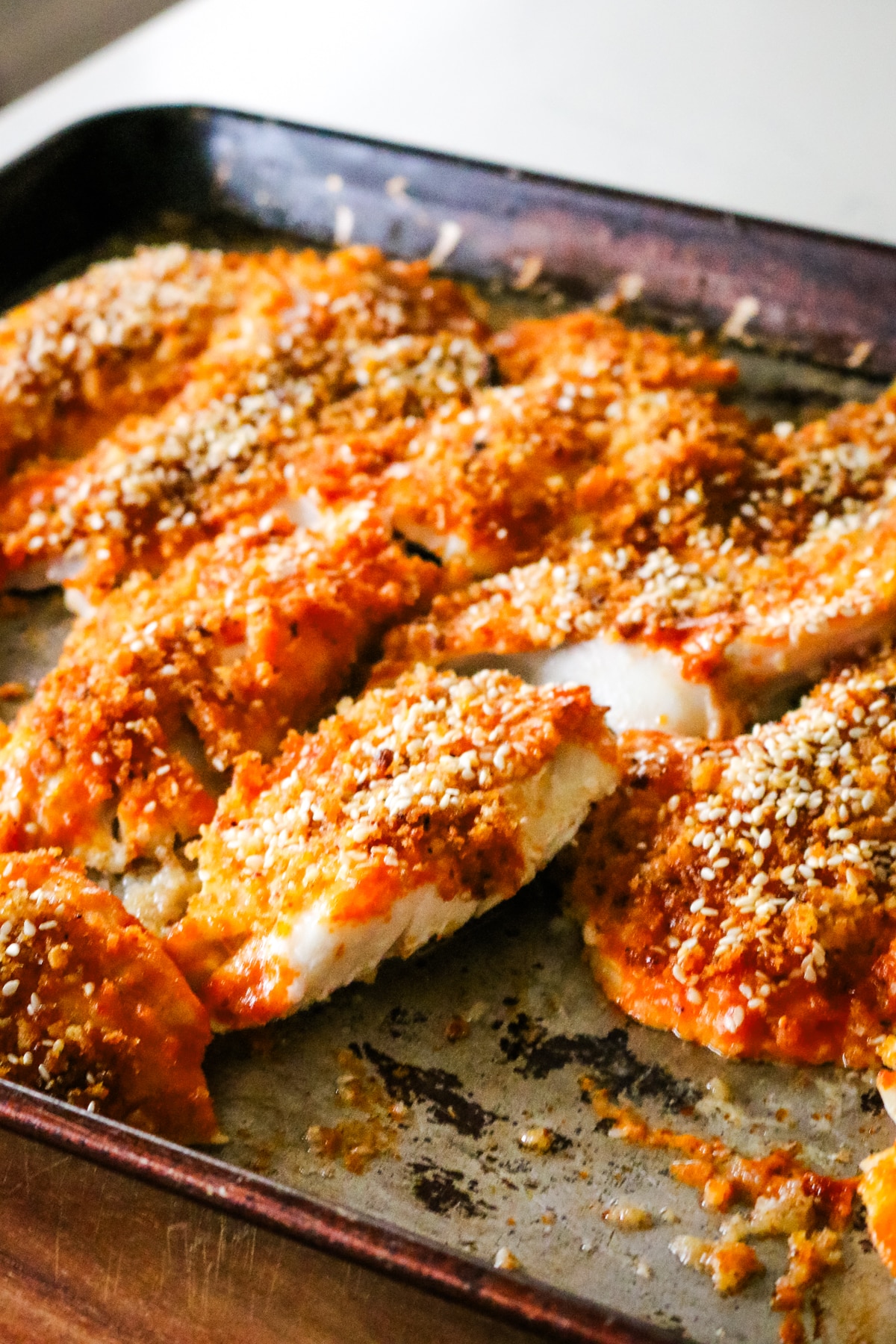
This fish was first served as part of a three-dish fridge clean-out dinner alongside creamy miso pasta and shaved carrot salad with sesame rice vinegar dressing, and that combination is hard to beat. The spice from the fish, the richness of the pasta, and the brightness of the carrot salad all work together. It's perfection in a bowl.
On its own, it pairs well with:
- Anything with butter like this butter cabbage
- Bone broth rice
- Cucumber and cabbage salad
- Roasted bok choy
Frequently Asked Questions
Best straight off the pan when the breadcrumbs at its crispiest. Leftovers keep in the fridge for up to 2 days. Reheat in a 375°F oven for 6 to 8 minutes -- skip the microwave, it turns the crust soggy. These glass snap containers are perfect for leftovers.
In short, it's a Korean fermented chili paste that's used in many Asian-inspired recipes. It's savory, slightly sweet, and spicy. It's widely available now in most grocery stores in the international aisle. Trader Joe's even carries gochujang. Brands vary in heat level, so taste yours before committing to the full three tablespoons.
You can, but the crust won't be as crispy. If baking, use 425°F for 12 to 15 minutes depending on the thickness of your fillets.
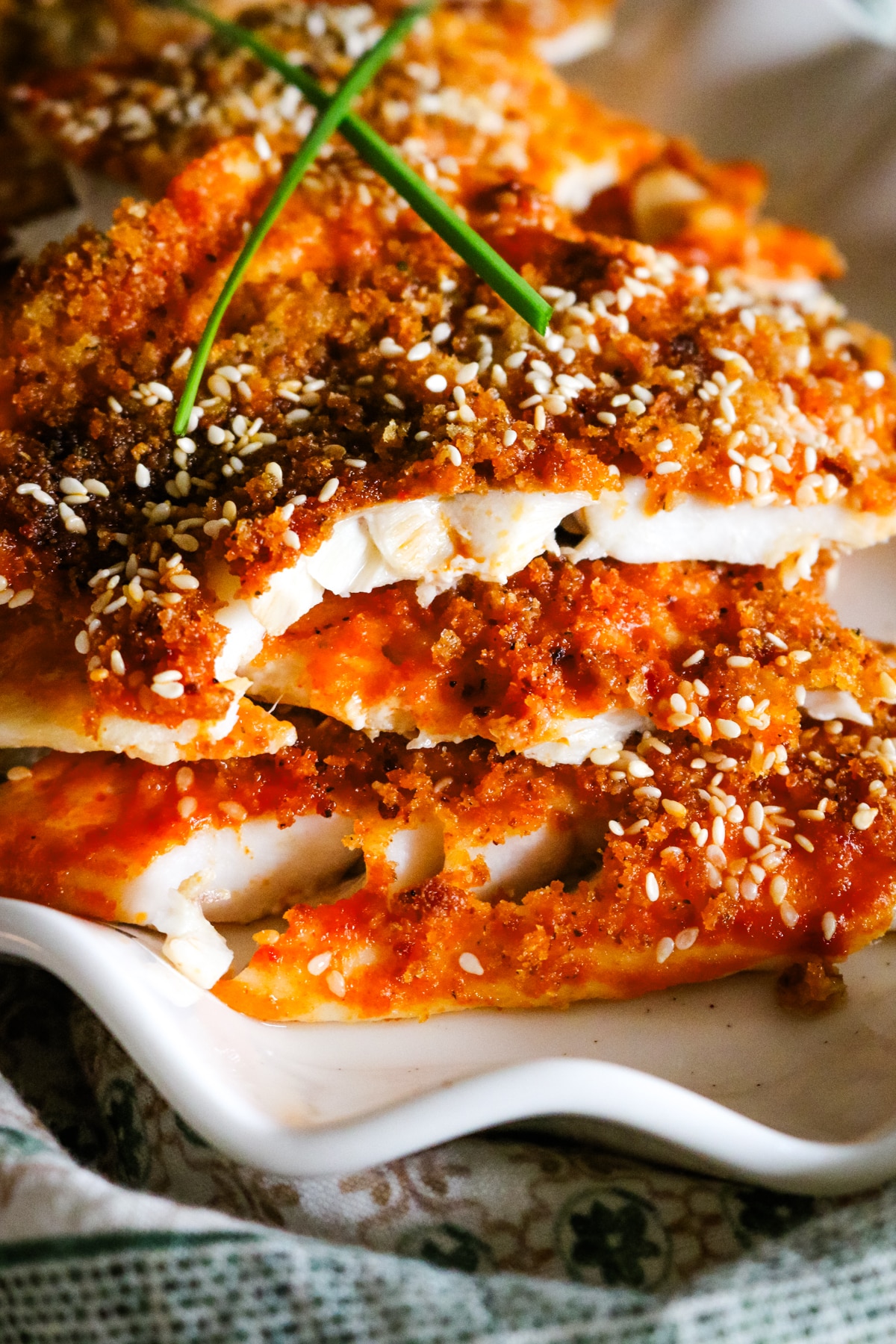
It flakes easily when pressed at the thickest part with a fork. Don't wait for it to look completely opaque on top -- by then it's usually overcooked.
Looking for more seafood recipes? Here are some ideas:


Did you make this spicy fish? Please leave a ⭐⭐⭐⭐⭐ recipe rating in the recipe card below and leave a review in the comments. Thank you!💚
Printable Recipe
Gochujang Panko Crusted Spicy Fish
Ingredients
- 6 rockfish fillets any mild white fish works here - cod, halibut, mahi-mahi
- ⅓ cup mayonnaise
- 3 tablespoons gochujang paste see notes
- 1 ½ tablespoon soy sauce or tamari
- 1 cup panko breadcrumbs
- 2 tablespoons white sesame seeds
Instructions
- Set your oven to low broil and position the rack about 6 inches from the broiler.
- Pat 6 rockfish fillets completely dry with a paper towel and lay them out on the prepared sheet pan. Don't skip this step -- moisture is what prevents the glaze from adhering properly.
- In a small bowl, stir together ⅓ cup mayonnaise, 3 tablespoons gochujang paste, and 1 ½ tablespoon soy sauce or tamari until smooth. Using a pastry brush, spread the glaze evenly over the top of each fillet only. Go all the way to the edges but it's not necessary to get the underside.
- Sprinkle 1 cup panko breadcrumbs generously over each glazed fillet, followed by a scatter of 2 tablespoons white sesame seeds. No pressing needed -- the glaze holds everything in place.
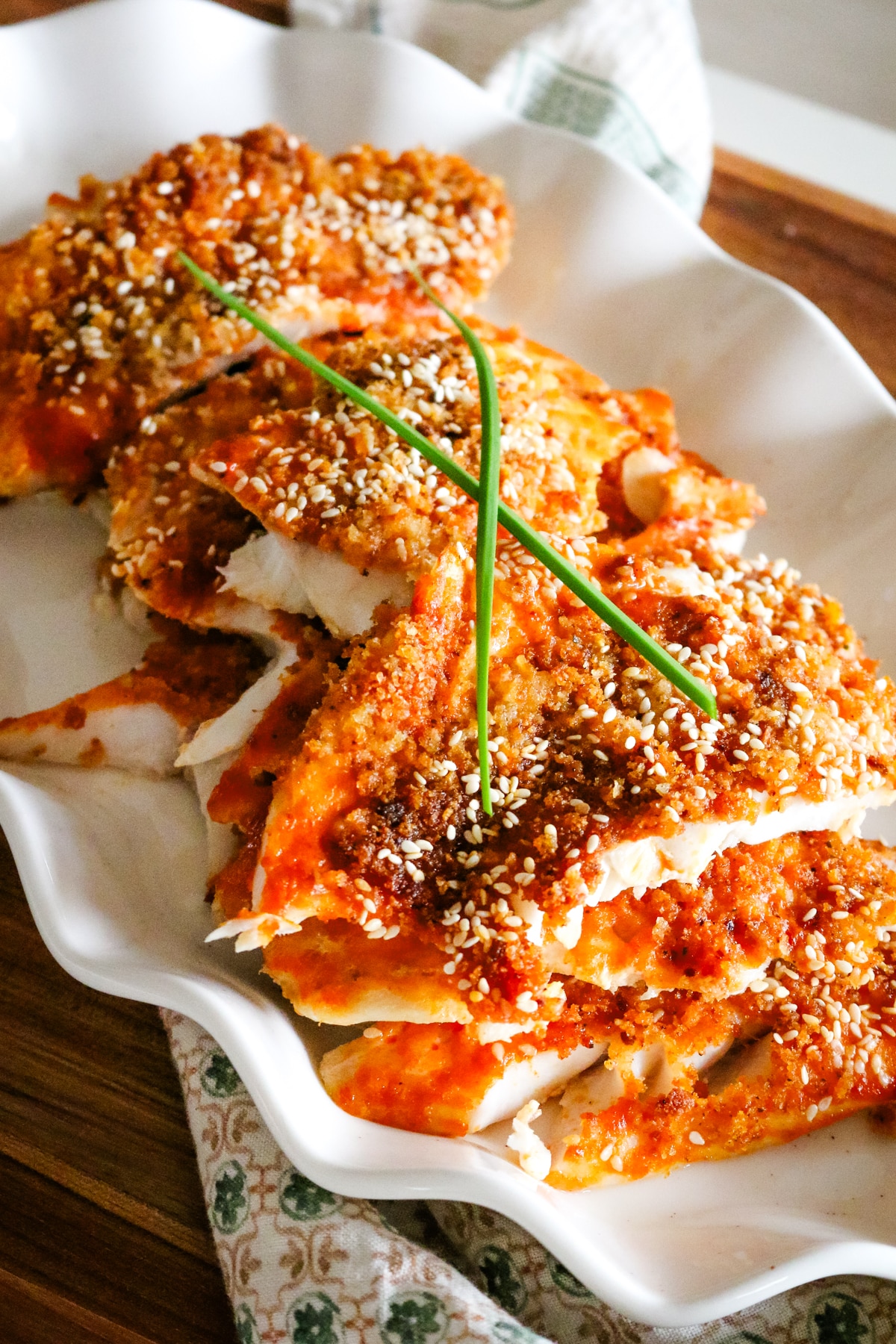
- Broil on low for 6 to 8 minutes, keeping a close eye after the 5 minute mark. The panko should be golden and the fish should flake easily at the thickest part when done. No flipping needed.
Notes
- Broil not bake: Low broil is intentional here. High broil will burn the panko before the fish has a chance to cook through, especially on thin fillets. Keep it low and watch it closely those last few minutes.
- Adjust the heat: Gochujang brings real heat at 3 tablespoons. If you're cooking for kids or anyone spice-sensitive, start with 1 to 1 ½ tablespoons. You can always serve extra gochujang on the side for those who want more.
- Don't overcook fish: Overcooked fish is dry and rubbery -- pull it the moment it flakes. Thin fillets move fast under a broiler.

Leave a Reply