



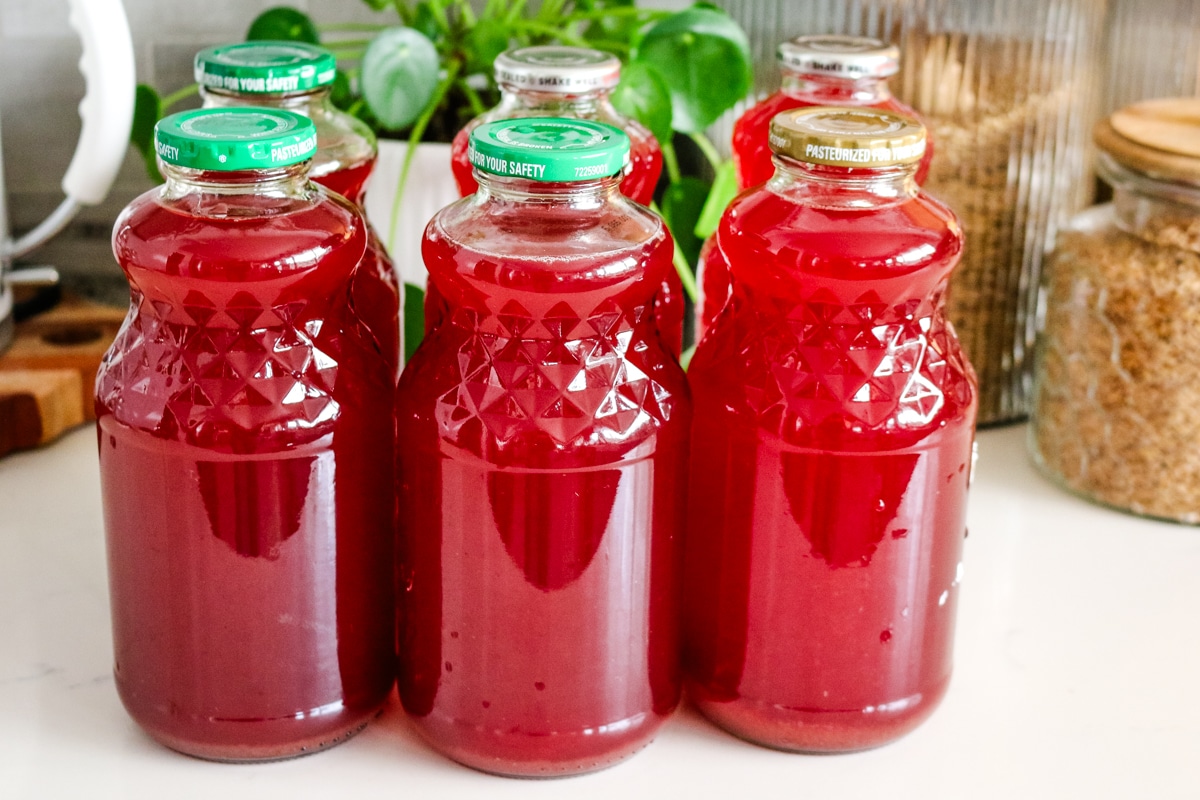
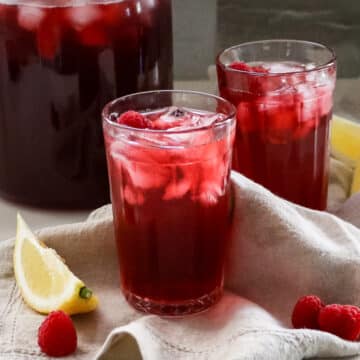
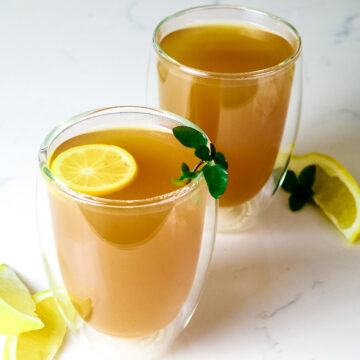
Kompot is a Russian homemade fruit drink that's especially handy when you've got fruit sitting around that's a little too ripe or soft to eat as is. Apples, stone fruit, and berries simmer together, then get sweetened with honey, sugar, or both. It's a good way to use up whatever's left in the fruit bowl instead of letting it go to waste. A refreshing chilled drink.
Jump to:
💡Recipe Overview
- Prep and Cook Time: 5 minutes to prep and 45 minutes to cook/stew
- Cooking Method: Stove-top
- Skill Level: Easy
- Who this recipe is for: Anyone with mushy, overripe fruit sitting in the basket and wants to turn it into something delicious and refreshing.
What is an ancestral diet? Read my post on what nourishing foods are based on the traditional dietary principles of the Weston A. Price Foundation.
Easier on Digestion, Easier on your Wallet, Easier on You
I like many other Slavic households make this at least once a week during the summer, and once you start, you'll see why it's stuck around for so long.
But the one thing that people often miss with this simple homemade fruit drink is that simmering the fruit down actually makes it easier on digestion than eating it raw, since the cooking process breaks it down before your body has to. I sweeten mine with honey instead of sugar for that reason too, you get a little more nutritional benefit along with the sweetness.
But honestly, what keeps this one in rotation is how flexible it is. It's less of a fixed recipe and more of a template, so whatever fruit is starting to go soft in your basket, or whatever's sitting in the back of the freezer with freezer burn all over it, can go into the pot.
I've swapped in cherries, pears, even a handful of cranberries depending on what I had, and it always turns out delicious and always a little different than the last time.
And once you get in the habit of making it, it's an easy way to stop buying juice and soda at the store.

Ingredient Notes
- Apples and stone fruit (plums, apricots, peaches) form the base of the kompot. They simmer the longest, so they need to go in first. Any variety works, just halve them and pit the stone fruit before adding to the pot.
- Berries (raspberries, blueberries, blackberries, cherries) get added later in the process since they break down faster than the apples and stone fruit. Fresh or frozen both work fine here, so use whatever you have on hand.
- Water is the base of the drink. Use clean, filtered water.
- Sweetener can be sugar, honey, or a mix of both. Honey is the more traditional choice and brings a little extra flavor, while plain sugar keeps things simple and works just as well. If you reach for unrefined sugars like coconut sugar or maple syrup instead, keep in mind it'll bring its own flavor along with it. And if you're using honey, let the liquid cool slightly before stirring it in so you don't kill off its natural enzymes.
- Lemon juice goes in at the end. It brightens the flavor and adds a little tang.
Variations by Season
- Summer is really when this recipe shines as written. Stone fruit and berries are at their best right now, so lean into whatever's overflowing at the farmer's market. Cherries work well swapped in for some of the stone fruit and you can just thrown them in with the pits.
- Fall calls for swapping the stone fruit and berries for what's actually in season. Pears work well in place of the apples or alongside them, and you can add a few whole cranberries once they show up for a tartness that balances the sweetener nicely. A cinnamon stick or a couple of whole cloves simmered in with the fruit gives it a warmer, more autumn feel without changing the method at all. You can also make the best cranberry juice.
- Winter is when dried fruit takes over, since fresh stone fruit and berries are hard to find and not worth the price. Swap the fresh fruit for a mix of dried apples, apricots, prunes, and raisins. You'll want less sweetener since dried fruit is already concentrated, so hold back and taste as you go. The simmer time stays about the same, you're just working with shelf-stable fruit instead of fresh.
- Spring is a good stretch to use up whatever's left in the freezer from last summer's berry haul, plus early rhubarb if you have access to it. Rhubarb brings a nice tartness, so cut back the lemon juice slightly if you add it in.

Make it Ancestral
Kompot has been made this way for generations, long before store-bought juice existed, so you're already close to the traditional version. Two ways to take it further:
- Leave the fruit pulp instead of straining it, provided that you use pitted fruits. It's already softened from the simmer and can be enjoyed with the fruit drink.
- Let the finished kompot sit at room temperature for a day or two with the lid loosely on before refrigerating. This gives it a light natural fermentation, closer to how it would have traditionally developed a bit of tang and effervescence. I am working on a fermented fruit drink recipe coming up! Refrigerate once it tastes the way you like.
How to Make Kompot
The printable version is in the recipe card below, ready to go. Keep reading here first though, since these instructions walk through more detail with photos along the way.
Step 1.
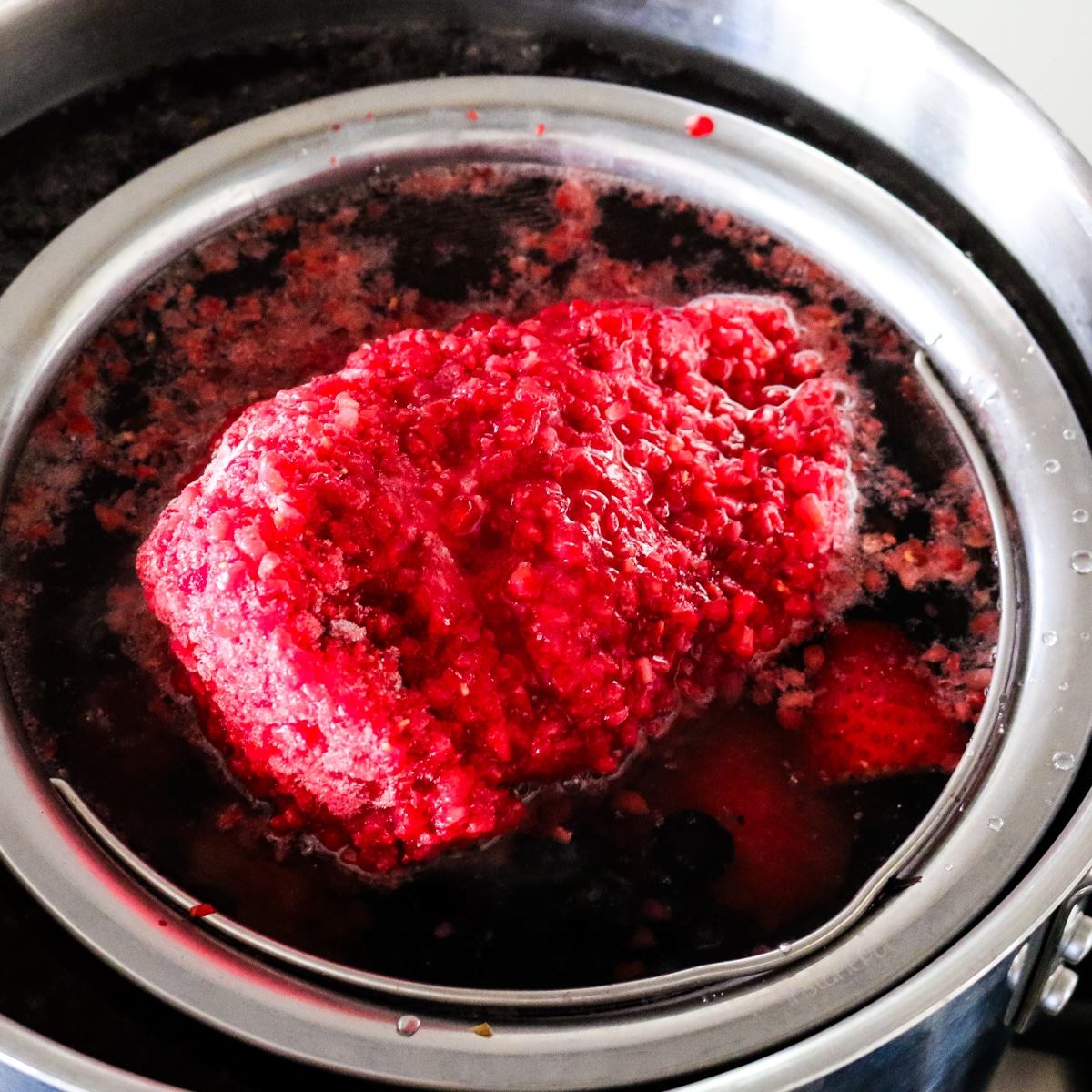
Add fruit like apples, stone fruits, and if you're short on time, like I was here, frozen berries to a large stockpot and fill with water. It's okay if your raspberries were clumped together as one big block.
Step 2.
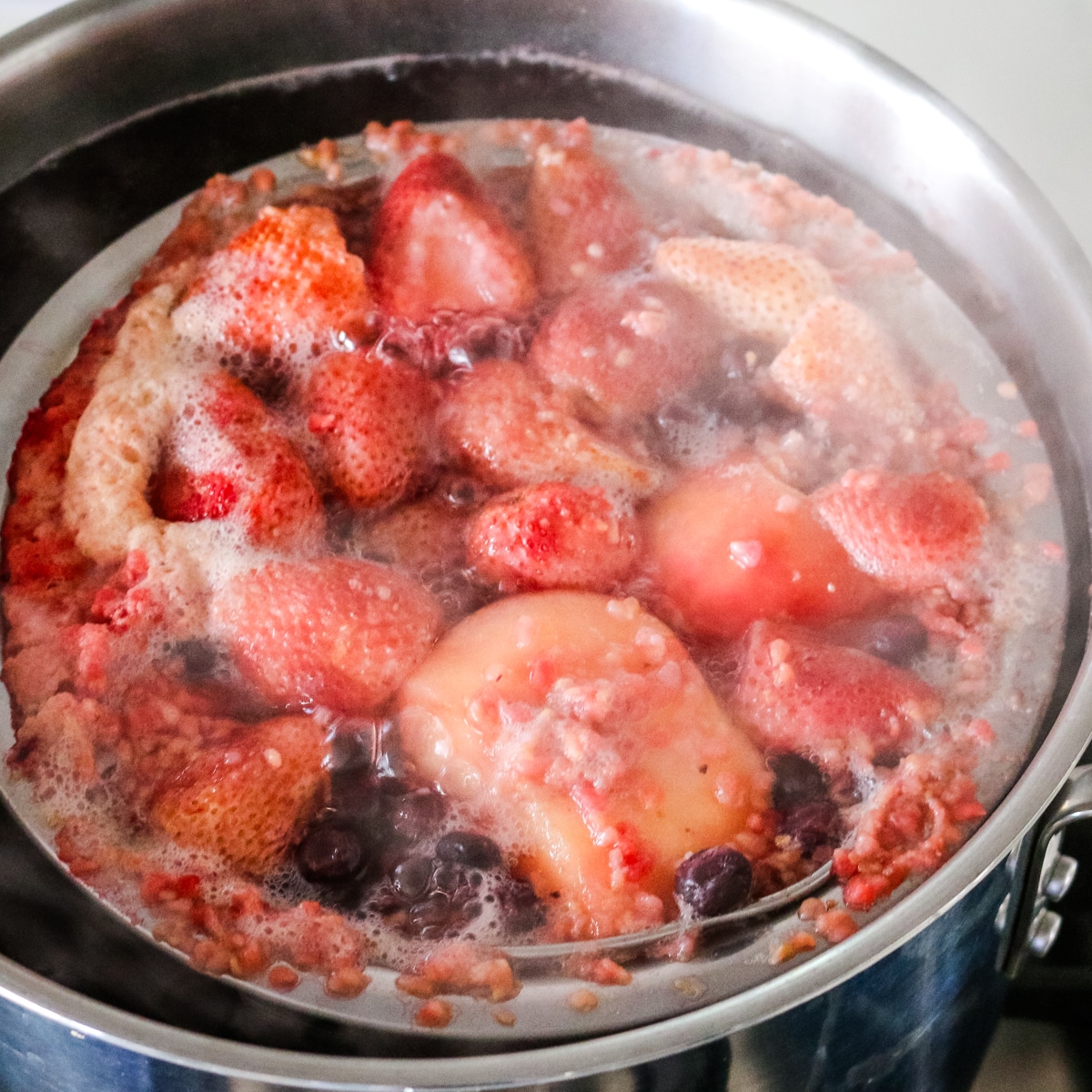
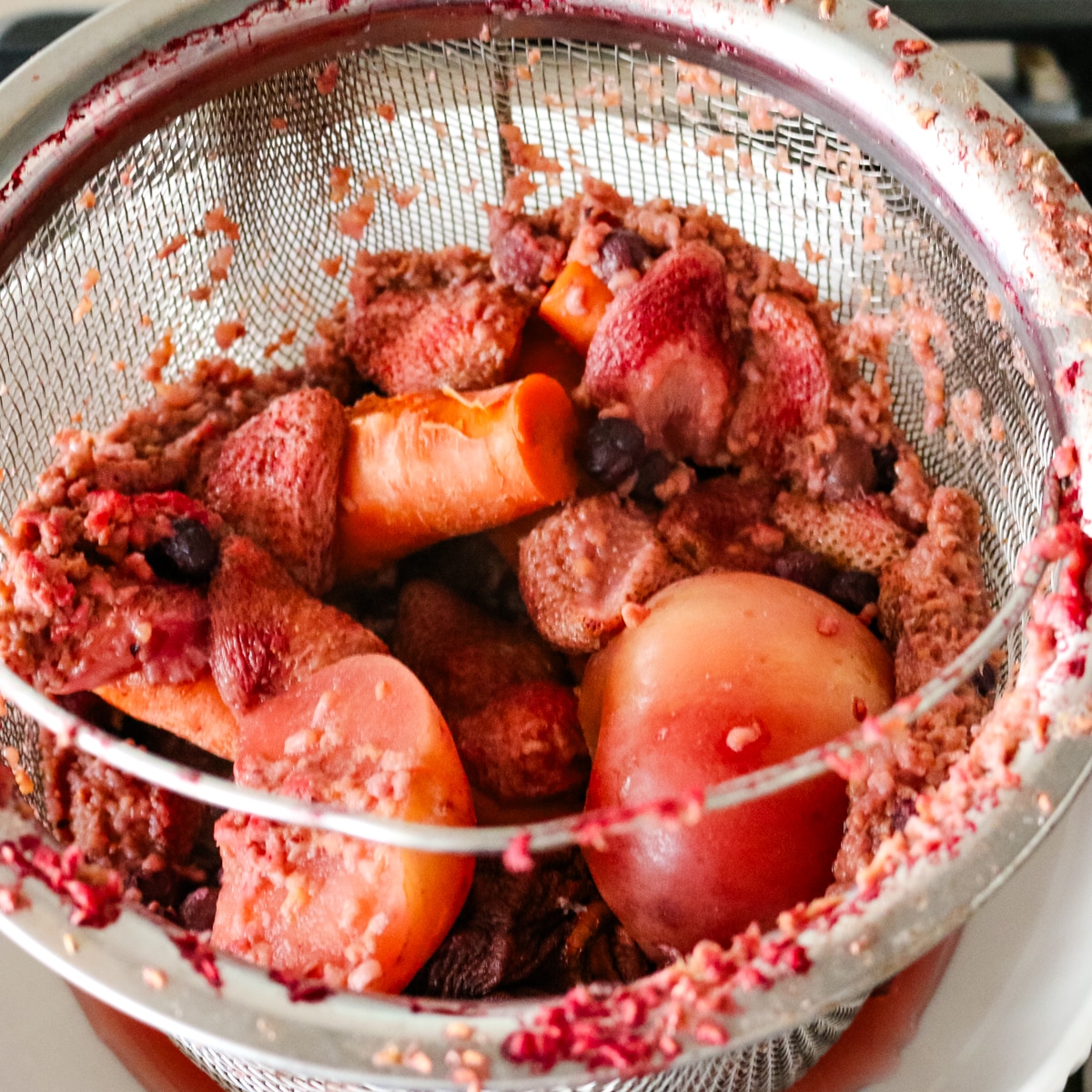
Simmer for 45 minutes until the fruit has softened and released lots of flavor. If you have the time, add the berries and continue to simmer for another 20-25 minutes.
Step 3.
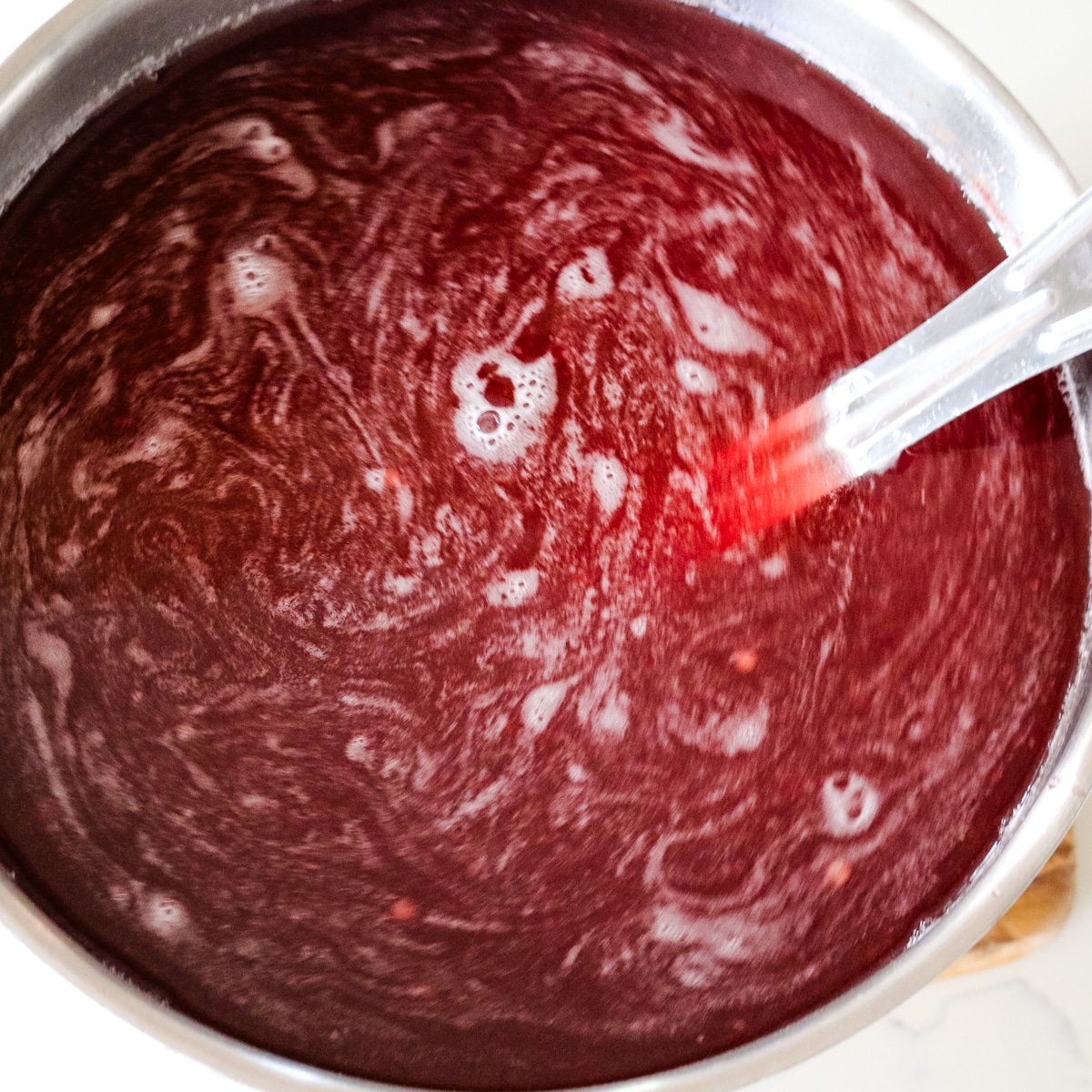
Strain through a fine mesh sieve into a large bowl or another pot. Add sweetener of choice and stir to dissolve. If using honey, wait until the liquid has cooled slightly first.
Step 4.
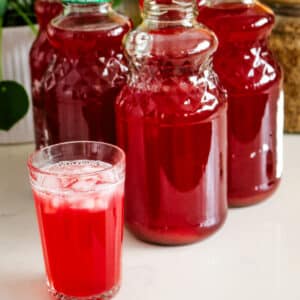
Stir in juiced lemon and pour into bottles or jars. Chill in the refrigerator before serving.
Helpful Tips
- Don't rush the simmer. The long stew time is what pulls the deep flavor and color out of the fruit, cutting it short leaves the kompot thin and underdeveloped.
- Cool slightly before adding honey. Stirring honey in while the liquid is still very hot destroys its live enzymes, wait until it's warm rather than boiling.
- Taste before adding all the sweetener. Fruit ripeness varies a lot, so add sweetener gradually and taste as you go instead of committing to the full amount upfront.
- Add a carrot or two for extra beta carotene. A sliced carrot simmered in with the fruit adds natural sweetness and beta carotene.
Serving Suggestions
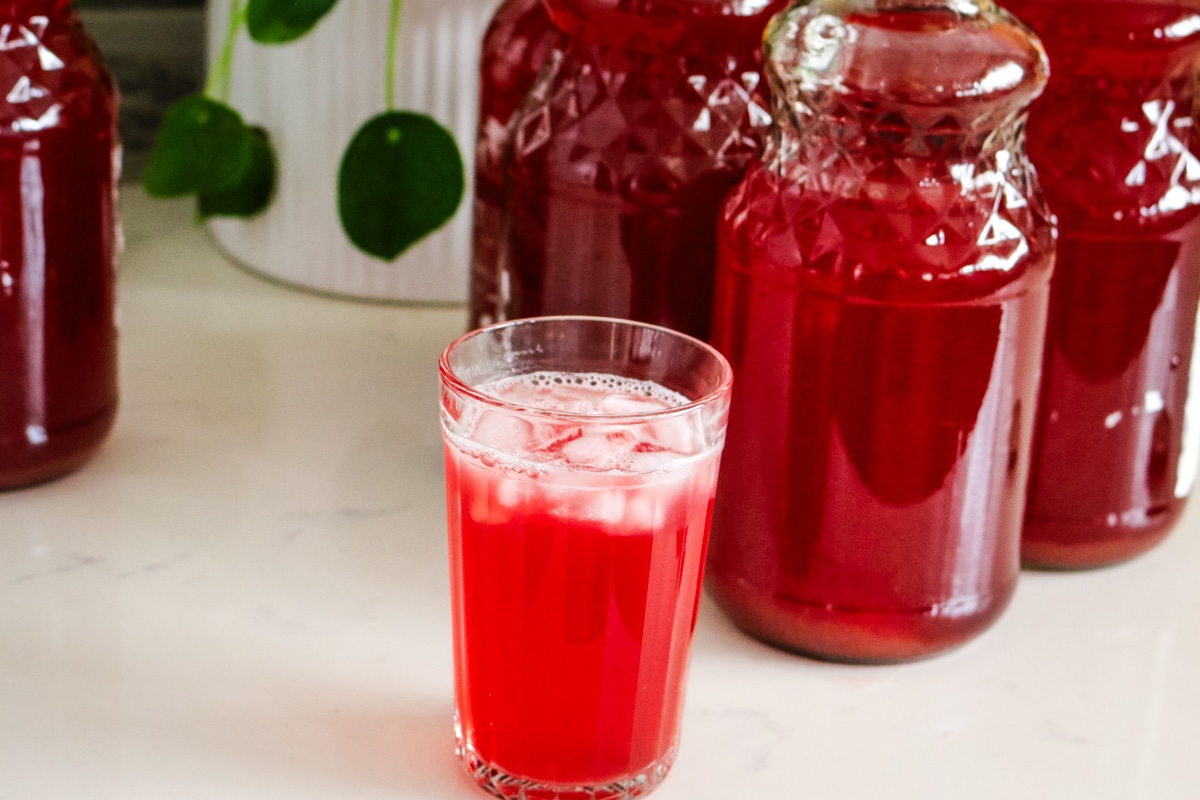
Kompot is traditionally served chilled as an everyday drink, though it shows up on the table for holidays and gatherings too, especially in Russian and Eastern European households where it's a normal part of the meal rather than something reserved for special occasions.
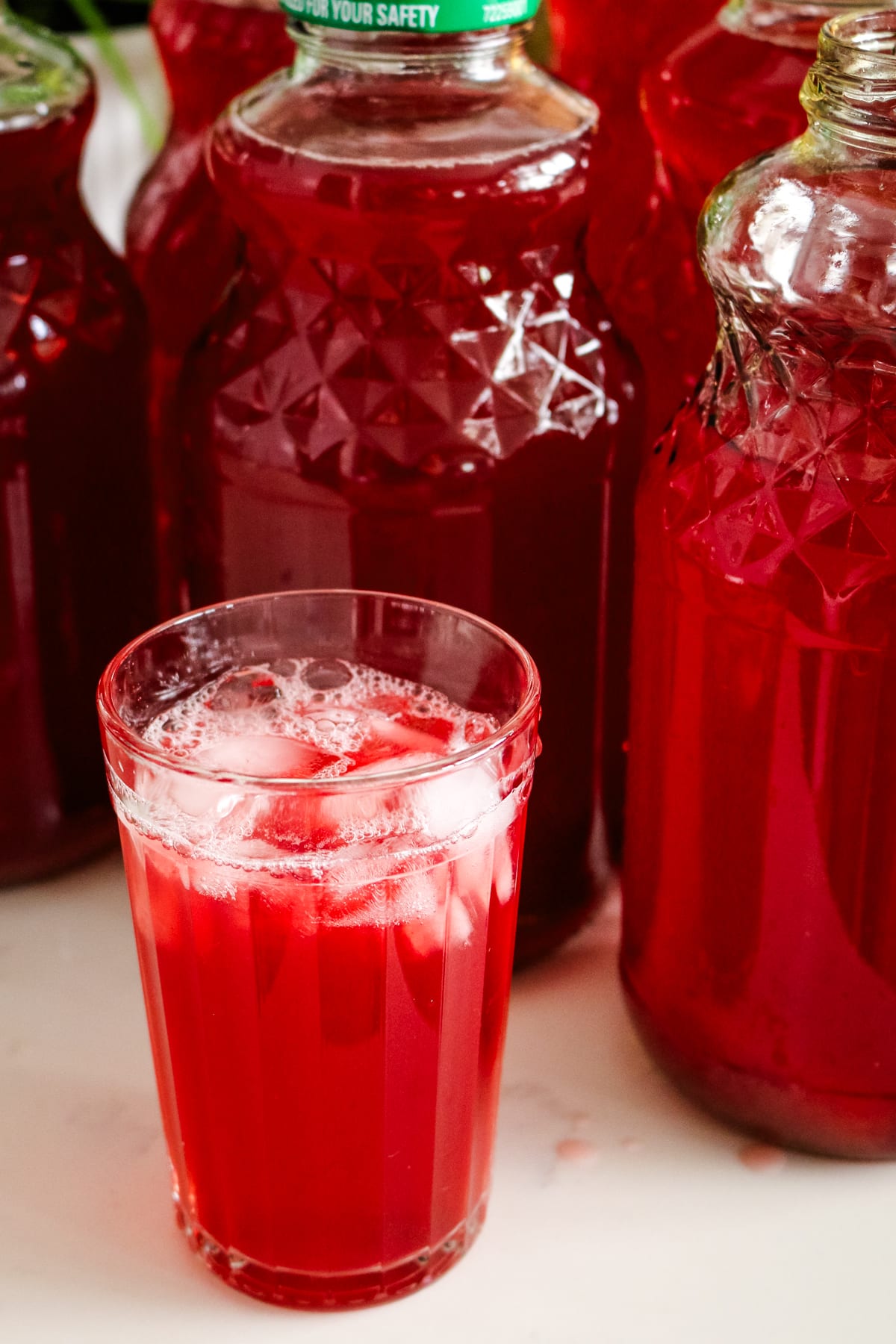
- Serve it straight over ice as a replacement for juice or soda at dinner.
- Mix it half and half with sparkling water (Mountain Valley or Gerolsteiner are my favorite) for something with a little fizz, this is a great way to stretch a batch further too and enjoy a fun drink.
- Pour it into a pitcher for a summer gathering alongside something like my La Scala Chopped Salad for an easy warm-weather spread.
Frequently Asked Questions
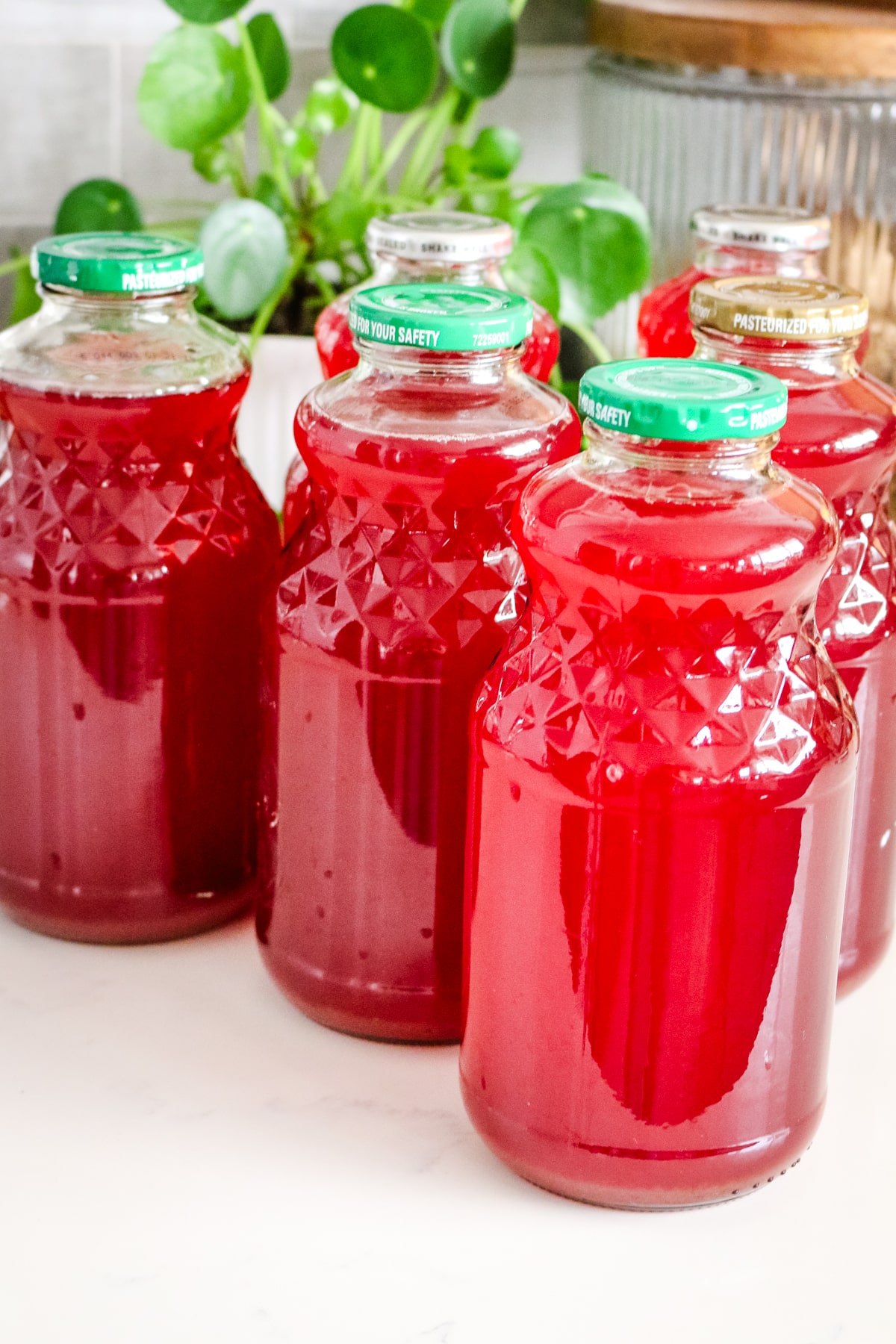
Store kompot in an airtight juice jars for up to a week. These Weck juice jars with lids are excellent for this homemade fruit drink. I've also used recycled glass juice bottles.
Not quite. Juice is typically extracted and concentrated, while kompot (aka homemade fruit drink) is a lightly sweetened water infused with fruit through simmering. It's much lighter and less sweet (though you can certainly increase the sugar) than most store-bought juices.
Straining gives you a clear, smooth drink, which is the traditional presentation. If you don't mind some texture, you can skip straining and leave the softened fruit in, though it'll be more like a chunky compote drink than a clear kompot.
Aim for about 1 pound of fruit per quart of water, so 4 pounds of fruit total for a gallon batch. This recipe uses 1 pound apples, 1 pound stone fruit, and 2 pounds berries to hit that ratio, giving you a deeper color and more pronounced fruit flavor. The long simmer still does most of the work, but starting with more fruit gives it more to pull from.
Looking for more refreshing drinks? Here are some ideas:



Did you make this homemade fruit drink? Please leave a ⭐⭐⭐⭐⭐ recipe rating in the recipe card below and leave a review in the comments. Thank you!💚
Printable Recipe
Kompot (Homemade Fruit Drink Recipe)
Ingredients
- 1 pound apples halved
- 1 pound stone fruit (such as plums, apricots, peachs) halved and pitted
- 1-2 pounds berries (such as strawberries, raspberries, blueberries, blackberries) fresh or frozen
- 1 gallon water
- 1 cup sweetener of choice (sugar, honey, or mix) more as needed
- ½ lemon, juiced
Instructions
- Add 1 pound apples, 1 pound stone fruit (such as plums, apricots, peachs), and 1 gallon water to a large stockpot. Bring to a boil, then reduce to a simmer.
- Simmer for about 45-50 minutes, until the fruit has softened and released lots of flavor into the water.
- Stir in 1-2 pounds berries (such as strawberries, raspberries, blueberries, blackberries) and continue to simmer for another 20-25 minutes.
- Strain through a fine mesh sieve into a large bowl or another pot. Add 1 cup sweetener of choice (sugar, honey, or mix) and stir to dissolve. If using honey, wait until the liquid has cooled slightly first, so you don't destroy the live enzymes in the honey.
- Stir in the ½ lemon, juiced and pour into bottles or jars. Chill in the fridge before serving.
Notes
- Don't rush the simmer. The long stew time is what pulls the deep flavor and color out of the fruit, cutting it short leaves the kompot thin and underdeveloped.
- Cool slightly before adding honey. Stirring honey in while the liquid is still very hot destroys its live enzymes, wait until it's warm rather than boiling.
- Taste before adding all the sweetener. Fruit ripeness varies a lot, so add sweetener gradually and taste as you go instead of committing to the full amount upfront.
- Add a carrot or two for extra beta carotene. A sliced carrot simmered in with the fruit adds natural sweetness and beta carotene.

Leave a Reply