



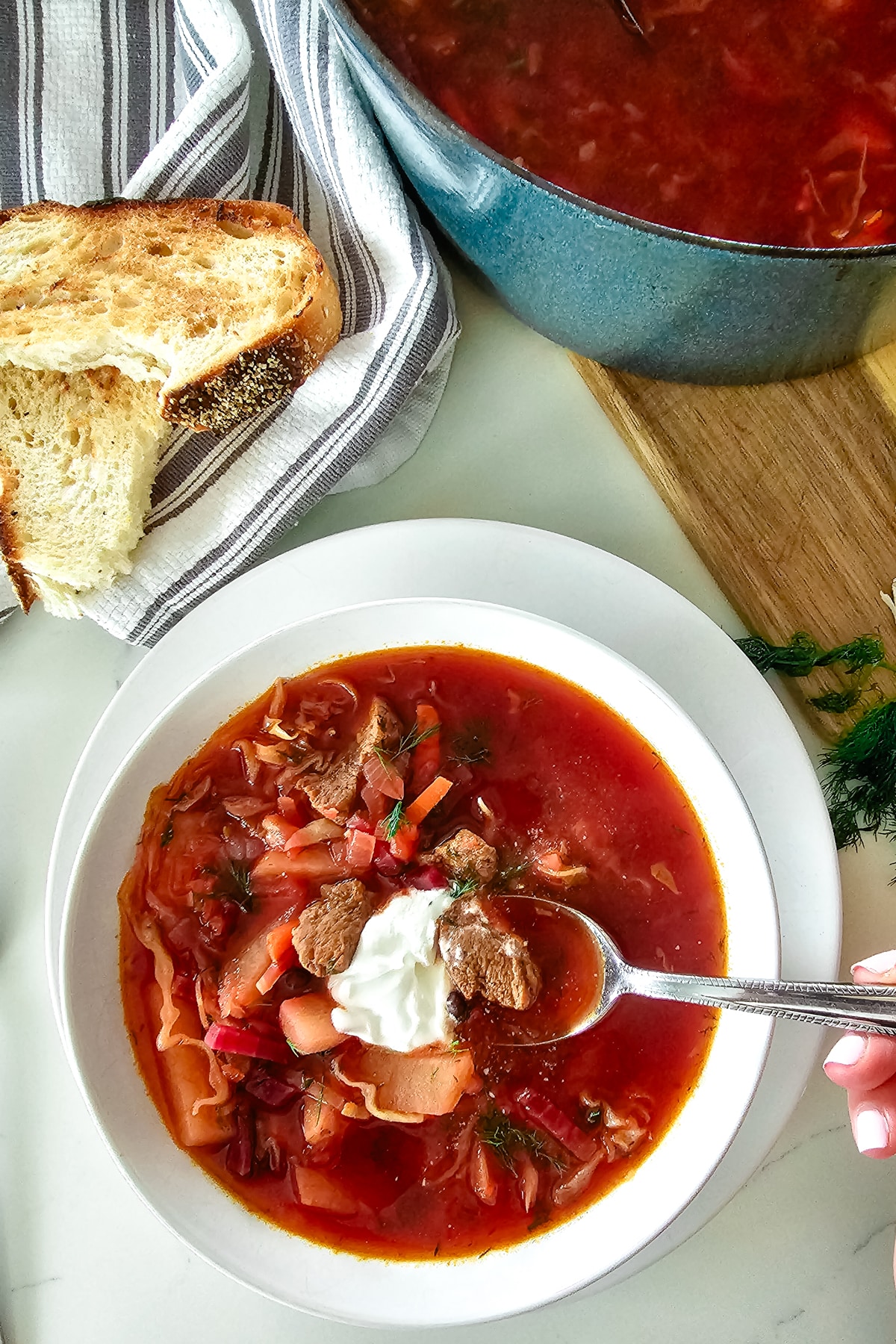
This borscht recipe is how I make this classic borsh soup at home, with beetroot, cabbage, potatoes, and a rich meat broth. This Russian beet soup recipe is a simpler 40-minute version made with meat stock, for a gentler, brothy soup with lots of root vegetables and nutrients.
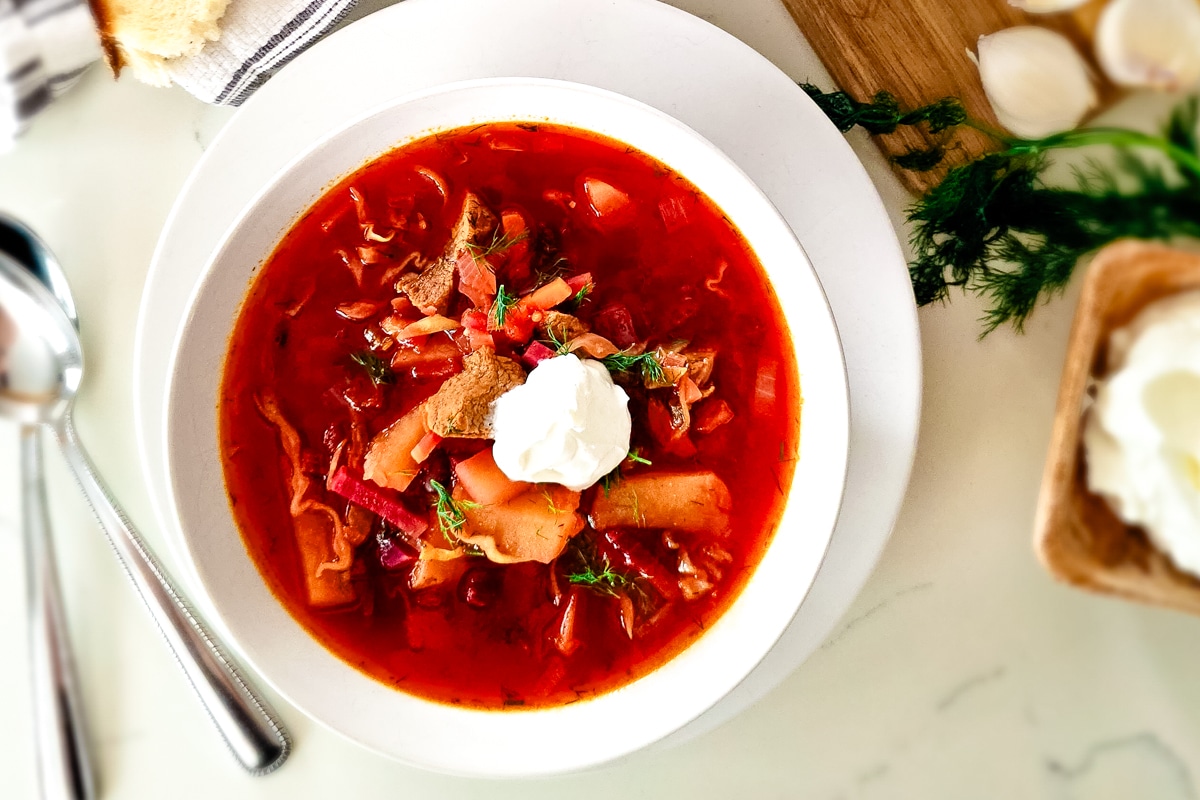
Traditional Russian borscht can be a time-intensive endeavor, depending on the cook. And every family has their version of it, with their babushka adding her special touch to a pot of rich Slavic soup. Just as every family is different, so is every borsch recipe. This one is mine.
This version comes together in one pot, and it might look intimidating with its long ingredient list. But once you get into the rhythm of making it, you'll see how simple it actually is.
For broth, you've got options: chicken broth or beef bone broth. Don't have either on hand? I'll show you how to make one with beef stew meat using this simple meat broth recipe.
Jump to:
💡Recipe Overview
- Prep and Cook Time: 30-40 minutes if you have already have meat stock on hand and a little longer if you don't
- Cooking Method: Stove-top
- Skill Level: Moderate
- Who this recipe is for: This is for the busy cook who wants a Slavic nourishing soup that comes together fast.
What is an ancestral diet? Read my post on what nourishing foods are based on the traditional dietary principles of the Weston A. Price Foundation.
Worth Making Even on a Busy Week
I love a good bowl of hearty borscht, but I don't always love the hours it takes to make real beef bone broth.
So this is my busy mom's version. Sometimes I make my broth ahead of time and pull it from the freezer. Other times I skip the wait entirely and just sauté my meat first to build the flavor fast. Either way, I still get a rich, from-scratch soup without babysitting a stockpot all day.
It's not just quick, it's good for you too. This soup is rich in magnesium, potassium, fiber, iron, and vitamins A, B, and C, plus the beta-carotene from the carrots and beets, so really hit this one hard in the winter.
Once my broth and meat are ready, the rest comes together in under 40 minutes. There's enough flavor built in that I can swap or leave out ingredients depending on what I have on hand that week, without losing the dish.
And it's a genuinely traditional recipe from Slavic cooking, so it's a good one to have when I'm feeling nostalgic.

Is It Borsch or Borscht? Here's the Real Answer
💭 Fun Fact: Borsh, borsch, or borscht, which one is the correct spelling?
Well, they all refer to the same traditional soup from Eastern Europe, but the spelling varries depending on the region. The most important thing to know is that these 3 terms, although have different spellings, are used interchangeably.
Here's a quick breakdown:
- Borsh: A simplified version of the word "борщ" but doesn't accurately represent the pronunciation in Russian or Ukrainian, where the soup is originally from.
- Borsch: This is the more correct phonetic representation of how the word "борщ" is pronounced in Russia and Ukraine.
- Borscht: This is another common English version and is often associated with the Yiddish or Jewish version of the soup.
No matter how you spell it, this is a genuinely traditional dish from Slavic cooking. Whether you're leaning into a Russian version or a Ukrainian one, making borsch is a great way to tap into that history.
What You Need for Borscht
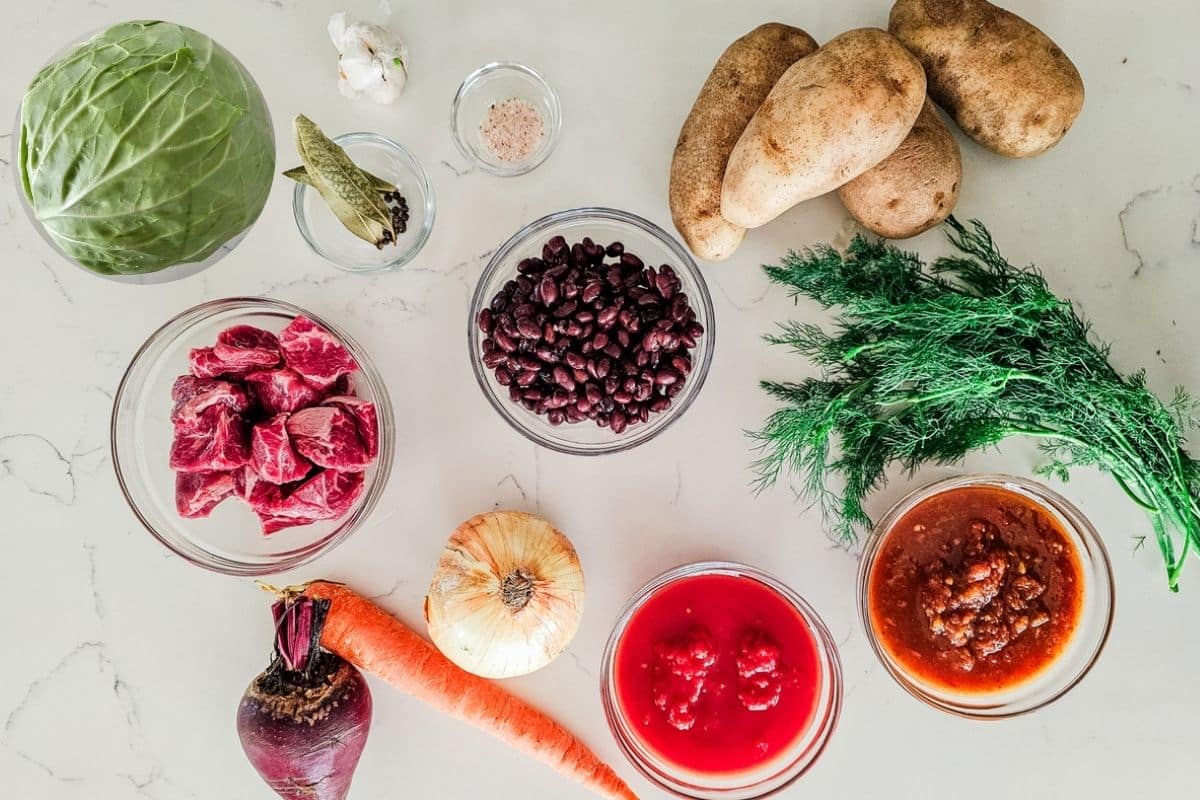
- Stew Meat: Since this is a recipe for a 40-minute borscht, I go for boneless cubed beef. It makes meat broth that is gentler on the stomach and gives you both meat and broth in one go. You can do this step few days before and cut your time in half. Check out my beef stock recipe to make this ahead of time.
- Vegetables & Aromatics: Onion, carrots, beetroot, and garlic build your base. Cut them however's fastest, julienned, diced, or shredded both work fine. No fresh beets on hand? Jarred or cooked beets work too, just add them later instead of at the start.
- Tomatoes: Crushed tomatoes and tomato sauce or salsa give the soup its tang and color. Salsa adds a little kick if you want it. Canned or jarred is standard, no need for fresh.
- Potatoes & Beans: Russet potatoes (Yukon gold potatoes also work) and cooked black beans make a satisfying, comforting full meal. Russets hold their shape better than waxier potatoes. Rinse and drain canned beans before adding.
- Cabbage & Fresh Herbs: Shredded cabbage and fresh herbs go in at the end for texture and brightness. Freshly shredded holds its crunch better than a bagged coleslaw mix, though that works in a pinch. Chopped fresh dill or dried parsley adds a pop of color and a nice herby flavor.
- Seasonings: Just salt and pepper. The broth, tomatoes, and vegetables already do the flavor work. Taste at the end and adjust, since broths vary in saltiness.
Customize Borscht With What You Have
- Make it with chicken - Make chicken borscht by using a whole chicken to make your broth first, then shred the meat straight from the pot for the leftover cooked meat portion in this recipe. Here's how to make chicken broth from a whole chicken so you get both at once.
- Mix and match the tomatoes - There is so much flexibility here. Feel free to use tomato paste, ketchup, blender salsa, tomato sauce, fire-roasted tomatoes, or even tomato juice - anything goes. I bet even fermented salsa would add a nice tang to the soup (I would add it towards the end, though).
- Skip the beets - Leave out the beets for a lighter, less earthy borsch. You'll lose the deep red color, but everything else in the pot still works the same. And I'll let you in on something, this is actually the version of borsch I love most. I know I know.

Make it Work for Your Gut
Healing diet compliant. If you are working to heal your gut, this soup is an excellent meal, but you will have to make slight modifications. The beans can easily be omitted if you are on GAPS or paleo (or use cannellini beans if tolerated on GAPS). Additionally, I have made borsch with yams, celeriac root, or even squash to make it Whole30. In other words, think of borsh as a blank canvas to add whatever ingredients are nourishing to you.
How to Make Borscht Recipe
The printable version is in the recipe card below, ready to go. Keep reading here first though, since these instructions walk through more detail with photos along the way.
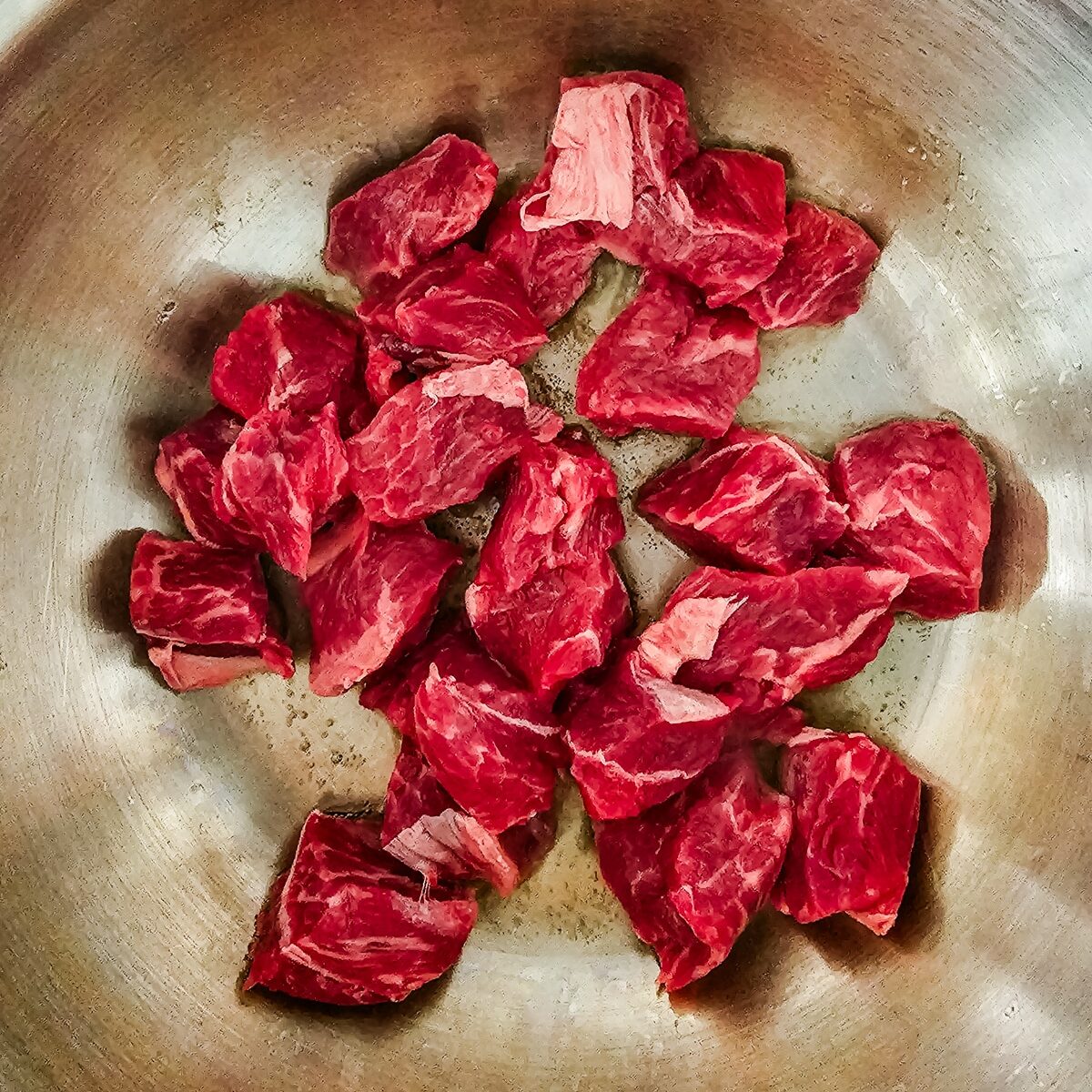
Step 1. Skip this step if you have meat stock already made.
Sear the cut meat in beef tallow, avocado oil, or butter until browned over medium-high heat. Flip and cook the other side. Searing the meat adds a ton of flavor to the soup.
Step 2. Skip this step if you have meat stock already made.
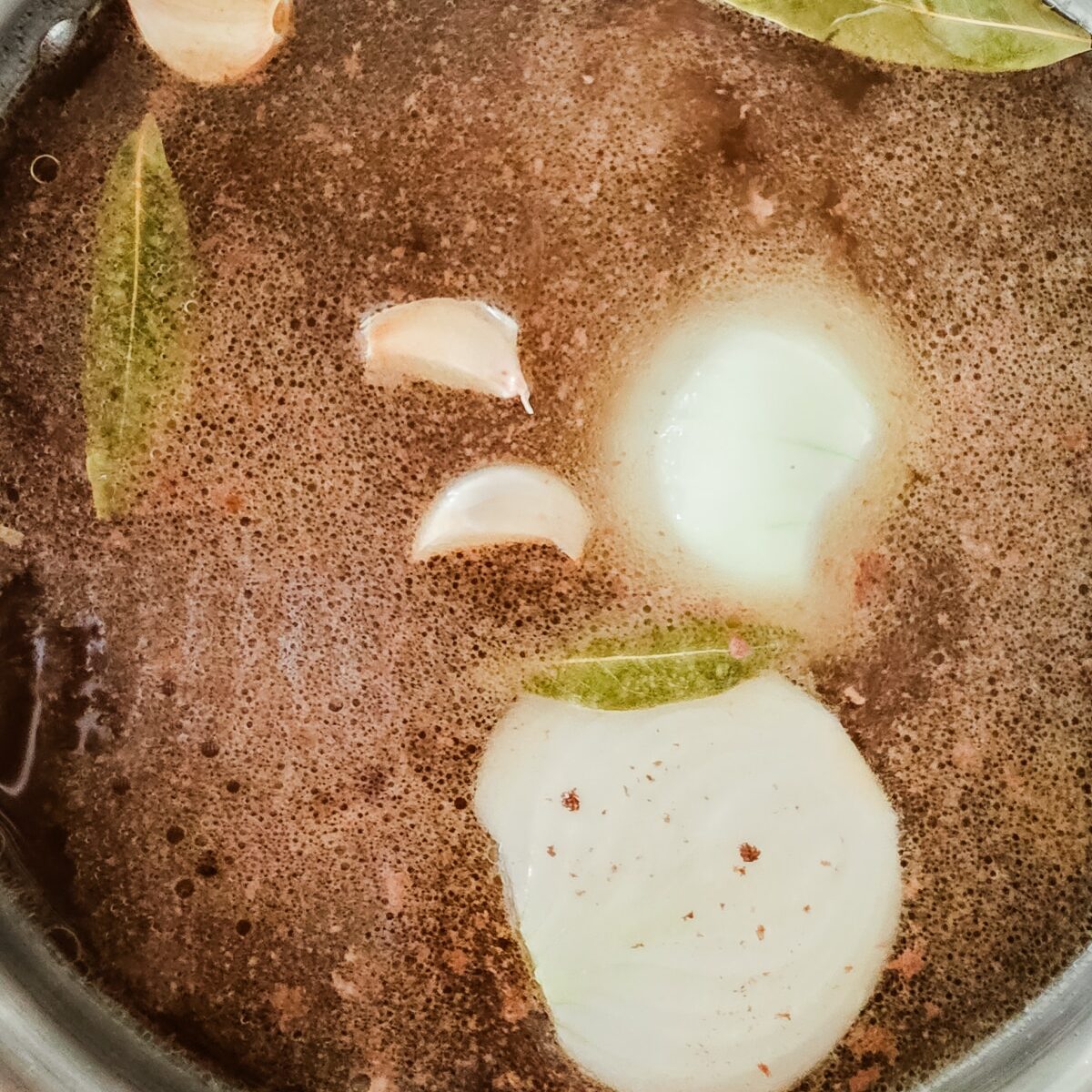
Add peeled and halved onion, bay leaves, peppercorns, and salt, and fill with cold water. Bring to a boil, then reduce heat to medium. Gently simmer until meat is cooked through.
Step 3.
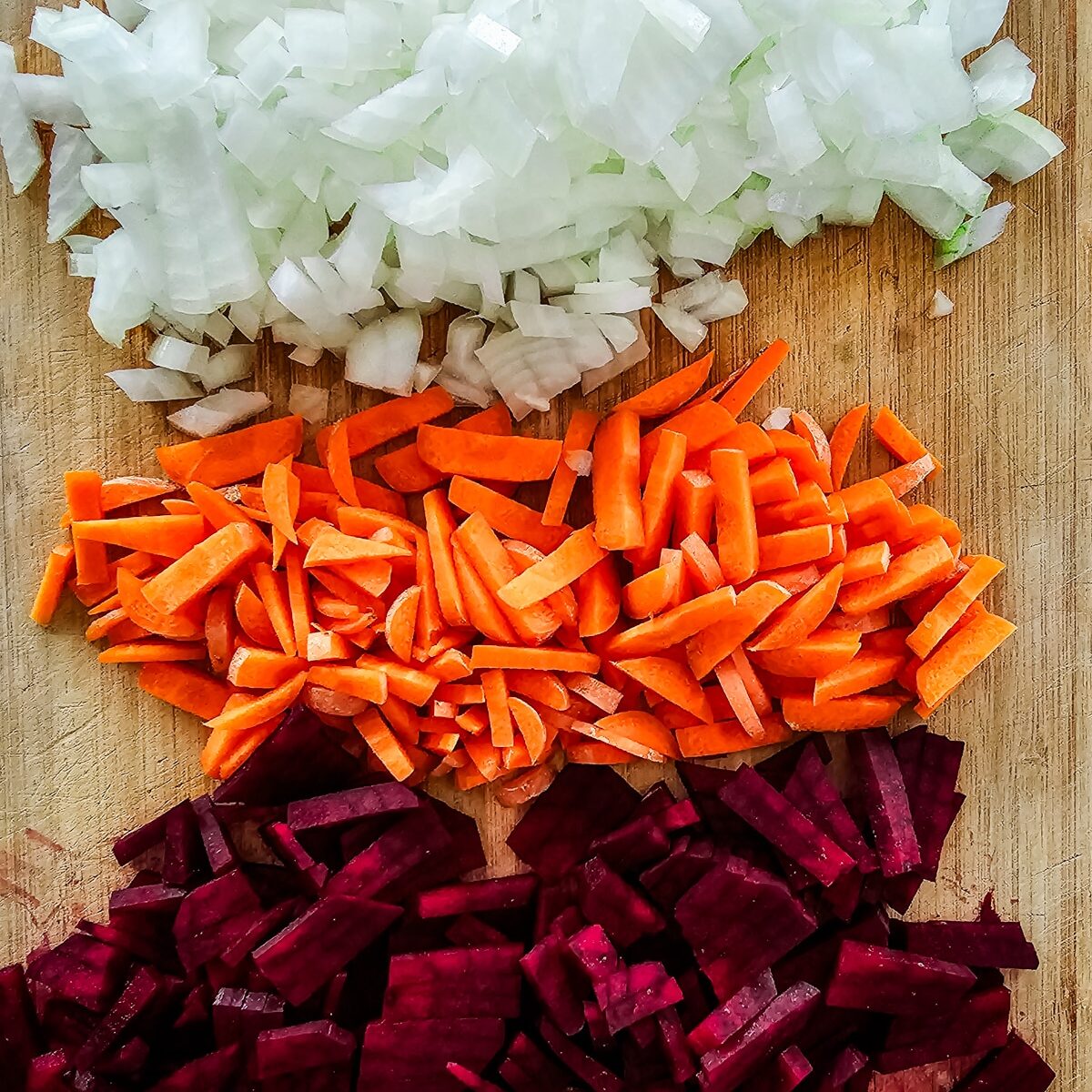
Dice the onions, julienne carrots and red beets, and minced garlic. Meanwhile, heat the cooking fat for a couple of minutes in a large pot over medium-high heat.
Step 4.
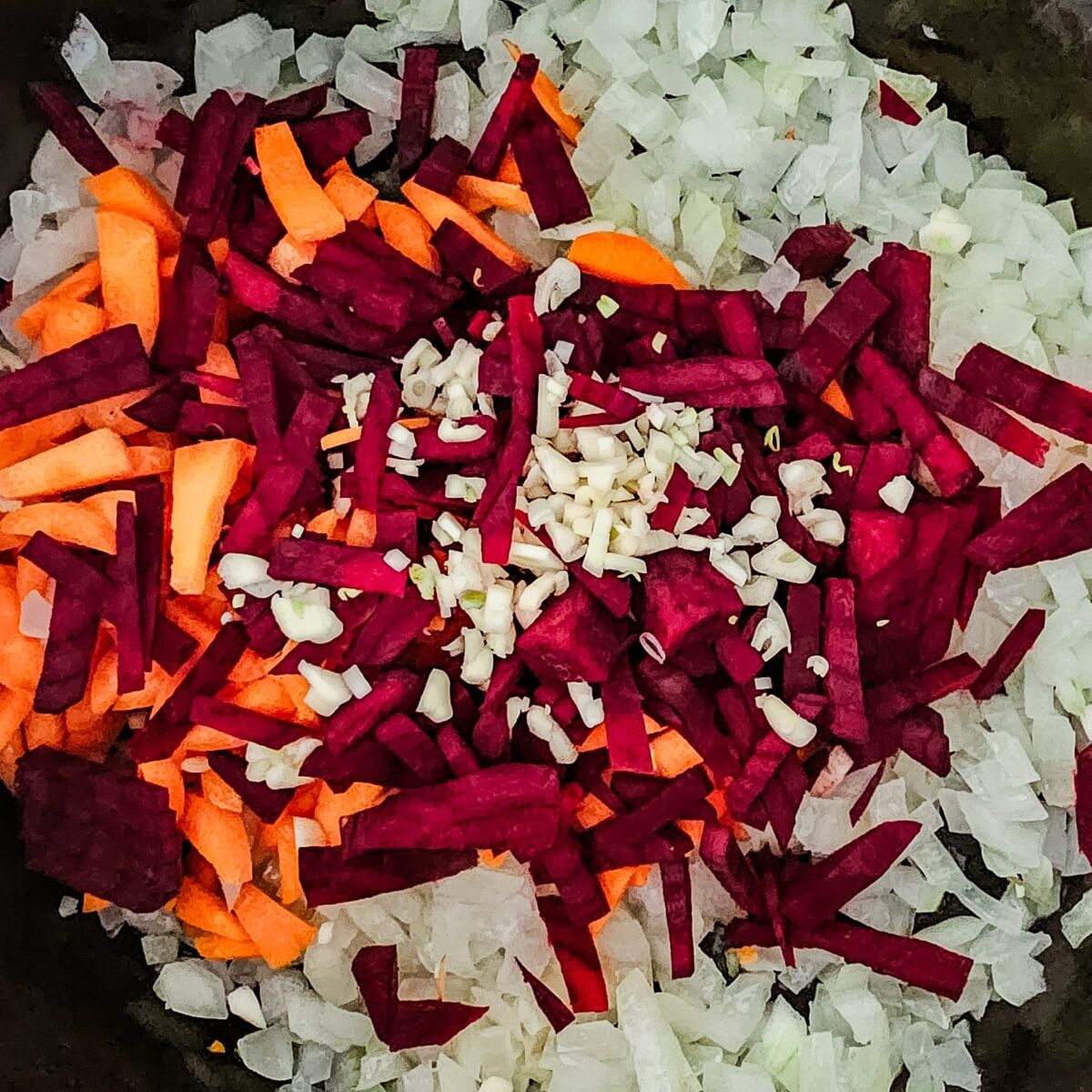
Add diced onions, julienned beets and carrots and cook until softened and onion is translucent. Reduce heat to medium, add garlic, and cook until fragrant.
Step 5.
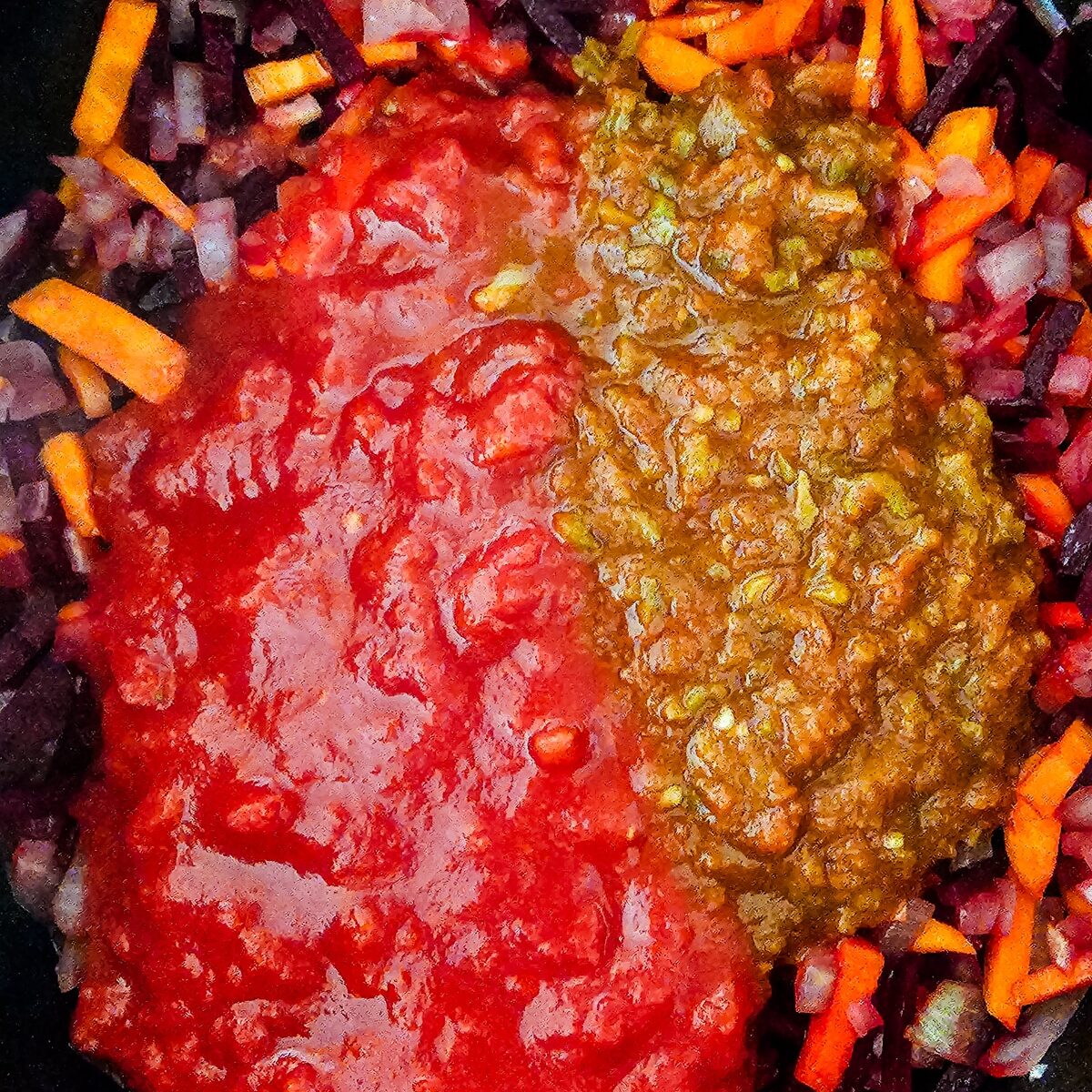
Add the crushed tomatoes and tomato sauce or salsa and stir to combine. Continue to cook until slightly thickened and uniform.
Step 6.
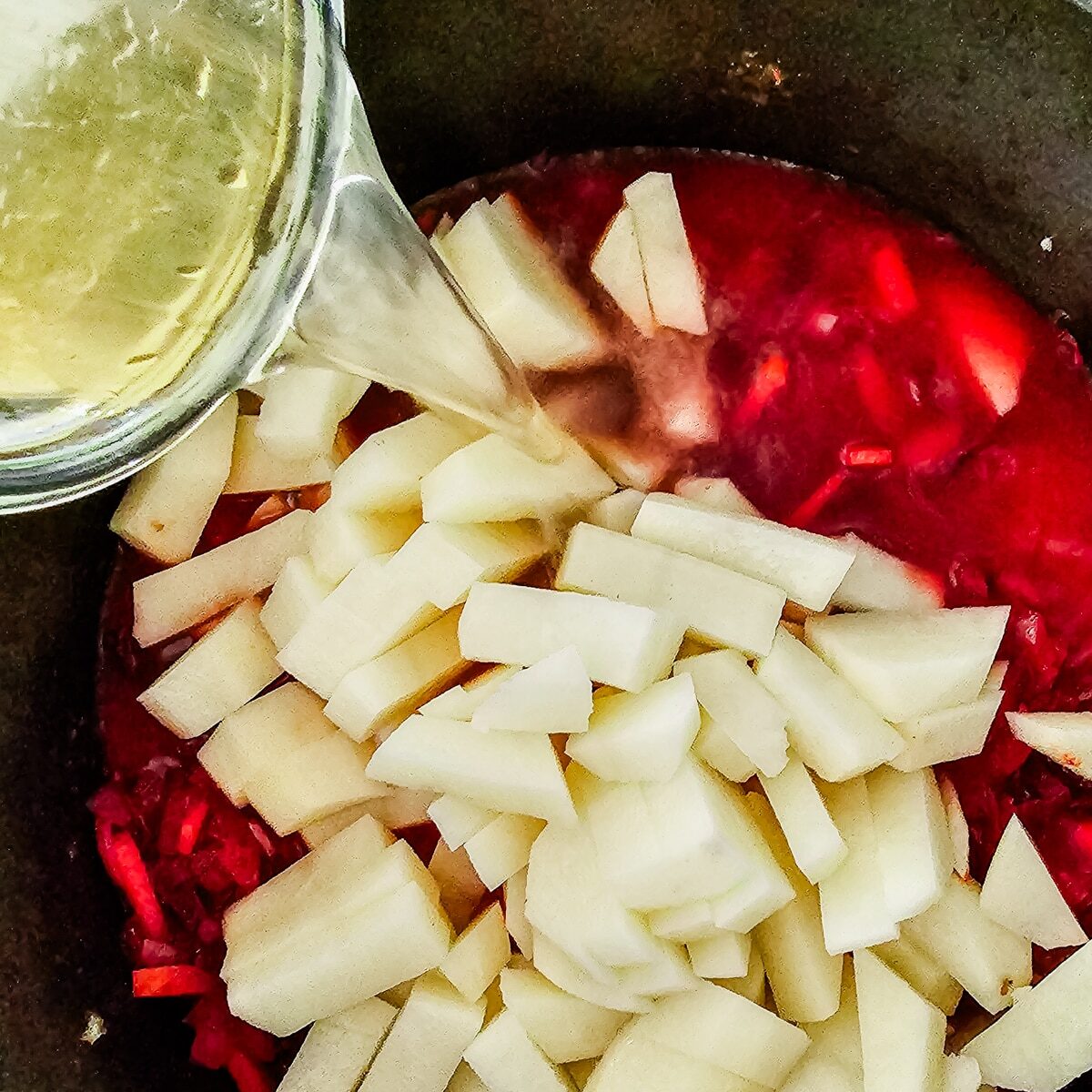
Add the broth to the pot and diced potatoes. Bring to a boil, then reduce heat to medium for a gentle simmer. Halfway through the potatoes cooking, add beans and meat.
Step 7.
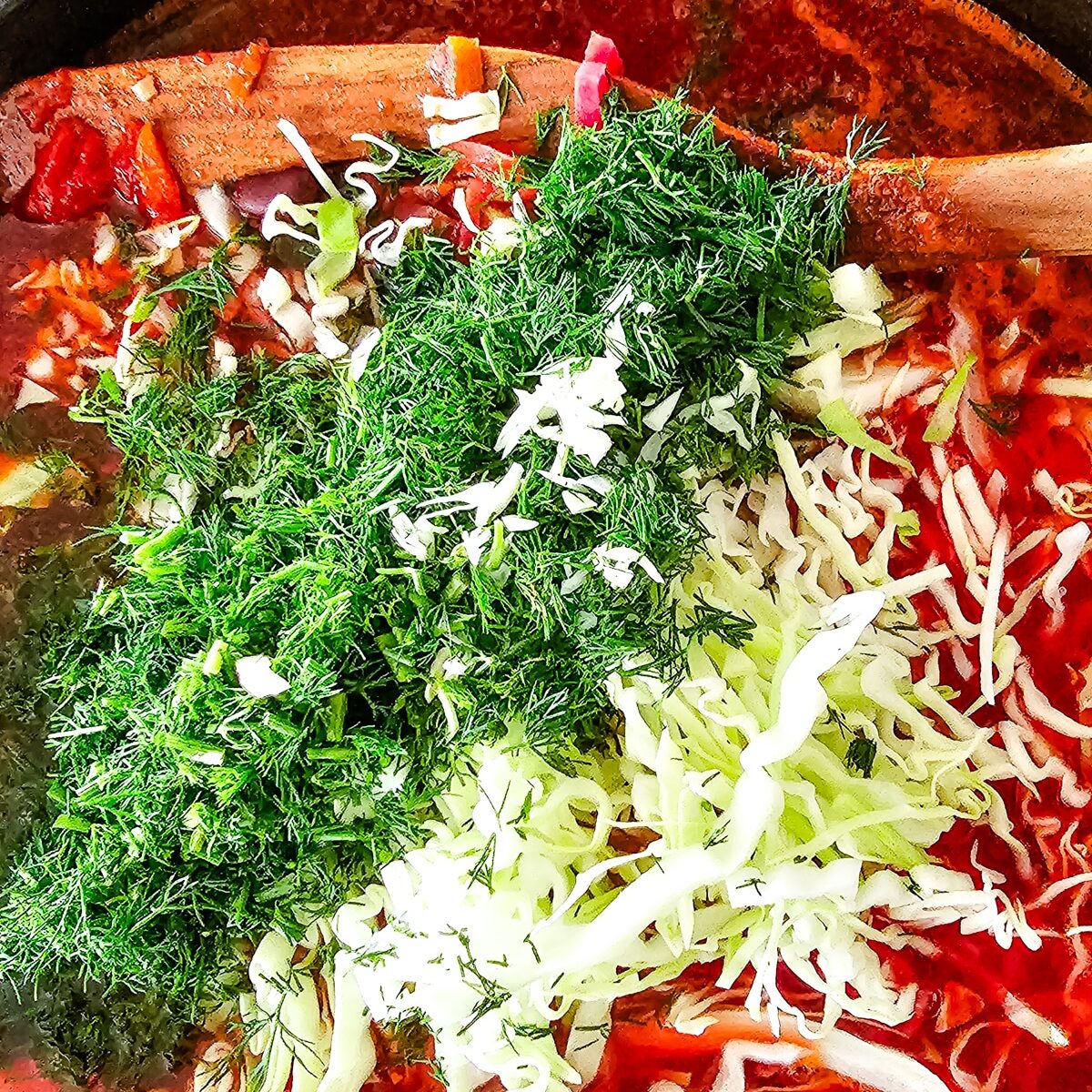
Turn off the heat and add shredded cabbage and chopped herbs. Stir to combine. Cover the pot to let the flavors meld.
Step 8.
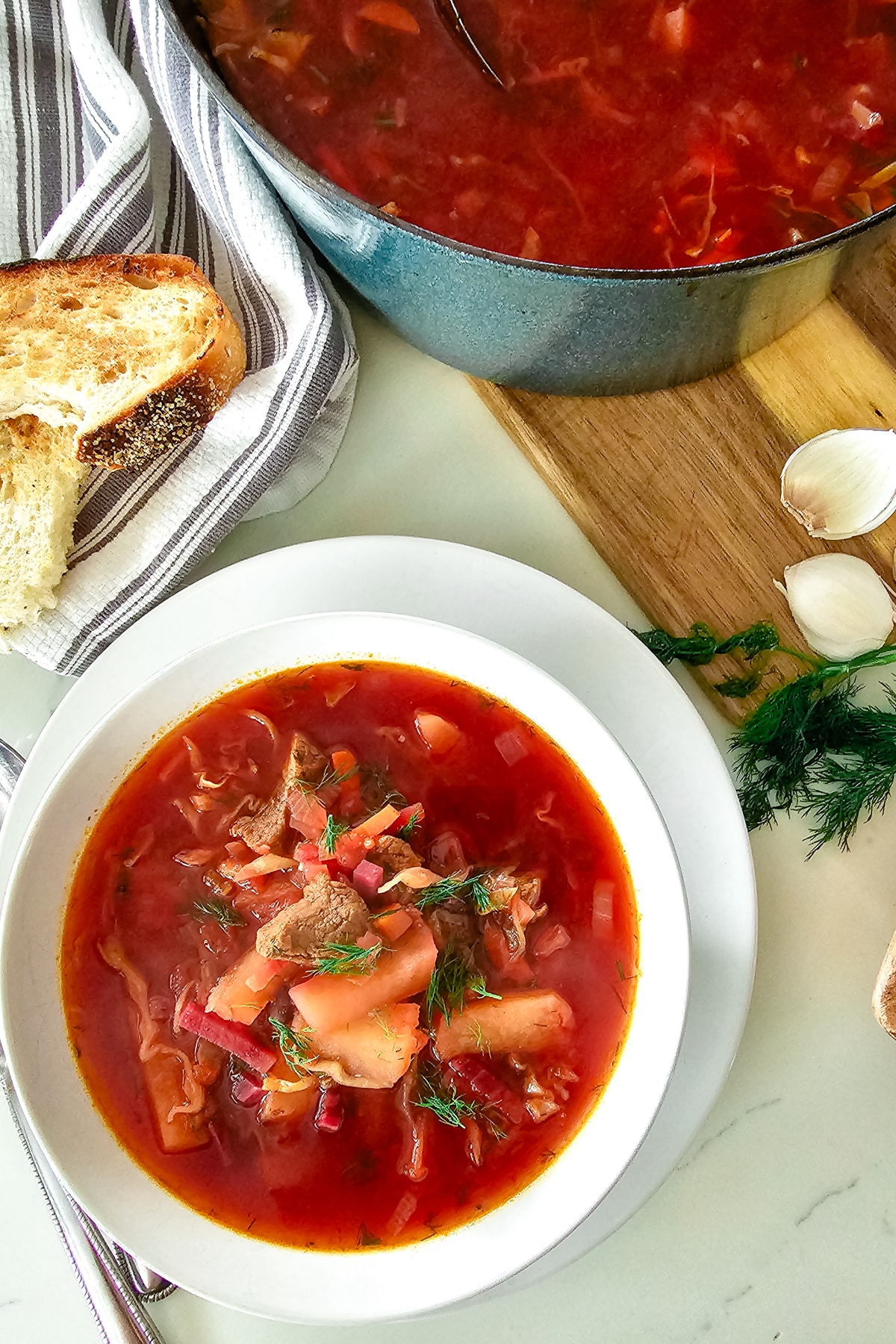
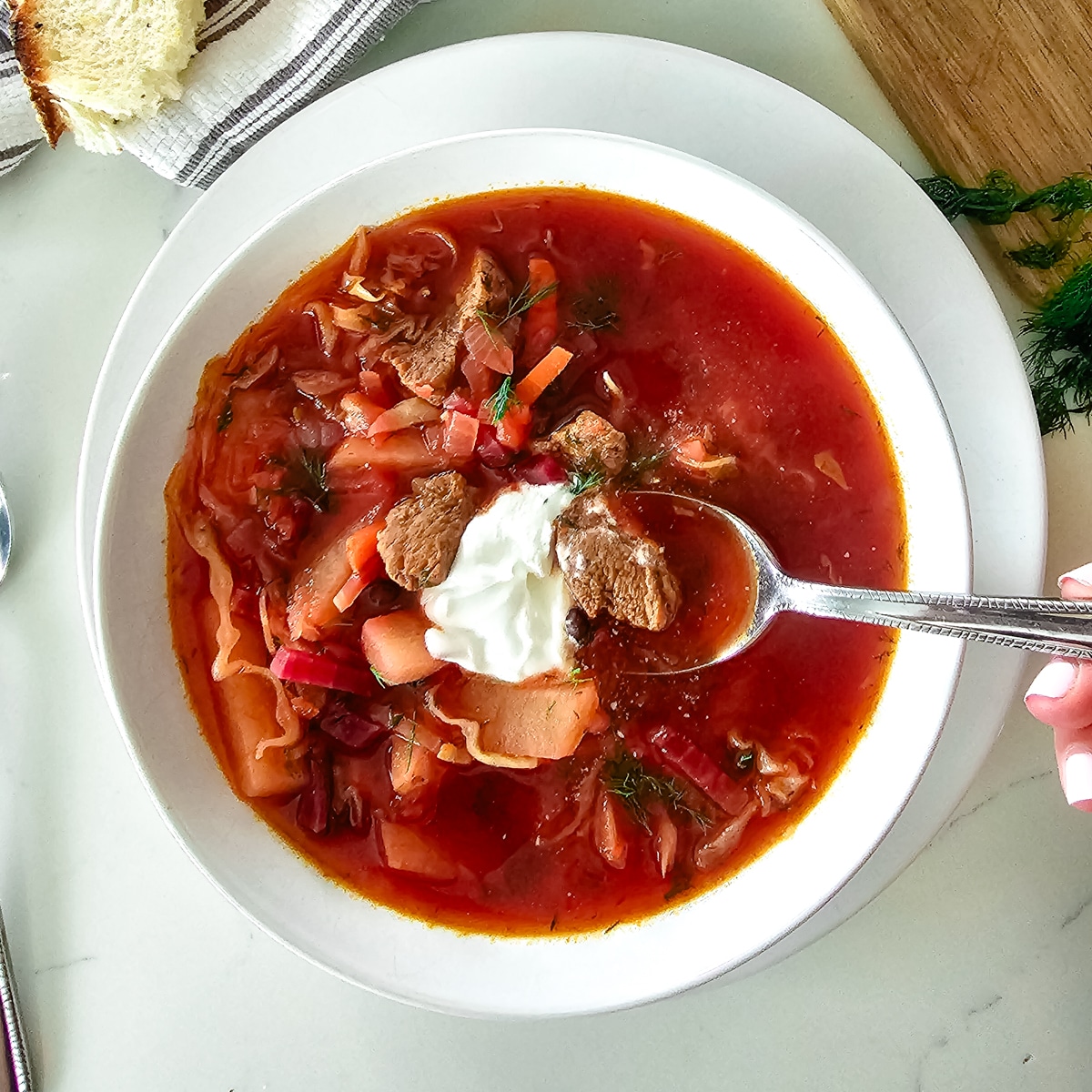
Serve immediately or let it rest to really let the flavors come together. We like to serve borscht with a dollop of sour cream and rye bread.
Tips for the Best Borscht
- Make the broth ahead - Save yourself some time and make a big batch of broth or meat stock ahead. Freeze it in quart bags or containers, then thaw what you need on soup day. This turns borscht into a genuinely quick meal since the broth is the only slow part.
- Timing matters - Adding beans and meat towards the end of the cooking helps to avoid overcooking the meat and prevents it from becoming dry and rubbery.
- Let it rest - The great thing about borscht is that it tastes better with time - yesterday's borscht is better than fresh. Try it both ways to see which one you like best.
- Time-saving tip - Freshly shredded cabbage is a key ingredient in the best borscht, but you can use coleslaw mix in a pinch. But be sure to add it towards the end of cooking time so it still has a crunch to it.
- Check your broth-to-veggie ratio - If the soup looks too thick after it sits, add a splash more broth when reheating. If it's thinner than you like, let it simmer uncovered for a few extra minutes to reduce.
💭Meal Prep Suggestion!
To meal prep borsch, double the batch and portion into individual freezer-safe containers and refrigerate or freeze them for convenient, ready-to-eat meals throughout the week.
What to Serve with Borscht
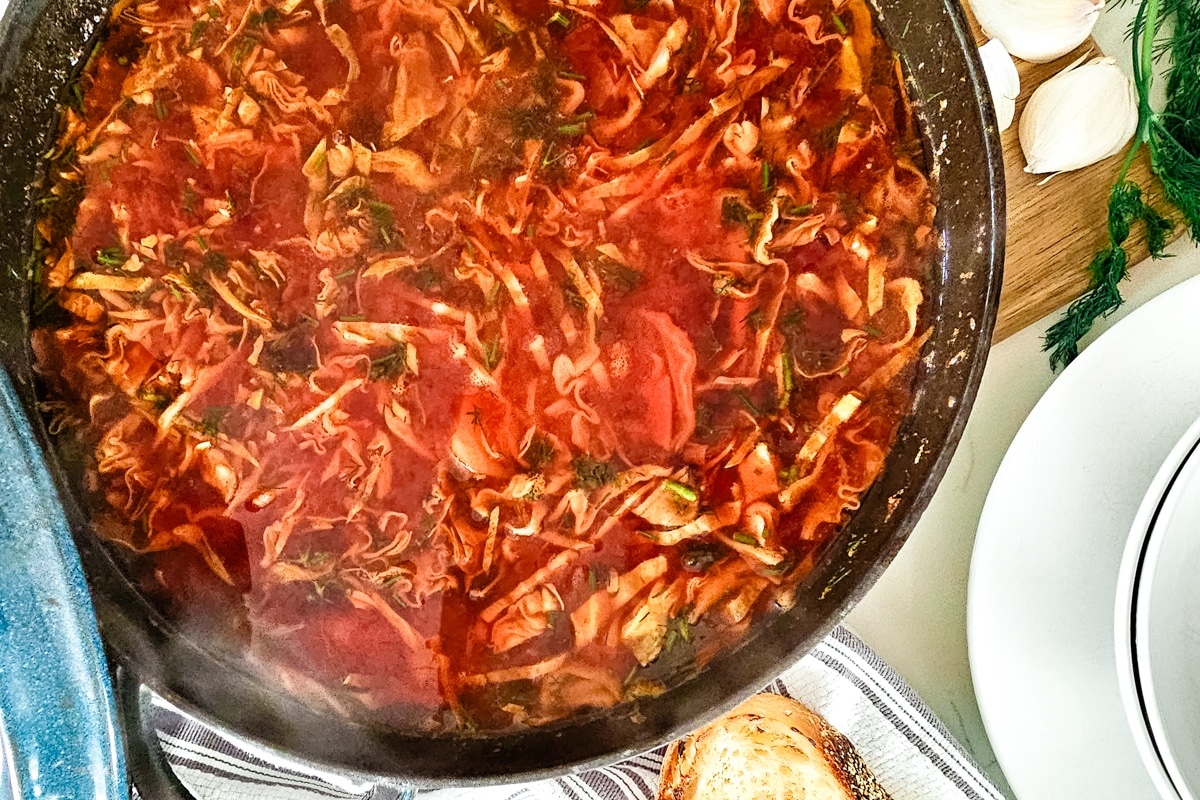
Authentic Russian borscht is served with a dollop of homemade sour cream, whole garlic cloves and green onions dipped in coarse salt and freshly baked rye bread.
Ukrainian borscht also has a secret pairing that is absolutely delicious. It's often served with "salo," cured pork fat or pork fatback. Salo is salted and aged and pairs wonderfully with beef borscht as the variety of vegetables cut through the richness of the cured pork fat.
But a simple serving of cultured sour cream and optional freshly milled flour bread will suffice. Either way, this delicious beet soup has a special place in my heart and will in yours too. With its beautiful ruby-red color and lots of health benefits, this soup will become a regular in no time.
What People Are Asking
Store leftover borscht in an airtight container for up to 1 week. These glass snap containers are perfect for leftovers but I prefer to store leftover soup in wide-mouth mason jars. Borsch is one of those soups that ages well - it only gets better with time. To reheat, transfer borsch to a small saucepan and warm over medium-high heat, stirring often.
Absolutely! Let the borsch cool to room temperature, then portion it into airtight containers, leaving a little space at the top for expansion. Place the containers in the freezer and freeze for up to 3 months. Thaw overnight in the fridge. Keep in mind, the texture of the potatoes may be slightly affected after freezing and thawing but it will still be delicious.
My version of borscht doesn't call for an acid like lemon juice or apple cider vinegar (check out my homemade ACV recipe). But if that is your personal preference, you may do so at the end of the cooking. Adding an acid balances the sweetness in the red beets. It also preserves a deep red color often associated with red borscht. I prefer to add a fermented brine from fermented jalapenos, sauerkraut, or pico de Gallo for extra nutrition and flavor.
Looking for more Slavic soups? Here are some ideas:


Did you make this borscht recipe? Please leave a ⭐⭐⭐⭐⭐ recipe rating in the recipe card below and leave a review in the comments. Thank you!💚
Printable Recipe
Borscht Recipe - Russian Beet Soup
Equipment
Ingredients
For the Meat Stock - Skip this if you already have meat stock
- 1 pound cubed beef chuck
- 1 tablespoon beef tallow or avocado oil
- 2 bay leaves
- 1 tablespoon sea salt
- ½ teaspoon black peppercorns
- 1 yellow or white onion
- 4 quarts water
Tomato-Based Mirepoix
- 2 tablespoons avocado oil
- 1 white onion diced
- 2 carrots julienned or shredded
- 1 beetroot julienned or shredded
- 3 garlic cloves minced
- 1 cup crushed tomatoes
- 1 cup tomato sauce or salsa
For the Borsch
- 4 russet potatoes peeled and chopped
- 1 cup cooked black beans
- 3 cups shredded cabbage ¼ head of small cabbage
- ½ cup fresh parsley or dill finely chopped
- salt and pepper to taste
Instructions
- Skip this step if you have ready made meat stock.Sear 1 pound cubed beef chuck in 1 tablespoon beef tallow or avocado oil until browned over medium-high heat. Flip and cook the other side. Searing the meat adds a ton of flavor to the soup. Add 2 bay leaves, 1 tablespoon sea salt, ½ teaspoon black peppercorns, and 1 yellow or white onion, peeled and halved. Fill with 4 quarts water. Bring to a boil, then reduce heat to medium. Gently simmer until meat is cooked through and tender.
- Heat 2 tablespoons avocado oil in a large heavy-bottomed stock pot over medium-high heat. Add diced 1 white onion, 2 carrots, and 1 beetroot and cook until softened, approximately 5-7 minutes. Reduce heat to medium and add 3 garlic cloves and cook until fragrant.
- Pour in 1 cup crushed tomatoes and 1 cup tomato sauce or salsa and stir to combine. Continue to cook over medium heat for another 5 minutes.
- Add cooked broth to the pot and peeled 4 russet potatoes. Increase the heat to medium-high heat and bring the soup to a gentle simmer. Then reduce heat to medium and cook until potatoes are tender, approximately 5 minutes.
- Midway through the potatoes cooking, add 1 cup cooked black beans and meat and stir to combine to help move the heat around them.
- When the potatoes are tender, take the borsch off the heat. Add 3 cups shredded cabbage and ½ cup fresh parsley or dill and stir to combine. Close the lid for five minutes to let the flavors meld. Season with salt and pepper to taste
- Serve borsch hot with a dollop of sour cream and fresh herbs.
Notes
- Make the broth ahead - Save yourself some time and make a big batch of broth ahead. Freeze it in quart bags or containers, then thaw what you need on soup day. This turns borscht into a genuinely quick meal since the broth is the only slow part.
- Timing matters - Adding beans and meat towards the end of the cooking helps to avoid overcooking the meat and prevents it from becoming dry and rubbery.
- Let it rest - The great thing about borscht is that it tastes better with time - yesterday's borscht is better than fresh. Try it both ways to see which one you like best.
- Time-saving tip - Freshly shredded cabbage is a key ingredient in the best borscht, but you can use coleslaw mix in a pinch. But be sure to add it towards the end of cooking time so it still has a crunch to it.
- Check your broth-to-veggie ratio - If the soup looks too thick after it sits, add a splash more broth when reheating. If it's thinner than you like, let it simmer uncovered for a few extra minutes to reduce.



easypeasylifematters says
Love all the nutrition in this! And so easy!!! Thanks for sharing on Thank Goodness it's Monday link up 🙂
Anya says
Hope you enjoy it! 🙂
Amber | Caleigh's Kitchen says
This is great to try out for something new in our household for these upcoming winter months! Thanks for linking up at Try A Bite Tuesday link party last week! This week is live, we'd love for you to come party again this week! #TryABiteTuesday
beth says
Looks delicious! We get many beets in our CSA in the winter and spring... well, really all year round in the Pacific Northwest. Love new ideas for how to use them.
Anya says
I love that beets can be grown year round.
Alison says
Borsch scares me and always has but this recipe looks really good. My favorite tip was how to eat it. I never would have done the garlic in salt, bread, and borsch trick! Thanks for sharing!
Anya says
Haha! Yes, the whole garlic, salt and bread thing. Not the same without it. 😉
Emily @ Recipes to Nourish says
You make such beautiful food! Love that dill! Such a lovely + nourishing soup.
Anya says
Thanks Emily. It is very nourishing.
linda spiker says
Gorgeous recipe! I have never made a Borsch before. Pinned to multiple boards:)
Anya says
Thank you Linda for sharing.
anna@greentalk says
I canned a ton of beets this summer. Love this soup recipe.