
• Skip to primary navigation
  • Skip to main content
  • Skip to primary sidebar
  • Home
  • About
  • Contact
  • Privacy Policy
  • START HERE
  • Nav Social Menu

    • Facebook
    • Instagram
    • Pinterest
    • YouTube
Prepare + Nourish logo
  • Recipes
  • Shop
  • Subscribe
menu icon
go to homepage
subscribe
search icon
Homepage link
  • Home
  • Recipes
  • Shop
  • Dinner, Decoded
  • About
  • Contact
  • Privacy Policy
  • First Time? Start Here
    • Facebook
    • Instagram
    • Pinterest
    • YouTube
  • ×
    Home » Recent Recipes

    Easy Chicken Gravy Recipe

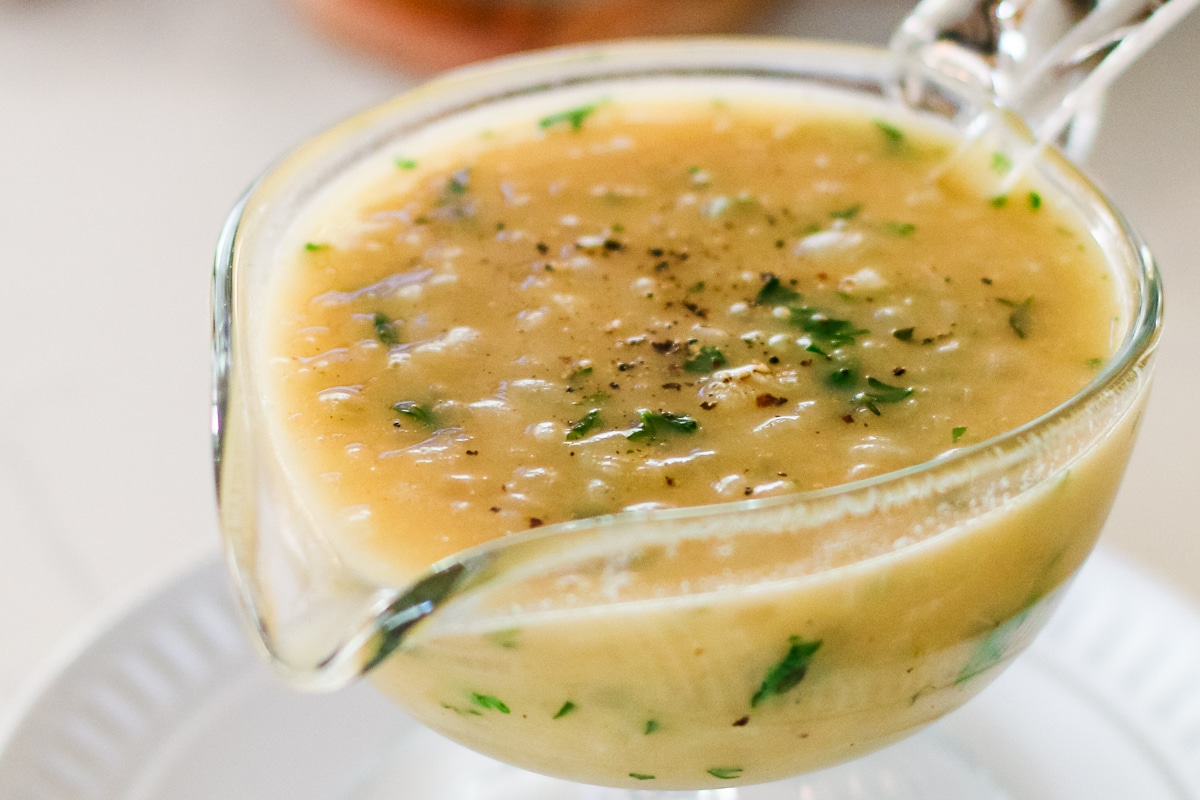
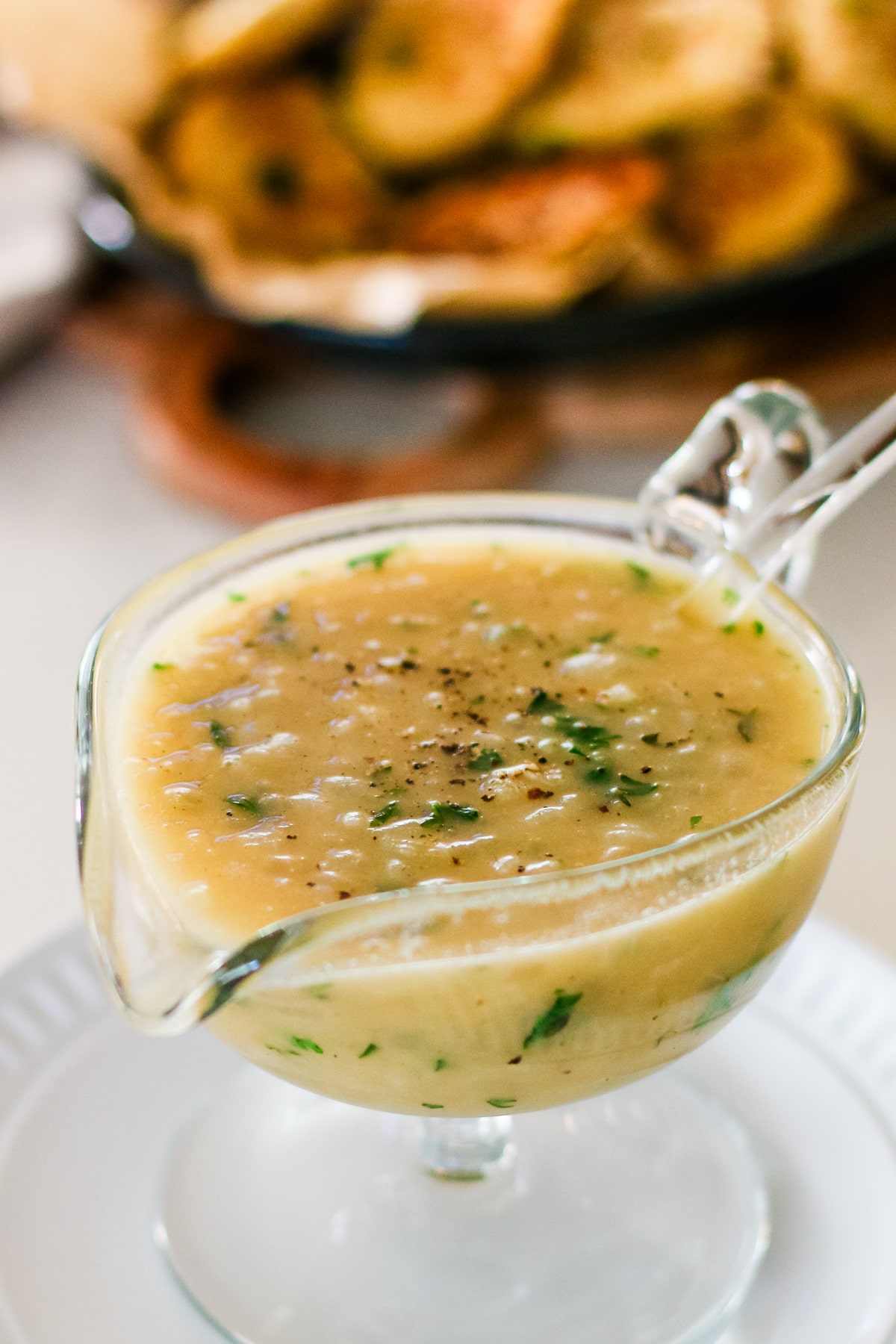
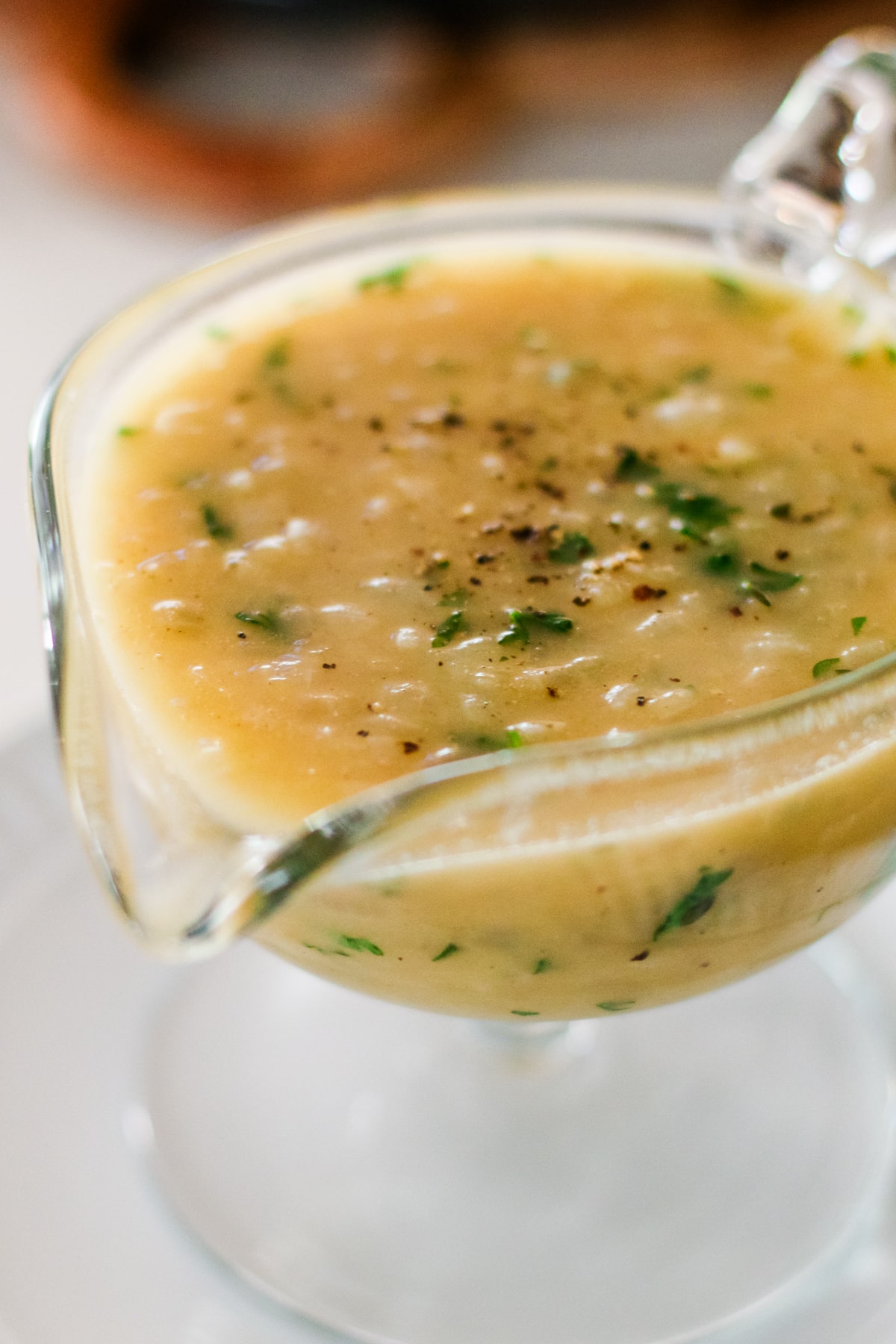
    chicken gravy with parsley in white gravy boat.

    This easy chicken gravy recipe requires only 4 simple ingredients and gives you the option to use pan drippings or butter. It will be perfectly smooth, flavorful, and the perfect addition to any meal!

    [feast_advanced_jump_to]

    💡Recipe Overview

    • Prep and Cook Time: 5 minutes to prep and 10 minutes to cook
    • Cooking Method: Stove-top
    • Dietary Info: Ancestral diet and gluten-free with swaps
    • Tools Needed: saucepan or skillet
    • Skill Level: Easy

    What is an ancestral diet? Read my post on what nourishing foods are based on the traditional dietary principles of the Weston A. Price Foundation.

    My Favorite Gravy Hack

    Want to know a little secret?

    I always make a double batch of this recipe of chicken gravy. It takes barely any extra effort, and future me is always so thankful.

    It’s just as good with or without pan drippings. As long as my fridge has Instant Pot chicken bone broth, I know I can whip up a batch. Times 2 or 4.

    I tuck some away in the fridge for the week (it keeps for about 4 days) and freeze the rest for those nights when dinner just needs something extra.

    Reheat it gently on the stove with a splash of broth if it thickens up - and just like that, you’ve got cozy, comforting magic ready to pour over anything. You're welcome. 😉

    image of Prepare and Nourish owner

    Ingredients for Chicken Gravy Recipe

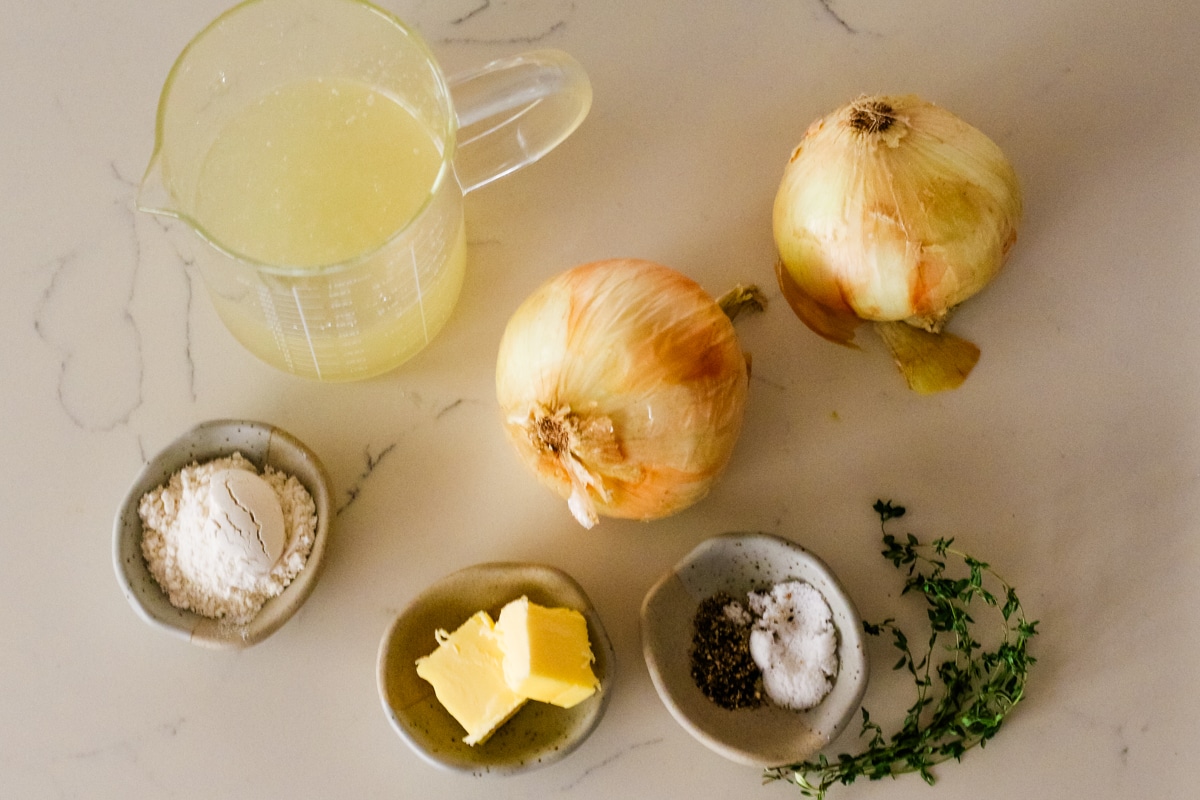
    Ingredients for chicken gravy: chicken broth, butter, and flour in a clear bowl; seasonings in a saucer.

    This gravy’s only got a few players, so let's make them count. Pan drippings from the oven-roasted chicken? Gold. Don’t toss that flavor jackpot - use it. But if you're doing this without the roasted chicken, butter and lots of broth will work too. Flour thickens things up, and good chicken broth brings the cozy flavor—go for homemade chicken bone broth. I always love a hearty pinch of fresh herbs at the end to make it look fancy and salt and black pepper to balance the flavor out.

    If you want to make this chicken gravy recipe with an ancestral slant, use fresh milled flour. It'll be more heartier but still so delicious!

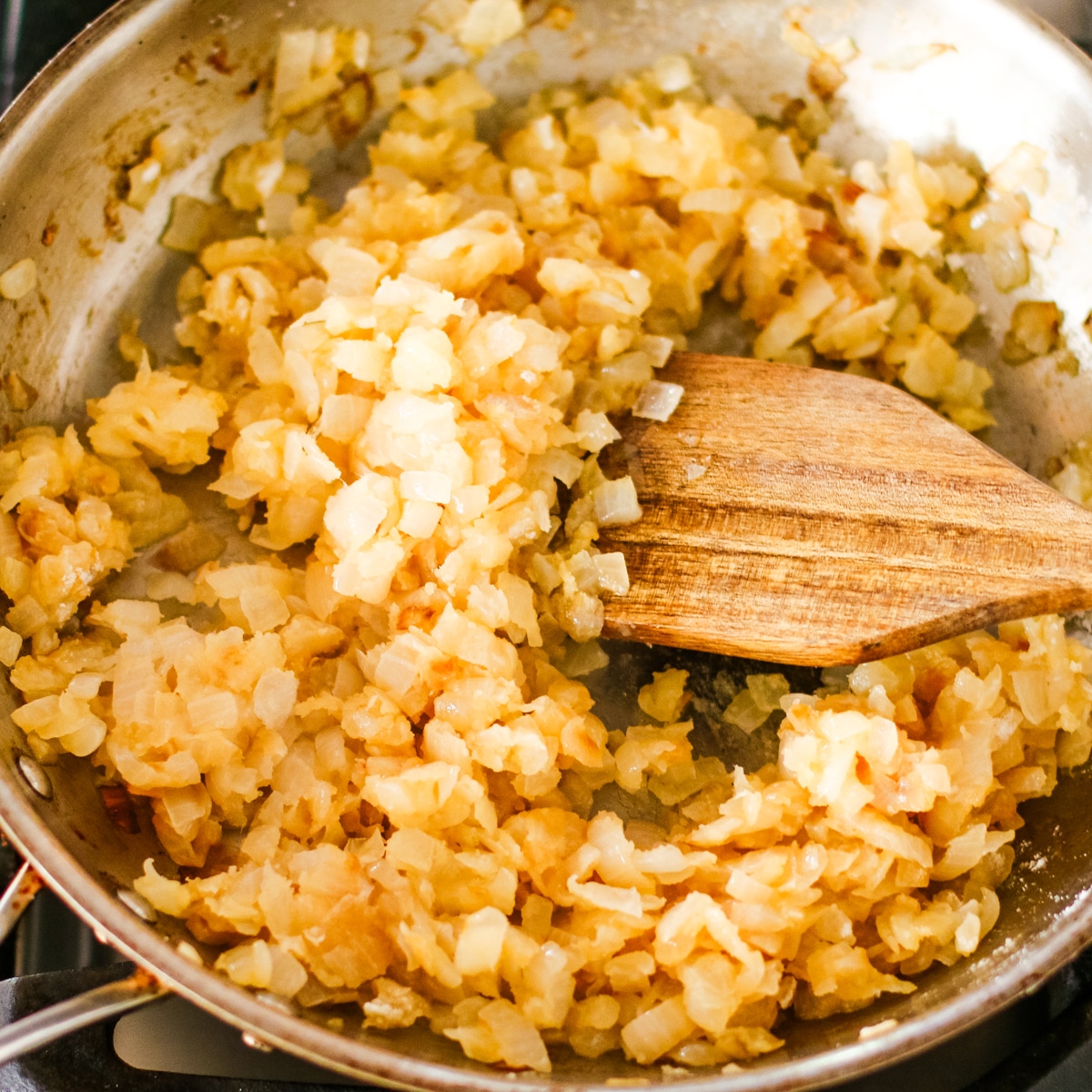
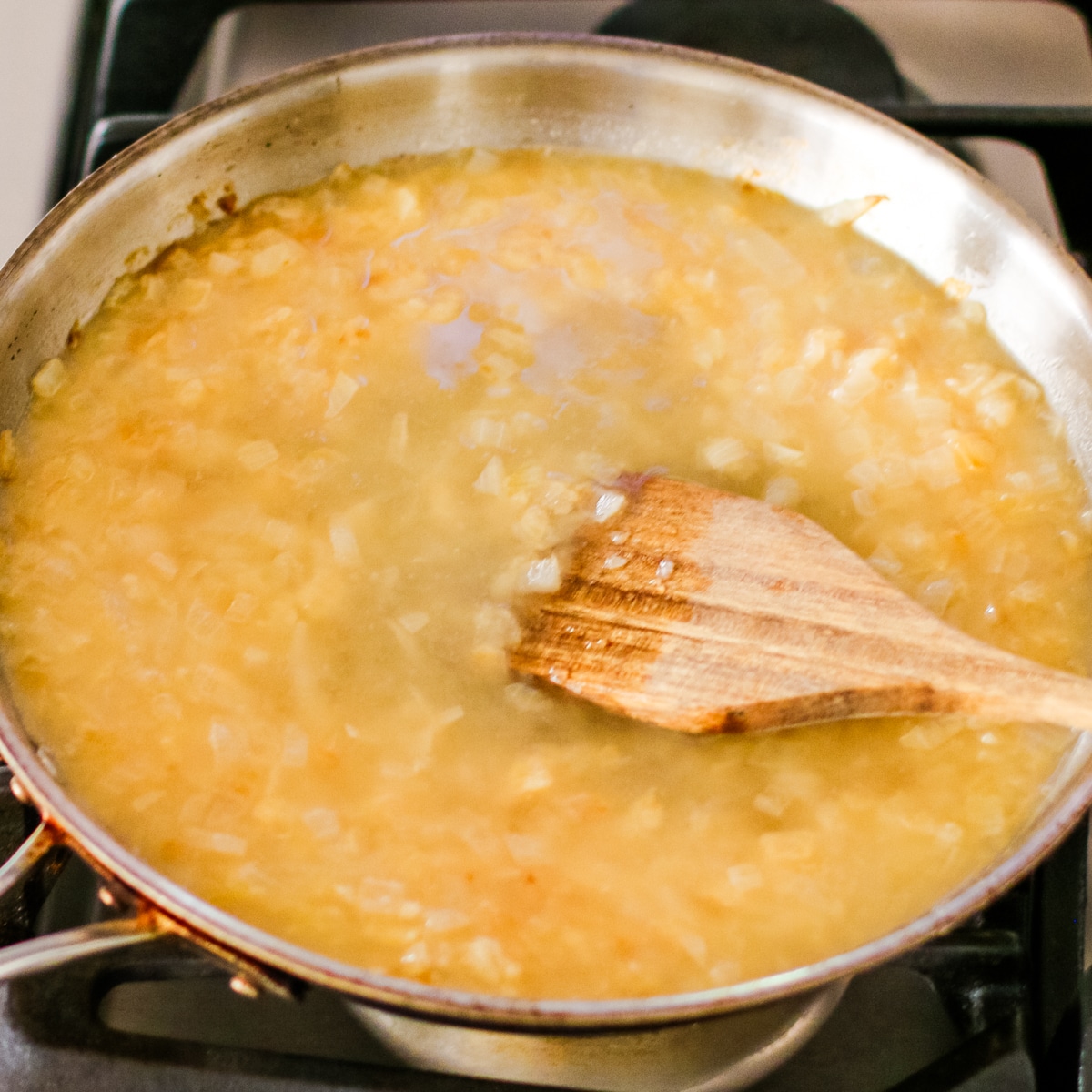
    Gravy in a pan with a spoon in it.

    How to Make Chicken Gravy

    The complete printable recipe is below in the recipe card for your convenience. Follow these simple step-by-step instructions for the best results.
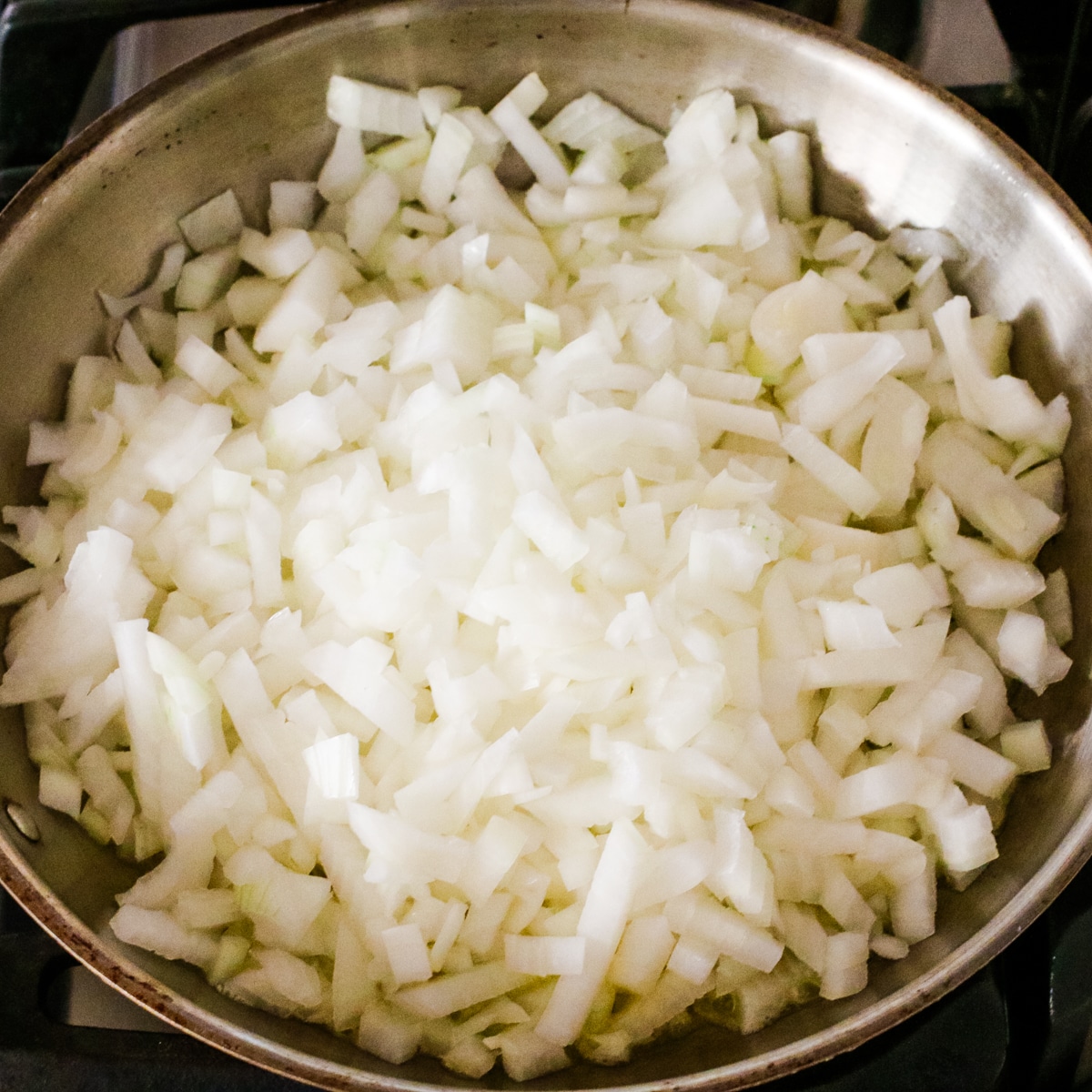
    Step 1. Prepare

    If using pan drippings from roasted chicken, transfer them to a small bowl and skim off the excess fat. Melt the fat from the pan drippings, or use all butter if no drippings are available.

    Step 2. Whisk

    Whisk in flour and continue whisking until the mixture forms a smooth paste and develops a slightly toasty aroma.

    Step 3. Combine

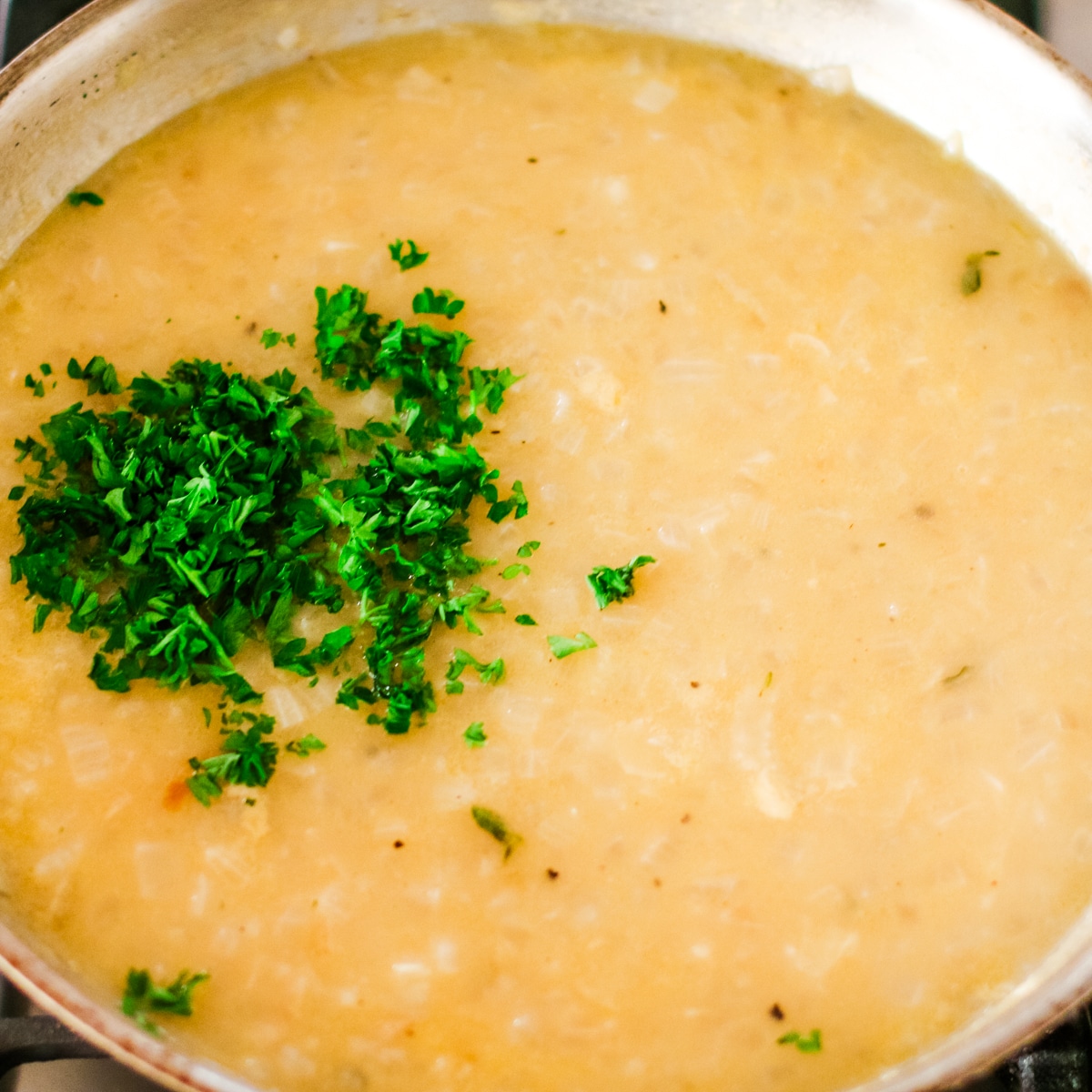
    Whisk in the remaining pan drippings and ½ cup of chicken broth until smooth. Pour in remaining broth and bring the mixture to a low simmer. As it simmers, it should thicken and take on a glossy appearance.

    Step 4. Season

    Season with salt and black pepper to taste, then stir in some fresh herbs.

    Helpful Tips

    1. Skim off as much fat as possible from the pan drippings to prevent the gravy from becoming too greasy. 
    2. If you don't have pan drippings, use butter to create a roux for your gravy. Melt 3 tablespoons of butter and whisk in the flour. Cook the mixture for a minute or two until it forms a smooth paste. Gradually add the broth and proceed with the recipe. 
    3. Make this gluten-free by whisking together 3 tablespoons of tapioca flour with 3 tablespoons of chicken broth until it forms a smooth slurry. This will help prevent clumps when adding the thickener to the pan. Add the slurry to butter or pan drippings and whisk to combine until the tapioca flour is dissolved and clump-free.
    4. Simmer the gravy on medium or low heat to allow the flavors to blend and the consistency to thicken properly. 

    Troubleshooting

    • Gravy split? It likely means the fat and liquid didn't emulsify properly. To fix it, whisk in a small amount of chicken broth over low heat until it comes back together. You can also try adding a slurry of flour and water to help rebind the fat and liquid. 
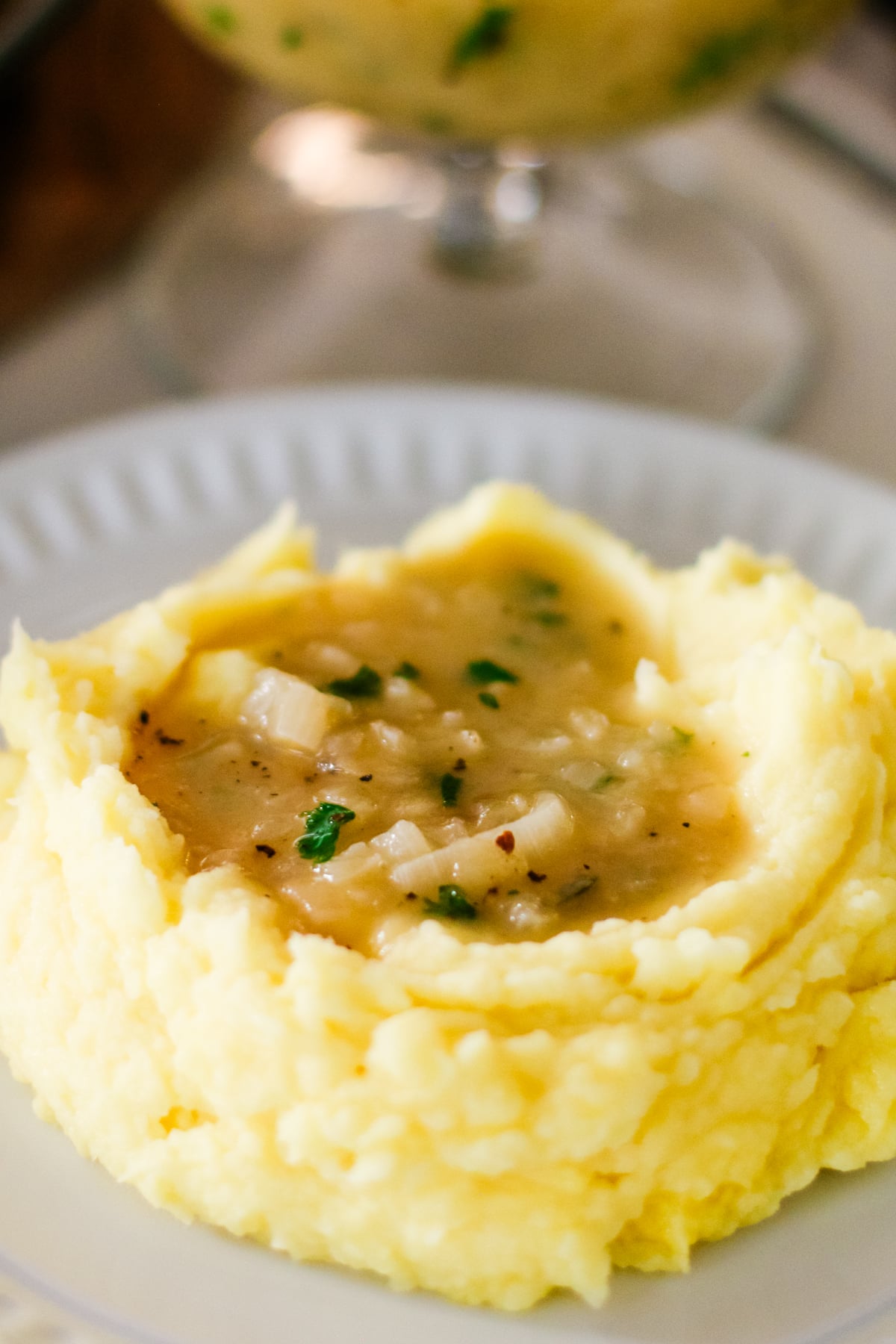
    Mashed potatoes with gravy on a white plate, with a fork beside it.

    Serving Suggestions

    Chicken gravy is a rich, savory sauce that adds the perfect finishing touch to just about any meal. It's incredibly versatile - I often make a quick batch for weeknight dinners, and it also shines as a comforting side for more special occasions or dinner parties.

    Here are some ideas:

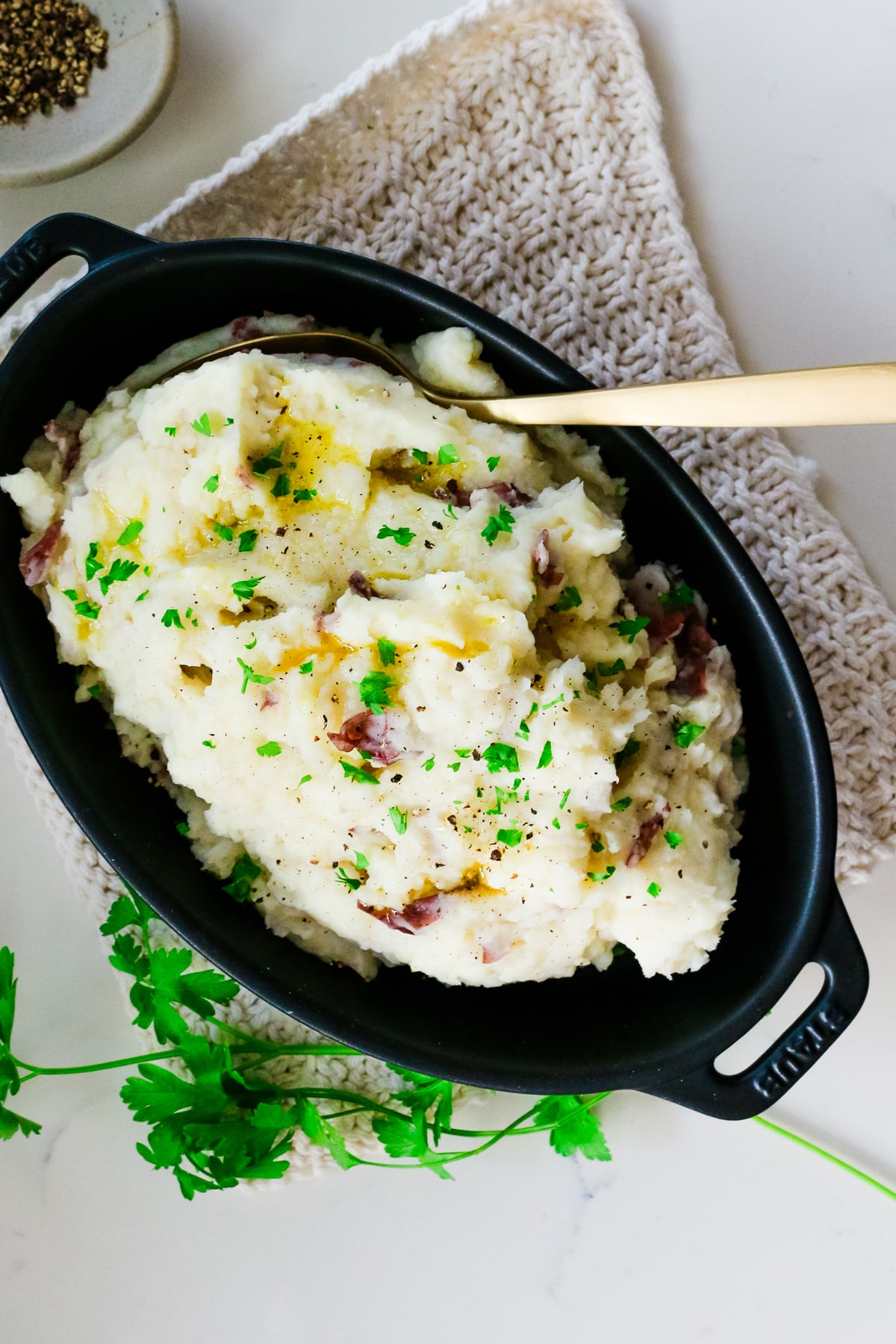
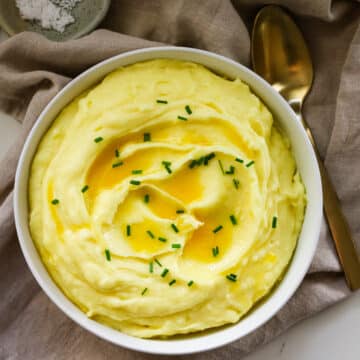
    Mashed Potatoes: Try it over Yukon gold mashed potatoes or chunky red-skinned mashed potatoes for a nice finishing touch.

    Hearty Grains: Don't limit gravy to mashed potatoes only, serve it over cooked millet, Instant Pot buckwheat, or bone broth rice.

    Roast Meats: Spoon it generously over oven-roasted whole chicken or even chicken cooked from whole chicken broth. It also makes a milder gravy to slow cooker duck and spatchcock turkey recipe.
    Frequently Asked Questions

    How do I store and reheat chicken gravy?

    Store any leftover chicken gravy in an airtight container in the fridge for up to 3-4 days. When reheating, warm it gently over low heat on the stove, stirring frequently to avoid any lumps. If the gravy thickens too much after refrigerating, add a little extra chicken broth or water to loosen it up. These glass snap containers are perfect for leftovers.

    Can I freeze chicken gravy?

    Yes, it freezes great. To freeze, pour the cooled gravy into a freezer-safe container and store for up to 3 months. Thaw overnight in the fridge and reheat as needed, adding more broth if necessary to achieve the right consistency.

    How can I fix a gravy that is too thin?

    Simmer it a little longer to reduce and thicken. You can also make a quick slurry by whisking 1 teaspoon of arrowroot or cornstarch with cold water and stirring it into the gravy and giving it a few minutes to cook.

    Looking for more savory condiments? Here are some ideas:
    • roasted and peeled peppers in a jar.
      Roasted Jalapeño Peppers
    • worcestershire sauce in jar.
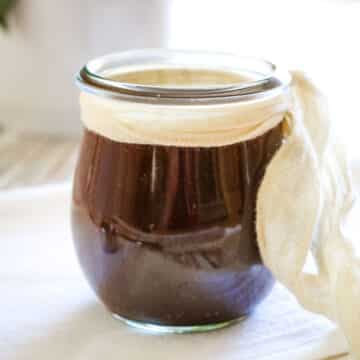
      Worcestershire Sauce Recipe
    • garlic in olive oil in baking dish.
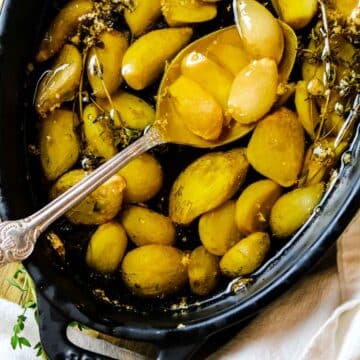
      Easy Garlic Confit Recipe
    • Pouring buffalo wing sauce into a smal jar for refrigeration
      Homemade Buffalo Sauce
    Did you make this chicken gravy recipe? Please leave a ⭐⭐⭐⭐⭐ recipe rating in the recipe card below and leave a review in the comments. Thank you!💚

    Printable Recipe
    chicken gravy with parsley in white gravy boat.
    Print Recipe
    No ratings yet

    Easy Chicken Gravy Recipe

    This easy chicken gravy recipe uses just 4 ingredients and includes instructions with or without pan drippings for a velvety smooth finish.
    Prep Time5 minutes mins
    Cook Time10 minutes mins
    Total Time15 minutes mins
    Course: Healthy Basics, Sides
    Cuisine: American
    Keyword: chicken gravy, chicken gravy recipe, how to make gravy, recipe of chicken gravy
    Servings: 6 servings
    Calories: 293kcal
    Author: Anya @ Prepare & Nourish

    Ingredients

    • 1 cup pan drippings from whole roasted chicken see notes if no pan drippings
    • ¼ cup flour
    • 1 cup chicken broth
    • salt and black pepper to taste
    • 1 teaspoon fresh herbs

    Instructions

    • If using pan drippings from roasted chicken, pour the 1 cup pan drippings from whole roasted chicken into a small bowl. Skim off excess fat from the drippings.
    • Melt about 3 tablespoons of the fat from the pan drippings or 3 tablespoons of butter if no pan drippings. When fully melted, whisk in the ¼ cup flour. Whisk until the flour and butter turn into a smooth paste and smells a little toasty.
    • Pour in the remaining pan drippings and 1 cup chicken broth and bring the gravy to a low simmer. As it simmers, it should thicken and become glossy.
    • Season with salt and black pepper to taste. And stir in 1 teaspoon fresh herbs.

    Notes

    To standardize the nutritional information, butter is used as the base in the nutrition facts calculation.
    Storage: Store any leftover chicken gravy in an airtight container in the fridge for up to 3-4 days. When reheating, warm it gently over low heat on the stove, stirring frequently to avoid any lumps. If the gravy thickens too much after refrigerating, add a little extra chicken broth or water to loosen it up. To freeze, pour the cooled gravy into a freezer-safe container and store for up to 3 months. Thaw overnight in the fridge and reheat as needed, adding more broth if necessary to achieve the right consistency.
    Helpful Tips:
    1. Skim off as much fat as possible from the pan drippings to prevent the gravy from becoming too greasy. 
    2. If you don't have pan drippings, use butter to create a roux for your gravy. Melt 3 tablespoons of butter and whisk in the flour. Cook the mixture for a minute or two until it forms a smooth paste. Gradually add the broth and proceed with the recipe. 
    3. Make this gluten-free by whisking together 3 tablespoons of tapioca flour with 3 tablespoons of chicken broth until it forms a smooth slurry. This will help prevent clumps when adding the thickener to the pan. Add the slurry to butter or pan drippings and whisk to combine until the tapioca flour is dissolved and clump-free.
    4. Simmer the gravy on medium or low heat to allow the flavors to blend and the consistency to thicken properly. 
    Troubleshooting Tips:
    Gravy split? It likely means the fat and liquid didn't emulsify properly. To fix it, whisk in a small amount of chicken broth over low heat until it comes back together. You can also try adding a slurry of flour and water to help rebind the fat and liquid. 

    Nutrition

    Calories: 293kcal | Carbohydrates: 4g | Protein: 1g | Fat: 31g | Saturated Fat: 19g | Polyunsaturated Fat: 1g | Monounsaturated Fat: 8g | Trans Fat: 1g | Cholesterol: 82mg | Sodium: 389mg | Potassium: 22mg | Fiber: 0.1g | Sugar: 0.2g | Vitamin A: 948IU | Vitamin C: 0.02mg | Calcium: 11mg | Iron: 0.3mg

    Juicy Oven Roasted Whole Chicken

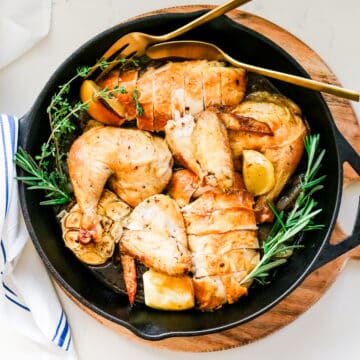
    oven roasted chicken in a cast iron skillet with serving utensils.

    Oven roasted whole chicken is the perfect main dish for any occasion. With garlic, lemon, and fresh herbs, you get juicy meat and crispy skin. It goes great with any side or salad, making it a versatile and satisfying meal.

    oven roasted chicken in a cast iron skillet on a round board with herbs.
    [feast_advanced_jump_to]

    💡Recipe Overview

    • Prep and Cook Time: 15 minutes to prep and 60 minutes to roast
    • Cooking Method: Oven-baked
    • Dietary Info: Keto, Whole30, Paleo, GAPS, Ancestral diet
    • Tools Needed: cast iron skillet
    • Skill Level: moderate

    What is an ancestral diet? Read my post on what nourishing foods are based on the traditional dietary principles of the Weston A. Price Foundation.

    Juicy Chicken That Keeps on Giving

    Everyone needs a juicy, whole roasted chicken recipe in their back pocket. It's the culinary equivalent of a "get out of jail free" card.

    You’ll have endless meals at your fingertips: one night, it’s crispy skin, juicy meat for dinner (by the way, did you see this chicken skin chips recipe? - irresistible!).

    The next, it’s chicken salad, tacos, or soup.

    It’s the chicken that keeps on giving - thanks to all that garlic, lemon, and herbs stuffed inside, making it juicy in all the right ways. You’ll savor every last bite, wondering why you didn’t roast two. Trust me, this is one of those “I’m never not making this again” recipes.

    And don't forget to use the leftover chicken meat in recipes like this chicken and potato salad, chicken Caesar pasta salad, and okroshka recipe.

    image of Prepare and Nourish owner

    Ingredients for Oven Roasted Whole Chicken

    ingredients to make oven roated chicken with veggies, chicken, and herbs.

    This recipe keeps it simple but flavorful. A quality whole chicken (pasture-raised from a local farmer is best here), seasoned with just sea salt and black pepper. Stuff it with garlic, lemon, and fresh herbs like rosemary and thyme. Not only does this infuse incredible flavor with zero effort but it also keeps that white meat juicy. Toss in onion wedges and pour in a bit of chicken broth to keep things extra flavorful and tender and create those dreamy pan drippings. Fewer ingredients, bigger flavor.

    Substitutions and Variations

    • Out of lemons? - Try orange or grapefruit wedges for a similar citrusy lift.
    • No fresh herbs? Use 1-2 teaspoons of dried herbs like thyme, oregano, or Italian seasoning.
    • Want extra flavor? - Rub the chicken with butter before roasting and add a sprinkle of paprika or garlic powder to the skin.
    graphic of fork and spoon connected in a plant.

    Make it Ancestral

    If you really want to keep this as nutrient-dense and ancestral as possible, it's important that you start with quality chicken - pasture raised! You're not just roasting it for one meal; the carcass becomes nourishing broth later. I always recommend knowing your local farmer's or Wild Pastures for clean meat raised the way nature intended. Better chicken = better meals = better broth.

    oven roasted chicken cut into pieces in cast iron skillet with serving utensils.

    How to Make Oven Roasted Chicken Recipe

    The complete printable recipe is below in the recipe card for your convenience. Follow these simple step-by-step instructions for the best results.

    Whole chicken in a white platter with black pepper

    Step 1. Season

    Pat the chicken fryer with paper towels. Generously season the chicken inside and out with sea salt and black pepper.

    yellow onions with garlic head in a cast iron skillet.

    Step 2. Prep

    Add sliced onions and ½ of crosswise cut garlic head to the bottom of the cast iron skillet or baking dish.

    oven roasted chicken on a white plate seasoned with salt and black pepper.

    Step 3. Stuff

    Stuff the cavity of the bird with remaining garlic, quartered lemons, and herbs. Truss the chicken's legs together using a kitchen twine.

    whole chicken fryers on onions in a cast iron skillet.

    Step 4. Roast

    Once trussed, place the chicken breast side up in the skillet. Roast the chicken in a preheated oven until cooked through.

    basting chicken with a spoon.

    Step 5. Baste

    After removing the chicken from the oven, baste it with its own juices from the pan, as well as the juices released from the onions and lemon.

    chicken covered with aluminum foil on board.

    Step 6. Cover

    Cover it tightly with aluminum foil (use parchment paper to create a barrier between chicken and foil) and let it rest well before carving.

    Helpful Tips

    1. Dry the skin thoroughly with paper towels before seasoning - this is key to getting that golden, crispy skin. 
    2. Trussing the legs keeps the aromatics tucked in and helps the chicken cook evenly and retain moisture. 
    3. Drizzle a bit of oil over the chicken about halfway through roasting to keep the skin crisp and evenly golden. 
    4. Resting the chicken is non-negotiable - wait 30 minutes before carving to lock in the juices and ensure clean slices. 

    Troubleshooting

    • Chicken not cooked through? All ovens run differently—always go by temperature, not just time. Use a thermometer to check doneness—insert into the thickest part of the thigh without touching bone; it should read 160-165°F. I pull it out at 160°F and the temp will rise to 165°F at rest. 

    Product Highlight!

    Large Cast Iron Skillet

    This skillet is perfect for roasting whole chicken thanks to its excellent heat retention and even cooking. Bonus: it goes from oven to table beautifully and makes the crispiest skin.

    Grab yours →
    💭Meal Prep Suggestion!
    Roast the chicken on a weekend, then shred and store the meat for easy meals all week - think salads (like this chicken Caesar pasta salad), wraps, or soups. Don’t forget to save the carcass for Instant Pot chicken bone broth, giving you double duty from one cook session.
    oven roasted chicken on white plate with broccolini.

    Serving Suggestions

    This oven-roasted whole chicken is incredibly versatile and can be dressed up for a special dinner or kept simple for a fuss-free weeknight meal. Pair it with sides that soak up all those delicious pan juices or complement the crisp skin and tender meat with.

    Here are some tasty serving ideas:

    Potatoes: Serve this with Yukon gold mashed potatoes or chunky mashed potatoes with red skin.

    Roasted veggies: Pair roasted whole chicken with roasted broccolini or air fryer butternut squash.

    Fresh salads: Don't forget something light and crisp like romaine salad or house salad.

    Condiments: A meal isn't complete without a serving of fermented foods. Try fermented carrots, pickled green tomatoes, or fermented cherry tomatoes for some probiotic action.

    oven roasted chicken in a cast iron skillet on a round board.

    Frequently Asked Questions

    How do I store and reheat roasted chicken?

    After roasting, remove all meat from the carcass and store it in an airtight container in the fridge for up to 4 days. Save the carcass to make broth or freeze it for later use. To reheat the chicken, place it in a skillet with a splash of broth, cover loosely with a lid, and reheat on medium heat until heated through. These glass snap containers are perfect for leftovers.

    Can I freeze whole roasted chicken?

    Yes, this chicken freezes well. To freeze, portion the carved or shredded meat with pan juices or broth in freezer-safe containers for up to 3 months. Thaw in the refrigerator overnight before using and reheat per instructions.

    What do I do if my juices run dry during roasting?

    If the pan gets too dry, simply add a splash of chicken broth or white wine to the pan. This will help keep the chicken moist, and you can baste the bird with the liquid to keep that crispy skin intact.

    Looking for more poultry recipes? Here are some ideas:
    • Seasoned duck, with marble potatoes, lemon and herbs.
      Slow Cooker Duck
    • dirty rice in a large pan with a wooden spoon and green onions and lemon wedges as garnish.
      Dirty Rice Recipe with Chicken Liver
    • Air Fryer Duck on platter with radicchio and oranges.
      Easy Air Fryer Duck
    • Shredded chicken in a white bowl with five jars of chicken broth beside it.
      How to Make Chicken Broth from Whole Chicken
    Did you make this oven roasted chicken recipe? Please leave a ⭐⭐⭐⭐⭐ recipe rating in the recipe card below and leave a review in the comments. Thank you!💚

    Printable Recipe

    oven roasted chicken in a cast iron skillet with serving utensils.
    Print Recipe
    No ratings yet

    Oven Roasted Whole Chicken

    Oven roasted whole chicken with garlic, lemon, and herbs is juicy on the inside and crispy on the outside - perfect with any side.
    Prep Time15 minutes mins
    Cook Time1 hour hr 15 minutes mins
    Resting Time30 minutes mins
    Total Time2 hours hrs
    Course: Dinner, Main Course
    Cuisine: American
    Keyword: juicy roasted chicken, oven roasted chicken recipe, oven roasted whole chicken, whole roasted chicken
    Servings: 6 servings
    Calories: 289kcal
    Author: Anya @ Prepare & Nourish

    Ingredients

    • 1 whole chicken about 4-5 pounds, giblets removed and patted dry
    • 1 tablespoon sea salt
    • ½ teaspoon black pepper
    • 1 cup chicken broth
    • 1 large yellow onion peeled and cut into large wedges
    • 1 garlic head cut in halve horizontally
    • 1 lemon quartered
    • 1 bunch herbs (such as thyme, rosemary, and oregano)

    Instructions

    • Preheat the oven to 425°F. Pat the 1 whole chicken dry with paper towels. Generously season the chicken inside and out with 1 tablespoon sea salt and ½ teaspoon black pepper.
    • Add sliced 1 large yellow onion and half of crosswise-cut 1 garlic head to the bottom of the cast iron skillet or baking dish. Pour in the 1 cup chicken broth or white wine to help with the basting and create some moisture.
    • Stuff the cavity of the bird with remaining garlic, quartered 1 lemon, and 1 bunch herbs (such as thyme, rosemary, and oregano). Truss the chicken's legs together using a kitchen twine. This helps the juices stay inside.
    • Once trussed, place the chicken breast-side up in the skillet or baking dish with the onions and the liquid. Roast the chicken in the preheated oven for 60-75 minutes, or until the internal temperature reaches 165°F at the thickest part of the thigh with an instant-read meat thermometer.
    • After removing the chicken from the oven, baste it with its own juices from the pan, as well as the juices released from the onions and lemon. This will help keep the chicken moist.
    • Cover it tightly with aluminum foil (use parchment paper to create a barrier between chicken and foil) and let it rest for about 30 minutes before carving. Use the pan drippings to make a chicken gravy if desired.

    Notes

    Storage: After roasting, remove all meat from the carcass and store it in an airtight container in the fridge for up to 4 days. Save the carcass to make broth or freeze it for later use. To reheat the chicken, place it in a skillet with a splash of broth, cover loosely with a lid and reheat on medium heat until heated through. To freeze, portion the carved or shredded meat with pan juices or broth in freezer-safe containers for up to 3 months. Thaw in the refrigerator overnight before using.
    Helpful Tips:
    1. Dry the skin thoroughly with paper towels before seasoning - this is key to getting that golden, crispy skin. 
    2. Trussing the legs keeps the aromatics tucked in and helps the chicken cook evenly and retain moisture. 
    3. Drizzle a bit of oil over the chicken about halfway through roasting to keep the skin crisp and evenly golden. 
    4. Resting the chicken is non-negotiable - wait 30 minutes before carding to lock in the juices and ensure clean slices. 
    Troubleshooting Tips:
    Chicken not cooked through? All ovens run differently—always go by temperature, not just time. Use a thermometer to check doneness—insert into the thickest part of the thigh without touching bone; it should read 160-165°F. I pull it out at 160°F and the temp will rise to 165°F at rest. 

    Nutrition

    Calories: 289kcal | Carbohydrates: 4g | Protein: 24g | Fat: 19g | Saturated Fat: 5g | Polyunsaturated Fat: 4g | Monounsaturated Fat: 8g | Trans Fat: 0.1g | Cholesterol: 96mg | Sodium: 1398mg | Potassium: 303mg | Fiber: 1g | Sugar: 1g | Vitamin A: 184IU | Vitamin C: 13mg | Calcium: 27mg | Iron: 1mg

    Chicken Caesar Pasta Salad

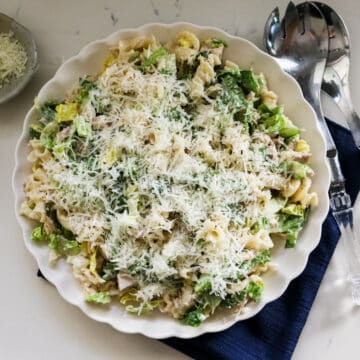
    Chicken Caesar pasta salad on a white plate, topped with cheese and served with a fork beside it.

    Chicken Caesar pasta salad recipe is a quick, complete meal made with leftover roast chicken, crisp romaine, pasta, and a bold, creamy Caesar dressing. Ready in under 30 minutes with mostly pantry staples - it’s perfect for busy nights or easy lunches.

    Chicken Caesar pasta salad on a white plate with a fork in it, served with black pepper and cheese on the side.
    [feast_advanced_jump_to]

    💡Recipe Overview

    • Prep and Cook Time: 15 minutes to prep and 10 minutes to cook
    • Cooking Method: Stove-top
    • Dietary Info: Gluten-free and Grain-free options with swaps
    • Skill Level: Easy

    When Caesar Met Pasta

    I've got to say, my classic Caesar salad has been a crowd favorite for years - and I'm not just saying that because I love it. I've gotten plenty of great feedback over the years from all of you, too.

    But sometimes, I need a salad that's a bit more filling - something that can stand on its own as a full meal.

    Enter this Chicken Caesar Pasta Salad recipe.

    It's got all the creamy, garlicky goodness of the classic, but with pasta and chicken to make it perfect for summer cookouts, picnics, or just when you need an easy, no-fuss dinner.

    It's the salad that keeps on giving.

    image of Prepare and Nourish owner

    Ingredients for Chicken Caesar Salad with Pasta

    Ingredients for Chicken Caesar Pasta Salad

    Chicken Caesar Pasta Salad recipe starts with the best mayonnaise for a creamy base, then add anchovy paste for that classic Caesar kick (don’t worry, it’s more salty-savory than fishy). Fresh garlic, lemon juice, Dijon mustard, and black pepper round out the dressing with just the right amount of zip. For the salad, grab any short pasta—penne, rotini, even bowties—toss in some cooked chicken (use the meat from whole chicken broth or oven-roasted whole chicken), and a chopped romaine heart. Finish with a handful of Parmesan cheese and a squeeze of lemon for brightness.

    Substitutions and Variations

    • Gluten-free pasta - Totally doable - just choose one that holds its shape well (Jovial brown rice pasta is my favorite). Cook it just to al dente and rinse well to keep it from getting mushy or sticky. Toss with a little olive oil while it cools to avoid clumping.
    • No anchovy paste? - You can sub in a splash of homemade Worcestershire sauce or just skip it - the dressing will still be tasty just a little less bold.
    Chicken Caesar pasta salad on a white plate, topped with cheese and served with a fork beside it.

    How to Make Chicken Caesar Pasta Salad Recipe

    The complete printable recipe is below in the recipe card for your convenience. Follow these simple step-by-step instructions for the best results.

    Step 1. Whisk

    Combine all the dressing ingredients, including mayonnaise, minced garlic, lemon juice, anchovy paste, Dijon mustard, and black pepper, in a small bowl. Whisk until smooth and creamy.

    A mix of chicken and pasta in a mixing bowl.

    Step 2. Toss

    In a large bowl, toss cooked pasta and the shredded chicken with quarter or half of the dressing. Add a few tablespoons of the dressing if it appears a little dry. Set aside until completely cooled.

    A mix of chicken and pasta in a mixing bowl, with vegetables and sauce being added.

    Step 3. Combine

    Add the chopped romaine lettuce and remaining Caesar dressing. Toss gently to coat everything evenly.

    Chicken Caesar pasta salad on a white plate, topped with cheese and served with a fork beside it.

    Step 4. Top

    Top with freshly grated Parmesan cheese. Squeeze a little lemon juice over the salad for extra brightness.

    Helpful Tips

    1. Dry romaine lettuce thoroughly with a salad spinner or clean kitchen towel so the dressing clings well and the salad doesn't become watery. 
    2. Toss warm pasta with dressing so it better absorbs the flavor and doesn't clump as it cools. If you're too nervous about using the Caesar dressing for this purpose, drizzle some olive oil and toss the pasta but you want to coat it with a bit of fat while it's still warm.
    3. Cool the pasta completely before adding lettuce to avoid wilting the greens prematurely. 
    4. Toss the cubed chicken in a small amount of dressing before adding to the salad to boost flavor and moisture. It can get a little dry (especially when served cold) so I like to give it extra dressing. 

    Troubleshooting

    • Dressing is too thick? Traditional healthy Caesar salad dressing is supposed to be thick, but if you want to thin it out a bit, whisk in a teaspoon of water or lemon juice at a time until it reaches a pourable consistency. 
    Chicken Caesar pasta salad on a white plate, topped with cheese and served with a fork beside it.

    Serving Suggestions

    This salad is hearty enough to hold its own, but if you're feeling extra, serve it with air fryer croutons, some crusty sourdough, or garlic bread for full Caesar energy. Pile it into a big bowl and let everyone dig in family-style.

    Want to make it cute? Serve in mason jars or meal prep containers for grab-and-go lunches that actually taste good.

    You could even wrap it in a tortilla (made with fresh milled flour, of course) and call it a Caesar Chicken wrap.

    Want to bump up your protein? Consider these chicken caesar pasta salad  pairing suggestions:
    • pork tenderloin medallions on a white plate.
      Air Fryer Pork Tenderloin
      Cook Time42 Minutes
    • Sausage and peppers on a baking sheet, with two white plates and utensils on the side.
      Oven-Baked Sausage and Peppers
      Cook Time40 Minutes
    • salmon fillet with mayo sauce on top and fresh slice of lemon.
      Quick 15-Minute Baked Salmon with Mayo and Fresh Dill
      Cook Time15 Minutes
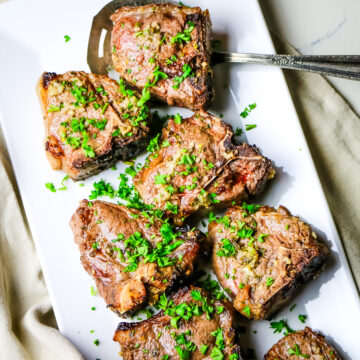
    • lamb loin chops air fried on a white square platter.
      Easy Lamb Loin Chops Recipe in Air Fryer
      Cook Time15 Minutes
    Chicken Caesar pasta salad on a white plate with a fork in it, served with black pepper and cheese on the side.

    Storage & Meal Prep Suggestion

    How do I store chicken Caesar pasta salad?

    Store leftover salad in an airtight container in the fridge for up to 3 days. These glass snap containers are perfect for leftovers. For best texture, keep the lettuce separate and add it just before serving. Freezing isn’t recommended due to the mayo dressing and romaine, but cooked pasta and chicken can be frozen separately for up to 2 months.

    Can I make this ahead of time for meal prep?

    For easy meal prep, mix the chicken, pasta, and dressing ahead of time and keep it separate from the chopped romaine. When you're ready to eat, just toss it all together for a fresh, flavorful meal without the soggy lettuce drama.

    Looking for more related recipes? Here are some ideas:
    • pasta salad with tomatoes, olives, red onions
      Gluten Free Pasta Salad Recipe
    • white bowl with caesar salad on top of white kitchen towel
      Classic Caesar Salad
    • Greek Tomato & Cucumber Salad (Low Carb, Primal, GAPS) -This Greek Tomato and Cucumber Salad with or without feta cheese has all the robust Mediterranean flavors. With a simple 4-ingredient salad dressing, this salad can be made in 15 minutes. #healthysalad #greeksalad
      Greek Tomato and Cucumber Salad (Primal, Low Carb, GAPS) +VIDEO
    • One Pot Creamy Greens & Tuna Pasta -Conveniently made in one pan, this 30-minute Creamy Tuna Pasta is loaded with flavor from lemon, parmesan, Swiss Chard and of course canned wild tuna. 
      One Pot Creamy Greens & Tuna Pasta (Gluten Free)
    Did you make this chicken caesar pasta salad ? Please leave a ⭐⭐⭐⭐⭐ recipe rating in the recipe card below and leave a review in the comments. Thank you!💚

    Printable Recipe

    Chicken Caesar pasta salad on a white plate, topped with cheese and served with a fork beside it.
    Print Recipe
    No ratings yet

    Chicken Caesar Pasta Salad

    Chicken Caesar pasta salad is a complete meal using leftover roast chicken, crisp romaine, pasta, and the best creamy, garlicky homemade dressing.
    Prep Time15 minutes mins
    Cook Time10 minutes mins
    Total Time25 minutes mins
    Course: Dinner, Lunch, Salad
    Cuisine: American
    Keyword: caesar pasta salad with chicken, chicken caesar pasta salad
    Servings: 4 servings
    Calories: 664kcal
    Author: Anya @ Prepare & Nourish

    Ingredients

    Caesar Dressing

    • ¾ cup mayonnaise
    • 3 garlic cloves minced
    • 1 ½ tablespoons anchovy paste
    • 1 tablespoon lemon juice
    • 1 teaspoon Dijon mustard
    • ¼ teaspoon black pepper

    Pasta Salad

    • 8 ounces pasta of choice
    • 2 cups cooked chicken meat shredded
    • 1 romaine heart chopped
    • ¼ cup shredded Parmesan cheese
    • 1 lemon

    Instructions

    • Combine all the dressing ingredients including ¾ cup mayonnaise, 3 garlic cloves, 1 tablespoon lemon juice,1 ½ tablespoons anchovy paste, 1 teaspoon Dijon mustard and ¼ teaspoon black pepper in a small bowl. Whisk until smooth and creamy.
    • Cook the 8 ounces pasta of choice according to package instructions. Drain and rinse under cold water to cool the pasta slightly. Toss the pasta with ¼ cup of the Caesar dressing while it is still slightly warm to touch so it absorbs the flavor.
    • Add the diced 2 cups cooked chicken meat to the dressed pasta. If it appears a little dry, add a few tablespoons of the dressing. Set aside.
    • In a large bowl, combine the dressed pasta and chicken with Caesar dressing and chopped 1 romaine heart and remaining Caesar dressing. Toss gently to coat everything evenly.
    • Add grated ¼ cup shredded Parmesan cheese on top. Squeeze a little 1 lemon juice over the salad for extra brightness.

    Notes

    Storage: Store leftover salad in an airtight container in the fridge for up to 3 days. For best texture, keep the lettuce separate and add it just before serving. Freezing isn’t recommended due to the mayo dressing and romaine, but cooked pasta and chicken can be frozen separately for up to 2 months.
    Helpful Tips:
    1. Dry romaine lettuce thoroughly with a salad spinner or clean kitchen towel so the dressing clings well and the salad doesn't become watery. 
    2. Toss warm pasta with dressing so it better absorbs the flavor and doesn't clump as it cools. If you're too nervous about using the Caesar dressing for this purpose, drizzle some olive oil and toss the pasta. 
    3. Cool the pasta completely before adding lettuce to avoid wilting the greens prematurely. 
    4. Toss the cubed chicken in a small amount of dressing before adding to the salad to boost flavor and moisture. It can get a little dry (especially when served cold) so I like to give it extra dressing. 
    Troubleshooting Tips:
    Dressing is too thick? Traditional Caesar salad dressing is supposed to be thick but if you want to thin it out a bit, whisk in a teaspoon of water or lemon juice at a time until it reaches a pourable consistency. 

    Nutrition

    Calories: 664kcal | Carbohydrates: 47g | Protein: 30g | Fat: 39g | Saturated Fat: 7g | Polyunsaturated Fat: 20g | Monounsaturated Fat: 10g | Trans Fat: 0.1g | Cholesterol: 78mg | Sodium: 587mg | Potassium: 446mg | Fiber: 3g | Sugar: 3g | Vitamin A: 2575IU | Vitamin C: 18mg | Calcium: 129mg | Iron: 2mg

    Fermented Carrots Recipe

    Slices of carrots on the side of an airtight jar of carrots, placed on a white plate.

    Fermented carrots with garlic and dill are the easiest way to use up a handful of carrots. Made with simple ingredients you probably already have, no fancy equipment required. They’re tangy, crunchy, and full of gut-loving benefits -perfect for beginners or anyone new to fermenting.

    Slices of carrots on the side of an airtight jar of carrots, placed on a white plate.
    [feast_advanced_jump_to]

    💡Recipe Overview

    • Prep and Cook Time: 15 minutes to prep and 7 days for fermentation
    • Cooking Method: No-cook
    • Dietary Info: Whole30, Paleo, GAPS, Ancestral diet
    • Tools Needed: sharp knife, cutting board, and quart-size jar
    • Skill Level: Easy

    What is an ancestral diet? Read my post on what nourishing foods are based on the traditional dietary principles of the Weston A. Price Foundation.

    Chop, Brine, Forget...Then Eat Half Early

    Fermented carrots are literally one of the easiest things you can ferment - chop, brine, forget about them on the counter, and suddenly they're a probiotic powerhouse.

    But to be honest, I say that about every ferment I make.

    Are fermented jalapenos easier? Maybe.

    Is raw sauerkraut the real MVP? Possibly.

    Is lacto-fermented salsa just pico pretending to be fancy? Also yes.

    The point is: they're all easy, and they're all worth making. Plus, each one gives you different strains of good bacteria, so rotating your ferments is basically gut health cross-training.

    That is… if you can resist sneaking bites while it’s bubbling away on the counter. Honestly, half the time I check on it, we’ve already eaten most of the jar before it’s even done fermenting.

    image of Prepare and Nourish owner

    Ingredients for Fermented Carrots

    Ingredients for fermented carrots.

    This fermented carrot recipe keeps it simple but flavorful. Use firm, fresh carrots - soft ones won’t ferment well. Crushed garlic cloves adds bold flavor, fresh dill brings that classic pickle taste, and a hot pepper like serrano or jalapeno gives a gentle kick (optional, but fun). For the brine, stick with sea salt and filtered water (iodized salt and chlorinated tap water can mess with fermentation). Finally, bay leaves and black peppercorns boost the flavor without being too much. 

    Substitutions and Variations

    • No fresh dill? - Use dried (about 1 teaspoon per sprig) or swap with fresh parsley, tarragon, or even celery leaves for a different twist. Or check out this post on substitute dried parsley for fresh for more ideas.
    • Not into heat? Ditch the pepper or scoop out the seeds to tame the heat. 
    • Add-ins for fun: Add a slice of fresh beet for color or some mustard seeds for a tangy zing.
    graphic of fork and spoon connected in a plant.

    Reuse that Fermented Carrots Brine

    Don’t even think about pouring that brine down the drain. It’s liquid gold - full of beneficial bacteria and flavor. Once you’ve crunched through the last carrot, drop in fresh veggies like cucumber spears, more carrots, or even cauliflower florets. Stick it in the fridge and let it slow-ferment. No extra effort, no waste, just another round of probiotic goodness doing its thing.

    Slices of carrots inside a clear jar with laurel leaves.

    How to Make Fermented Carrots

    The complete printable recipe is below in the recipe card for your convenience. Follow these simple step-by-step instructions for the best results.

    Step 1. Make the brine

    In a mixing bowl, combine the hot water with salt, peppercorns, and bay leaves. Stir until the salt has dissolved.

    Slices of carrot on a chopping board.

    Step 2. Cut the carrots

    Cut the carrots into thin sticks, length depending on preference but aim for uniform pieces.

    Slices of carrots inside a clear jar.

    Step 3. Pack the jar

    Stack the carrots, smashed garlic cloves, jalapenos, and fresh dill sprigs so they are packed tightly.

    Slices of carrots inside a clear jar with laurel leaves and pepper.

    Step 4. Fill the brine

    Pour the prepared brine over the carrots, making sure they are fully submerged. If necessary, place a fermentation weight.

    Fermentation Timeline

    Once your carrots have been filled with the brine, place the jar in the warmest part of your kitchen (optimal temperature ranging between 65-75°F (18-24°C)) to ferment for 1-2 weeks, or until it reaches your desired taste. Burp daily and gently shake by turning it upside down to evenly distribute the salt and spices.

    You can see how the carrots, dill, and the brine will lose their brightness over time as the friendly bacteria consume the sugars and convert them into lactic acid.

    I love to include these photos because I know fermenting can be intimidating. But also because I find this whole transformation so fascinating. I hope this timeline helps you through each stage, showing you what to expect and giving you confidence in the process.

    A collage of carrot slices in a clear jar with water, onion, and other ingredients, from day 1 to day 8.

    Helpful Tips

    1. Cut carrots into uniform sticks about 3-4 inches long and ½ inch thick so they ferment and fit neatly into a wide-mouth quart size jar. 
    2. Pack the jar tightly with carrots to prevent them from floating and to reduce air exposure. I like to tilt the jar sideways so it's easier to pack the carrot sticks.
    3. Always keep the carrots submerged in brine. A fermentation weight works great for this purpose. 
    4. Taste every 2-3 days with a clean utensil (I know, tough job!). When they taste tangy and slightly fizzy, they're ready. They should still be crunchy not soft. 

    Troubleshooting

    • What's the white film? That's just kahm yeast and it's totally harmless. You can scoop it off with a clean spoon. If it recurs, try fermenting at a cooler temperature or with more brine coverage.
    • Carrots too soft? This usually happens if fermentation goes too long in warm temps. Next time, ferment for less time and pop them in the fridge sooner. 

    Essential Tools

    Here's what you'll need to make these fermented carrots:

    • Quart-size jar: I usually use wide-mouth mason jar with a quart capacity for these carrot sticks. But this flip-top half-gallon jar set is a cute option if you're doubling the recipe.
    • Wide-mouth lids: I use metal lids during active fermentation to prevent salty brine from touching plastic, then switch to plastic lids to avoid corrosion from the salt. Metal lids are airtight so they're great when you need to shake the jar gently.
    • Fermenting weight: This is optional, but a glass fermentation weight will help hold all the cucumbers submerged in the pickle juice.
    Slices of carrots on the side of an airtight jar of carrots, placed on a white plate.

    Serving Suggestions

    The hardest part is not eating these straight out of the jar while they’re still bubbling away on the counter. They’re that good. So when (if) you manage to wait until they’re fully fermented, here are a few tasty ways to enjoy them:

    Tucked into tacos: Swap in for quick-pickled red onions or pile them on top of beef tongue tacos or blackened fish tacos. 

    Alongside a good protein: Try slow cooker duck, oven roasted whole chicken, or air fryer pork tenderloin. The richness of these meats loves a good punchy crunch of carrots. 

    On a grazing board: Serve with a bunch of appetizers like deviled eggs, cucumber cream cheese bites, and chicken liver pate for a truly nutrient-dense board.

    Slices of carrots on the side of an airtight jar of carrots, placed on a white plate.

    Frequently Asked Questions

    How do I store and reheat fermented carrots?

    Store fermented carrots in the refrigerator in the original jar, brine included for up to 6 months. If you finish the carrots and still have the brine left over, you can just add more carrots (or other veggies) to it and keep it in the fridge to allow slow-fermentation.

    How do I know when the carrots are ready?

    Give them a taste every 2-3 days. When they’re tangy, a little fizzy, and still crisp—not soft—they’re ready to go. If you like a milder flavor, pull them out earlier, but if you want more of a punch, let them ferment longer.

    My carrots looks a little cloudy - how can I fix it?

    That’s just kahm yeast—totally harmless and not a sign of anything going wrong. Just scoop it off with a clean spoon. If it keeps coming back, try fermenting at a cooler temperature or ensuring your brine fully covers the carrots.

    Looking for more fermented veggies? Here are some ideas:
    • fermented pickles in a weck jar with a red hot pepper.
      Easy Lacto-Fermented Dill Pickles Recipe
    • kimchi in half-gallon mason jar with lid on the side in how to make kimchi tutorial.
      How to Make Kimchi (Easy Fermented Kimchi Recipe)
    • green tomatoes with fresh dill in mason jar.
      Fermented Green Tomatoes (Pickled Green Tomatoes Recipe)
    • red cabbage kraut in a jar.
      Red Cabbage Sauerkraut Recipe (Fermented Red Cabbage)
    Did you make these lacto-fermented carrots? ? Please leave a ⭐⭐⭐⭐⭐ recipe rating in the recipe card below and leave a review in the comments. Thank you!💚

    Printable Recipe

    Slices of carrots on the side of an airtight jar of carrots, placed on a white plate.
    Print Recipe
    No ratings yet

    Fermented Carrots with Dill and Garlic

    Fermented carrots with garlic and dill made with a handful of ingredients you likely already have on hand. Easy, crunchy, and no special tools needed.
    Prep Time15 minutes mins
    Fermentation Time7 days d
    Total Time7 days d 15 minutes mins
    Course: Condiment, Ferment, Salad
    Cuisine: American
    Keyword: fermented carrot recipe, fermented carrots, lacto fermented carrots
    Servings: 4 servings
    Calories: 30kcal
    Author: Anya @ Prepare & Nourish

    Equipment

    • fermentation weight
    • wide mouth quart mason jars

    Ingredients

    Brine

    • 2 cups hot water
    • 1 tablespoon sea salt
    • 1 bay leaf
    • 6 black peppercorns

    Fermented Carrots

    • 4-5 medium carrots (about 1 ½ pounds) peeled and cut into sticks
    • 3 garlic cloves peeled and smashed
    • 1 jalapeno pepper sliced in half lengthwise
    • 3 sprigs dill or 1 tablespoon dried dill

    Instructions

    • In a mixing bowl, combine 2 cups hot waterwith 1 tablespoon sea salt. Stir until the salt completely dissolves to create the brine. Add 1 bay leaf and 6 black peppercornsand set aside.
    • Peel the carrots and slice them into thin sticks, length depending on preference. Aim for uniform pieces so they ferment evenly.
    • Pack the jar with carrot sticks, smashed garlic cloves, jalapenos, and fresh dill sprigs.
    • Pour the prepared saltwater brine over the carrots, making sure they are fully submerged. If necessary, add more water to ensure everything is covered.
    • Place the fermentation weight over the carrots to keep them submerged in the brine. Cover the jar loosely with a lid or a clean cloth to allow the air to flow but keep the debris out.
    • Let the jar sit at room temperature for up to 2 weeks, depending on your taste preferences and the ambient temperature. Fermentation times can vary, but typically, the carrots will be ready in 4-5 minutes. Taste them every couple of days to check the flavor.
    • Once the carrots are fermented to your liking, move the jar to the refrigerator to store. They'll continue to develop flavor, but at a much slower rate.

    Notes

    Storage: Store fermented carrots in the refrigerator in the original jar, brine included for up to 6 months. If you finish the carrots and still have the brine left over, you can just add more carrots (or other veggies) to it and keep it in the fridge to allow slow-fermentation. 
    Helpful Tips:
    1. Cut carrots into uniform sticks about 3-4 inches long and ½ inch thick so they ferment and fit neatly into a wide-mouth quart size jar. 
    2. Pack the jar tightly with carrots to prevent them from floating and to reduce air exposure. 
    3. Always keep the carrots submerged in brine. A fermentation weight works great for this purpose. 
    4. Taste every 2-3 days with a clean utensil (I know, tough job!). When they taste tangy and slightly fizzy, they're ready. They should still be crunchy not soft. 
    Troubleshooting Tips:
    What's the white film? That's just kahm yeast and it's totally harmless. You can scoop it off with a clean spoon. If it recurs, try fermenting at a cooler temperature or with more brine coverage. 
    Carrots too soft? This usually happens if fermentation goes too long in warm temps. Next time, ferment for less time and pop them in the fridge sooner. 

    Nutrition

    Calories: 30kcal | Carbohydrates: 7g | Protein: 1g | Fat: 0.2g | Saturated Fat: 0.03g | Polyunsaturated Fat: 0.1g | Monounsaturated Fat: 0.01g | Sodium: 1793mg | Potassium: 216mg | Fiber: 2g | Sugar: 3g | Vitamin A: 10243IU | Vitamin C: 9mg | Calcium: 30mg | Iron: 0.3mg

    Quick 30-Minute Chicken Pad Thai

    Freshly made Chicken Pad Thai in a skillet."

    This quick and easy 30-minute Chicken Pad Thai is made with leftover chicken, lots of veggies, rice noodles, and cooked in one skillet for a simple weeknight dinner.

    Chicken Pad Thai in a white bowl with chopsticks beside it.
    Looking for more Asian-inspired Dishes? 
    Check out spicy pork ramen, smoked salmon poke bowl, and Asian cucumber salad.
    [feast_advanced_jump_to]

    💡Recipe Overview

    • Prep and Cook Time: 15 minutes to prep and 30 minutes to cook
    • Cooking Method: Stove-top
    • Dietary Info: Paleo, Ancestral diet, Gluten-free
    • Tools Needed: wok or deep skillet
    • Skill Level: Moderate

    What is an ancestral diet? Read my post on what nourishing foods are based on the traditional dietary principles of the Weston A. Price Foundation.

    Why I Keep Coming Back to This Recipe

    Can I be honest? This is my go-to when dinner needs to happen yesterday and all I've got is some sad-looking leftover chicken in the fridge.

    It comes together fast, uses just one skillet (less dishes = happiness), and feels way fancier than it actually is.

    This isn't traditional Pad Thai - so don't come at me - but it's a Thai-inspired, real-food version with ingredients you likely already have on hand.

    Good broth. Pastured eggs. Clean protein. It's not just quick and easy - it's actually nourishing.

    Turns out, leftover chicken + a skillet = a dinner win every time.

    image of Prepare and Nourish owner

    Ingredients for Chicken Pad Thai

    Ingredients for Chicken Pad Thai.
    • Chicken: Leftover cubed or shredded chicken is the best here. Rotisserie? Roasted? Boiled and forgotten? It's all fair game. Dark meat stays juicier, but use what you've got. Use leftover meat from whole chicken broth or oven-roasted whole chicken. And make sure to crisp it up in a good cooking oil like avocado oil or beef tallow.
    • Veggies: Load this chicken pad Thai with red onion, green onions, carrots, and green cabbage. It's a great time to use up that lonesome cabbage that's been sitting in your crisper for weeks.
    • Sauce: A mix of coconut sugar, coconut aminos, lime juice, sriracha, and chicken broth to round it all out and help everything come together. Whisk it ahead of time and set it aside.
    • Noodles: Grab the pad Thai-style rice noodles. They're flat and wide and cook quickly. Soak or cook them just until bendy but still a touch firm - they'll finish in the sauce.
    • Eggs: Just two beaten eggs will add richness and help bind the whole chicken pad Thai together. The trick is to push everything to the sides and pour the eggs right into the center of the hot pan.

    Substitutions and Variations

    • Try a different chicken - No leftover cooked chicken? Try ground chicken and cook until browned and crispy.
    • Coconut swaps - Swap the coconut aminos with tamari or soy sauce and brown sugar is a great fill-in for coconut sugar.
    • Other veggies - Sub out the cabbage with zucchini, snap peas, bell peppers, or even that mystery bag of stir-fry mix buried in your freezer.
    graphic of fork and spoon connected in a plant.

    Make it Ancestral

    Use homemade bone broth! Storebought is convenient but homemade can be made pennies on the dollar and so much more nutrient dense. Try Instant Pot chicken bone broth or whole chicken broth that will give you the chicken meat and broth to use in the recipe. If you're interested in learning more, check out my post on difference between broth, stock, and bone broth.

    Chicken Pad Thai in a white bowl with chopsticks beside it, and a skillet of Pad Thai in the background.

    How to Make Chicken Pad Thai

    The complete printable recipe is below in the recipe card for your convenience. Follow these simple step-by-step instructions for the best results.

    Broth in a clear bowl with a whisk in it.

    Step 1. Whisk

    Mix the coconut sugar, coconut aminos, lime juice, sriracha, and chicken broth in a small bowl until well combined, then set aside.

    Sautéing chicken in a skillet.

    Step 2. Sauté

    Heat avocado oil in a large wok. Add the cooked shredded chicken and let it cook undisturbed until golden brown and crispy. Remove with a slotted spoon and set aside.

    Sautéing vegetables and onions in the skillet.

    Step 3. Stir-fry

    In the same pan over medium-high heat, add the diced red onion, the white parts of the green onions, and the julienned carrot. Stir-fry for a few minutes until the onion softens. Add the green cabbage and cook until it shrinks in size and becomes tender.

    Sautéing vegetables and onions in the skillet.

    Step 4. Combine

    Add the cooked noodles and crispy chicken to the center of the pan and stir to combine.

    Adding beaten egg to the Pad Thai noodles."

    Step 5. Scramble

    Push the ingredients to the outer edges of the pan and crack the eggs into the center. Cook the eggs until they start to scramble, then stir them into the rest of the ingredients.

    Mixing the Pad Thai in the skillet.

    Step 6. Simmer

    Add the sauce to the pan and stir-fry until the noodles absorb most of the liquid, about 2 minutes, stirring occasionally.

    Helpful Tips

    1. Don't overcook the noodles - Pad Thai noodles can turn to mush fast. Soak them just until bendy but still a touch firm - they'll finish cooking in the sauce. If boiling, follow the package instructions to just al dente, then rinse under cold water to stop the cooking. 
    2. Use what you've got - Leftover rotisserie or roast chicken works beautifully here - dark meat tends to stay juicier, but any part is fine. Just shred it roughly so it crisps up better in the skillet. 
    3. Crisp up the chicken - Make sure it's dry before adding to the pan and don't stir too much. Let it sear undisturbed to get that golden edge. 
    4. Make space for the eggs - Push everything to the sides and pour your eggs into the center of the pan. Let them cook undisturbed for a minute before scrambling and mixing in. This gives better texture and prevents sogginess. 

    Troubleshooting

    • Noodles clumping together? That's likely because they were over-soaked or not rinsed well enough. After cooking or soaking, rinse them under cold water and toss them with a tiny bit of avocado oil if not using them right away. And make sure to stir them quickly once they hit the pan.

    Product Highlight!

    Stainless Steel Wok

    Ditch the non-stick stuff - a good stainless steel is where it's at. It heats up fast, gives you that restaurant-style sear, and no weird coatings flaking off directly into your dinner. Pro tip: preheat it properly and don't be afraid of a little oil, then the veggies will deglaze the pan and remove all the browned bits from the bottom.

    Grab yours →
    stainless steel wok with a glass lid.
    💭Meal Prep Suggestion!
    If you wanted to meal prep this pad Thai, I recommend storing the noodles seprately to avoid clumping. Prep components ahead (sauce, veggies, chicken) for a quick toss-together meal later. Or make as is and reheat gently with a splash of broth and add garnishes fresh.
    Chicken Pad Thai in a white bowl with chopsticks lifting some noodles.

    Serving Suggestions

    This chicken pad Thai is a full meal on its own, but you can round it out with a few simple sides if you're feeling fancy. A quick cucumber salad with rice vinegar and sesame seeds adds a fresh contrast. Serve with fresh cilantro, crushed peanuts, and lime wedges on the side so everyone can add their own freshness to their plate.

    Pair this dish with Asian cucumber salad or a cucumber cabbage slaw.

    Chicken Pad Thai in a white bowl with chopsticks beside it, and a skillet of Pad Thai nearby.

    Frequently Asked Questions

    How do I store and reheat chicken pad Thai?

    Store leftover chicken pad Thai in an airtight container for up to 3 days. These glass snap containers are perfect for leftovers. To reheat, warm it gently in a skillet over medium heat with a splash of broth or water to loosen the noodles and keep them from sticking. Stir occasionally until heated through. Garnsih with fresh cilantro after reheating.

    Can I freeze chicken pad thai?

    Yes, you can freeze chicken pad Thai but keep in mind the noodles may be a little softer after thawing. Let it cool completely before storing in a freezer-safe container for up to 2 months. When ready to enjoy, thaw in the fridge overnight and reheat in a skillet.

    What can I use instead of a wok?

    A large stainless steel or cast iron skillet works well if you don't have a wok. Just make sure it's big enough to toss everything together without overcrowding.

    Looking for more related recipes? Here are some ideas:
    • fried cabbage and sausage with dill and fresh parsley garnish in a skillet.
      Easy Fried Cabbage and Sausage Skillet Recipe
    • cabbage rolls on a white plate with sour cream drizzle.
      Lazy Cabbage Rolls
    • spinach artichoke and chicken in a black baking dish with a wooden spoon.
      Healthy Spinach Chicken Artichoke Casserole Recipe
    • fish tacos in a corn tortilla on parchment paper.
      Easy Blackened Fish Tacos
    Did you make this chicken pad thai? Please leave a ⭐⭐⭐⭐⭐ recipe rating in the recipe card below and leave a review in the comments. Thank you!💚

    Printable Recipe

    Freshly made Chicken Pad Thai in a skillet."
    Print Recipe
    No ratings yet

    Quick 30-Minute Chicken Pad Thai with Leftover Chicken

    This quick and easy 30-minute Chicken Pad Thai is made with leftover chicken, lots of veggies, rice noodles, and cooked in one skillet for a simple weeknight dinner.
    Prep Time15 minutes mins
    Cook Time15 minutes mins
    Total Time30 minutes mins
    Course: Dinner, Main Course
    Cuisine: Asian
    Keyword: chicken pad thai, chicken pad thai recipe, easy chicken pad thai recipe
    Servings: 4 servings
    Calories: 490kcal
    Author: Anya @ Prepare & Nourish

    Ingredients

    • 2 tablespoons coconut sugar
    • 4 tablespoons coconut aminos
    • 2 tablespoons lime juice
    • 1 tablespoon sriracha
    • ½ cup chicken broth
    • 8 ounces pad thai rice noodles
    • 2 tablespoons avocado oil
    • 2 cups cooked shredded chicken
    • 1 small red onion sliced
    • 4 green onions sliced, whites and greens divided
    • 1 carrot julienned
    • 3 cups green cabbage shredded
    • 2 eggs beaten
    • cilantro and peanuts for garnish

    Instructions

    • Mix together the 2 tablespoons coconut sugar, 4 tablespoons coconut aminos, 2 tablespoons lime juice, 1 tablespoon sriracha, and ½ cup chicken broth in a small cup and set aside.
    • Cook 8 ounces pad thai rice noodles according to package instructions. Drain, rinse under cold water and set aside. Or soak them in hot water, stirring frequently to make sure they don't stick.
    • In a large wok, heat 2 tablespoons avocado oil, Add 2 cups cooked shredded chicken and cook undisturbed until golden brown and crispy. Remove from pan with a slotted spoon and set aside.
    • In the same pan over medium-high heat, add diced 1 small red onion, the whites of the 4 green onions and julienned 1 carrot and stir-fry for 3 minutes until the onion has softened. Add 3 cups green cabbage and cook until shrunk in size and softened
    • Add the cooked noodles and crispy chicken to the center of the pan and stir to combine.
    • Push everything to the outer edges of the pan and add 2 eggs to the center. Cook the eggs until slightly scrambled, then stir to combine with the rest of the ingredients.
    • Add sauce to pan and stir fry until the noodles absorb most of the liquid, about 2 minutes, stirring occasionally.
    • Serve with lime wedges, cilantro and peanuts for garnish.

    Video

    Notes

    Storage: Store leftovers in an airtight container in the fridge for up to 3 days. To reheat, warm gently in a skillet over medium heat with a splash of broth or water to loosen the noodles and prevent sticking. 
    Helpful Tips: 
    1. Don't overcook the noodles - Pad Thai noodles can turn to mush fast. Soak them just until bendy but still a touch firm - they'll finish cooking in the sauce. If boiling, follow the package instructions to just al dente, then rinse under cold water to stop the cooking. 
    2. Use what you've got - Leftover rotisserie or roast chicken works beautifully here - dark meat tends to stay juicier, but any part is fine. Just shred it roughly so it crisps up better in the skillet. 
    3. Crisp up the chicken - Make sure it's dry before adding to the pan and don't stir too much. Let it sear undisturbed to get that golden edge. 
    4. Make space for the eggs - Push everything to the sides and pour your eggs into the center of the pan. Let them cook undisturbed for a minute before scrambling and mixing in. This gives better texture and prevents sogginess. 
    Troubleshooting Tips:
    Noodles clumping together? That's likely because they were over-soaked or not rinsed well enough. After cooking or soaking, rinse them under cold water and toss them with a tiny bit of avocado oil if not using them right away. And make sure to stir them quickly once they hit the pan. 

    Nutrition

    Calories: 490kcal | Carbohydrates: 65g | Protein: 24g | Fat: 14g | Saturated Fat: 3g | Polyunsaturated Fat: 3g | Monounsaturated Fat: 8g | Trans Fat: 0.01g | Cholesterol: 135mg | Sodium: 756mg | Potassium: 438mg | Fiber: 3g | Sugar: 8g | Vitamin A: 2876IU | Vitamin C: 29mg | Calcium: 74mg | Iron: 2mg

    Italian Seasoning Recipe

    Italian seasoning in a clear jar with a spoon in it.

    Make your own Italian seasoning blend at home with simple pantry spices and herbs. It's fresh, flavorful, and better than anything from the store!

    Italian seasoning in a transparent jar, with a spoon next to it.
    [feast_advanced_jump_to]

    💡Recipe Overview

    • Prep and Cook Time: 5 minutes to prep
    • Cooking Method: No-Cook
    • Dietary Info: Keto, Whole30, Paleo, GAPS, Ancestral diet
    • Tools Needed: spice jar
    • Skill Level: Easy

    What is an ancestral diet? Read my post on what nourishing foods are based on the traditional dietary principles of the Weston A. Price Foundation.

    Spice it Up with Homemade Italian Seasoning

    Italian seasoning is one of those no-brainer blends that makes everything taste better with zero effort. It’s perfect for busy weeknights when you don’t want to measure five different herbs but still want big flavor.

    Whether you’re seasoning meat, veggies, soups, or sauces, a quick sprinkle of this mix adds instant herby goodness that works in just about any savory dish.

    Plus, making my own seasoning blends is a total win - it’s way more cost-effective than buying pre-made ones, especially since I buy my herbs and spices in bulk and store them in the freezer to keep them fresh longer.

    And it’s not just Italian seasoning that I use those bulk spices and herbs for. I also whip up my own dairy-free ranch seasoning, taco seasoning, and Cajun seasoning blend. These DIY mixes save me money, cut down on the number of spice jars crowding my pantry, and add tons of flavor to my meals.

    image of Prepare and Nourish owner

    What is in the Italian Seasoning?

    Ingredients of Italian seasoning.

    This homemade Italian seasoning is made with basic dried herbs you probably already have, but don’t sleep on the importance of freshness—old, stale spices will give you sad, dusty results. Dried basil and dried parsley give it that classic, bright Mediterranean flavor, while dried oregano and dried thyme add depth and a little earthiness. Crushed rosemary brings in a woodsy kick, so make sure it’s actually crushed (not full-on twigs). Garlic and onion powder round it out with a solid savory base, and the crushed red pepper? Totally optional, but a tiny bit of heat never hurt anyone.

    Italian seasoning in a transparent jar, with a spoon next to it.

    Italian Seasoning Recipe

    The complete printable recipe is below in the recipe card for your convenience. Follow these simple step-by-step instructions for the best results.

    Spices in a clear mixing bowl.

    Step 1. Mix

    Combine all the herbs and spices in a small bowl until thoroughly mixed.

    Italian seasoning in a clear jar.

    Step 2. Store

    Transfer to a spice jar and store in the pantry.

    Helpful Tips

    1. Crush as you mix. For a finer texture and more flavor release, lightly crush the herbs with your fingers or use a mortar and pestle when mixing. It really wakes up the dried herbs. 
    2. Refresh older herbs. If your dried herbs have been in the pantry a little too long, give them a quick toast in a dry pan for a minute or two before mixing - just don't burn them. 
    3. Zero-waste win. Making your own seasoning blends helps you use up those half-full jars of herbs and reduces plastic from buying pre-made ones. 
    4. Perfect for gift jars. Spoon the blend into cute spice jars, tie with twine, and boom - thoughtful little gifts for friends who cook (or want to start!). 

    Troubleshooting

    • Seasoning blend clumped up? Dried herbs usually don't clump unless there's moisture. If your blend has gotten a little clumpy, break it up with a fork or give the jar a good shake and add a few grains fo rice to absorb excess humidity.

    Product Highlight!

    Square Glass Spice Jars

    If your kitchen is small like mine and pantry space is tight, these square spice jars are a total game-changer. They make the most of every inch in my spice cabinet.

    Grab yours →
    square glass spice jars
    💭Meal Prep like a Pro!
    Double the recipe to make a full cup of Italian seasoning - just multiply each ingredient by 2. That way, you'll always have a stash ready for soups, sauces, and quick weeknight meals without pulling out a dozen jars every time.
    Italian seasoning in a clear jar with a spoon in it.

    Serving Suggestions

    This Italian seasoning blend is incredibly versatile. Use it on vegetables, meats, soups, sauces, and more for a flavor boost.

    Here are some ideas:

    • Slow Cooker Duck
    • Hamburger Vegetable Soup
    • Air Fryer Pork Tenderloin
    • Instant Pot Zuppa Toscana
    Italian seasoning in a transparent jar, with a spoon next to it.

    Frequently Asked Questions

    How do I store Italian seasoning?

    Store your homemade Italian seasoning in an airtight glass spice jar or container, away from heat and direct sunlight. A cool, dark pantry or cabinet is ideal. For best flavor, use within 6 months—though it’ll still be safe to use after that, the herbs may lose some potency over time.

    Can I freeze Italian seasoning?

    Technically, yes - you can freeze Italian seasoning but it's not ideal. Freezing can introduce moisture, which may cause the herbs to lose flavor and texture or even clump together. For the best flavor and shelf life, just store it in an airtight container in a cool, dark place like your pantry.

    Can I use fresh herbs instead of dried ones?

    This blend is specifically designed for dried herbs. Fresh herbs have higher moisture content and a much shorter shelf life, so they aren’t ideal for a long-lasting seasoning mix.

    Looking for more related recipes? Here are some ideas:
    • Taco seasoning in a clear glass and on a spoon on a white plate.
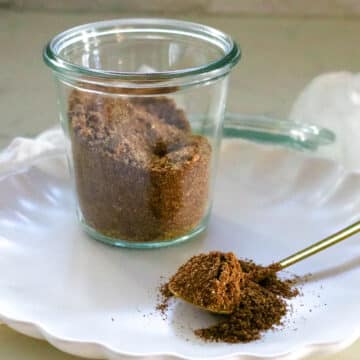
      Mild Taco Seasoning Recipe
    • herby seasoning in a small glass dish with gold spoon.
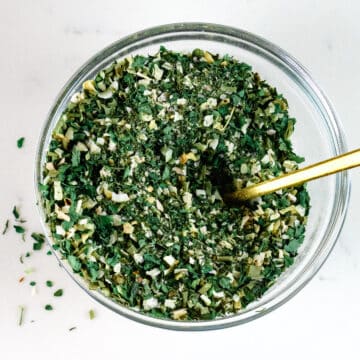
      Homemade Ranch Seasoning (Dairy-Free)
    • Cajun seasoning in a small weck jar on a white plate with a spoon on the side.
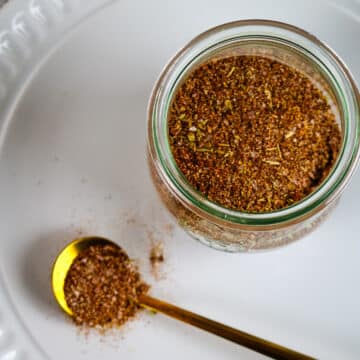
      Homemade Cajun Seasoning
    • worcestershire sauce in jar.
      Worcestershire Sauce Recipe
    Did you make this Italian seasoning? Please leave a ⭐⭐⭐⭐⭐ recipe rating in the recipe card below and leave a review in the comments. Thank you!💚

    Printable Recipe

    Italian seasoning in a clear jar with a spoon in it.
    Print Recipe
    No ratings yet

    Italian Seasoning Recipe

    Make your own Italian seasoning blend at home with simple pantry spices and herbs. It's fresh, flavorful, and better than anything from the store!
    Prep Time5 minutes mins
    Total Time5 minutes mins
    Course: Condiment
    Cuisine: American, Italian
    Keyword: italian seasoning, Italian seasoning recipe, what is in the Italian seasoning
    Servings: 24 servings
    Calories: 3kcal
    Author: Anya @ Prepare & Nourish

    Ingredients

    • 2 tablespoons dried basil
    • 2 tablespoons dried parsley
    • 1 tablespoon dried oregano
    • 2 teaspoons dried thyme
    • 1 ½ teaspoons crushed rosemary
    • 1 teaspoon garlic powder
    • 1 teaspoon onion powder
    • ¼ teaspoon crushed red pepper

    Instructions

    • Combine all ingredients, including 2 tablespoons dried basil, 2 tablespoons dried parsley, 1 tablespoon dried oregano, 2 teaspoons dried thyme, 1 ½ teaspoons crushed rosemary, 1 teaspoon garlic powder, 1 teaspoon onion powder, and ¼ teaspoon crushed red pepper in a small bowl until thoroughly mixed.
    • Transfer to a spice jar and store in the pantry.

    Notes

    This seasoning blend makes approximately ½ cup with about 1 teaspoon-size servings. 
    Storage: Store your homemade Italian seasoning in an airtight glass spice jar or container, away from heat and direct sunlight. A cool, dark pantry or cabinet is ideal. For best flavor, use within 6 months—though it’ll still be safe to use after that, the herbs may lose some potency over time
    Helpful Tips: 
    1. Crush as you mix. For a finer texture and more flavor release, lightly crush the herbs with your fingers or use a mortar and pestle when mixing. It really wakes up the dried herbs. 
    2. Refresh older herbs. If your dried herbs have been in the pantry a little too long, give them a quick toast in a dry pan for a minute or two before mixing - just don't burn them. 
    3. Zero-waste win. Making your own seasoning blends helps you use up those half-full jars of herbs and reduces plastic from buying pre-made ones. 
    4. Perfect for gift jars. Spoon the blend into cute spice jars, tie with twine, and boom - thoughtful little gifts for friends who cook (or want to start!). 
    Troubleshooting Tips:
    Seasoning blend clumped up? Dried herbs usually don't clump unless there's moisture. If your blend has gotten a little clumpy, break it up with a fork or give the jar a good shake and add a few grains fo rice to absorb excess humidity. 

    Nutrition

    Calories: 3kcal | Carbohydrates: 1g | Protein: 0.2g | Fat: 0.04g | Saturated Fat: 0.02g | Polyunsaturated Fat: 0.01g | Monounsaturated Fat: 0.01g | Sodium: 2mg | Potassium: 19mg | Fiber: 0.3g | Sugar: 0.04g | Vitamin A: 19IU | Vitamin C: 0.3mg | Calcium: 15mg | Iron: 1mg

    Ancient Grains are Back and Better than Ever

    ancient grains in glass jar with a measuring spoon on white towel.

    Ancient grains like spelt, einkorn, and teff are making a comeback in kitchens everywhere. Discover how these nutrient-dense grains can boost your health, provide unique flavors, and offer a more sustainable alternative to traditional white flour.

    ancient grains in glass jars.
    [feast_advanced_jump_to]

    For years, all-purpose flour has been the go-to in baking, but ancient grains are making a major comeback. Grains like spelt, einkorn, and buckwheat are gaining traction, and the market for them is expected to grow by $50 million by 2028. People are turning to these grains instead of white flour because they offer more flavor, better health benefits, and a more sustainable option.

    Embracing ancient grains: from grain-free to nutrient-rich

    If you've been following me for a while, you know that I’ve spent time (and I mean tiiiime) experimenting with Paleo, GAPS, and Whole30 diets and many of my recipes still reflect these healing dietary principles. I've been gluten-free for over 10 years in the past, not because I’m celiac—but because grains were deemed "bad" by diet culture, and I fell for it.

    But here’s the thing: after years of being grain-free-ish, I’ve finally decided to dive deep into ancient grains, and I’m honestly blown away by the nutrition packed into these little powerhouses.

    There’s so much more to them than I ever realized, and I’m excited to explore their richness, flavor, and health benefits. It’s been a real game-changer for me, and I can’t wait to share what I’m discovering!

    image of Prepare and Nourish owner

    What are ancient grains?

    For millennia, grains have been a key ingredient in baking across cultures. All-purpose flour, made from wheat, forms the basis of many breads, pastries, and sweets in America and Europe. In the past decade, however, ancient grains like buckwheat, amaranth, teff, and Kamut have been significantly reintroduced into baking recipes.

    As defined by the Whole Grains Council, ancient grains are those that have not been changed through breeding. While wheat has been consistently bred to create more resistant and productive crops, ancient grains are the same today as they were hundreds of years ago. The result is grains that are packed with flavor, texture, and nutrients.

    graphic of fork and spoon connected in a plant.

    Make it Ancestral

    To me, these grains feel like a return to the roots of true nourishment—unhybridized, nutrient-dense, and often easier to digest. It’s no wonder that many of these grains are celebrated by organizations like the Weston A. Price Foundation (WAPF), which promotes the wisdom of traditional diets. You can read about my 8 pillars of truly nourishing food.

    kamut in a weck jar.

    A growing market for ancient grains

    Many of these grains have been popular in non-Western cultures. World Grain noted that teff has grown in the mountains in present-day Ethiopia, where it is a key ingredient in the flatbread injera. Sorghum flour is a common ingredient in Indian roti or susu bukkumi cakes in Korea, according to Schär.

    Flours from these whole grains are also gaining popularity in American baking. Food Business News reports that the United States ancient grains market will grow from $90.4 million in 2022 to $142.3 million by 2028, a nearly 8% growth every year.

    Meanwhile, the all-purpose flour industry is only expected to grow by about 3% per year, according to a 2024 Dataintelo study. Even among all-purpose flour, consumers seek healthier organic and non-GMO varieties as they turn toward more nutritious and sustainable options for baking.

    What’s exciting is that this isn’t just a trend - it’s a revival of traditional wisdom. More people are rediscovering the value of diverse, heritage grains that were long staples in traditional cultures worldwide.

    Here's a few recipes to get your started with ancient grains:

    Okay, okay, bone broth rice isn't exactly ancestral but did I mention I'm new to this?

    • roasted buckwheat kasha in glass container.
      How to Roast Buckwheat in Oven
      Cook Time30 Minutes
    • millet cooked in instant pot.
      Instant Pot Millet (Quick and Fluffy!)
      Cook Time35 Minutes
    • cooked buckwheat in a white bowl with Instant Pot in background
      Instant Pot Buckwheat
      Cook Time27 Minutes
    • Cooked rice in a white bowl, with bone broth in a clear jar behind it.
      Bone Broth Rice
      Cook Time20 Minutes

    How ancient grains weigh up against all-purpose flour

    The switch to ancient grains follows some larger trends in food and baking. Among these reasons, a curiosity about innovative flavors, healthier alternatives, and eco-friendly choices has been key in boosting ancient grains’ popularity despite the higher cost.

    Add flavor and texture with ancient grains

    The predictable, neutral taste of all-purpose flour is a large part of what has made it so useful in baking, as it lets other flavors shine. Ancient grains offer more complex flavors and, depending on the way they are milled, a distinct texture that can enhance baked goods.

    King Arthur Flour describes amaranth and teff as earthy. Kamut is buttery, and sorghum is slightly sweet. Spelt and buckwheat flour can also bring extra tenderness to baked goods in small amounts or make them drier in large quantities.

    These tastes and textures add complexity to breads and desserts. Bakers can create exciting flavor combinations with the right recipe or for simply being adventurous. Professional bakers at Carlisle Bakery explain how ancient grains like rye enable them to make more unique baked goods.

    ancient grains in jars on white kitchen towel.

    Ancient grains for nutrient-packed baked goods

    Consumer awareness is shifting towards more wholesome and nutrient-dense ingredients. Healthy eating app Lifesum reported in their 2024 State of Healthy Eating and Wellness Report that 62% of millennials and Gen Z are willing to sacrifice spending on fashion for healthy food, while 55% would sacrifice tech spending to eat healthier.

    Ancient grains deliver when it comes to health. Brown University Health notes that, as whole grains, ancient grains have more protein, fiber, vitamins, minerals, and antioxidants than refined all-purpose flours. Substituting ancient grain flours can help manage weight and reduce the risk of heart disease, diabetes, and stroke.

    These grains are nutrient-dense by nature, not by fortification. They come with their bran and germ intact, providing essential vitamins and minerals as nature intended. It aligns perfectly with the WAPF approach of choosing whole, unprocessed foods rich in naturally occurring nutrients.

    Some ancient grains are naturally gluten-free. Buckwheat, amaranth, teff, and sorghum contain no gluten, making them excellent gluten-free flours for those with celiac or gluten intolerance. In 2024, Tarrand Fiesel of flour miller and blender DakotaMB described to Snack Food & Wholesale Bakery how bakeries seek gluten-free, ancient grain blends to use in their pastries.

    Sustainable farming with whole grains

    Ancient grains are more sustainable, requiring less water, fertilizer, and pesticides. Grains like millet grow well in harsh conditions, enabling them to thrive as global warming creates more intense climates.

    Many ancient grain farmers and millers are also small businesses. Unlike the industry farming and monoculture of wheat production, the wide variety of ancient grains can yield healthier soils and more sustainable growth.

    Supporting ancient grains often means supporting regenerative and small-scale agriculture. These are the kinds of farmers who prioritize soil health, seed preservation, and biodiversity—values that resonate deeply with those of us following traditional food principles.

    ancient grains in opened glass jars.

    Ways to incorporate more ancient grains into everyday cooking

    Baking with ancient grains takes a little practice but can yield fantastic results. When it comes to flour for baking, most whole-grain flours are not a 1-to-1 replacement with all-purpose flour. Too much ancient grain flour can make a bake dry, for instance. Ancient grains also have weaker or no gluten, which can negatively impact the structure of bread.

    Substitute gradually to avoid these challenges with ancient grains. Replace a portion of the all-purpose flour in your cookies, muffins, or pancake recipes. You can continue to increase the ratio in future bakes until you’re satisfied with the balance of taste and texture.

    Use flours like teff or buckwheat to boost the richness of chocolatey desserts or sorghum to create airy crepes. Glutinous einkorn can go well in your favorite bread recipes. In exploring new recipes, look to other cultures. Ancient grains may be seeing a resurgence in the U.S. now, but they’ve always been a part of cuisine in other areas. These recipes can give you a starting point for melding flavors.

    Experiment with a variety of flours as you start to explore ancient grains. Over a few recipes, you’ll see which ones match your style of baking and should become pantry staples.

    I recommend starting with spelt or einkorn in muffins or pancakes - easy recipes where you can still get great results even if you're new to ancient grains. (Personally, that's where I am at right now and it's so fun experimenting!) Soak or sour your grains whenever possible, especially for longer-fermented sourdoughs, to make nutrients more bioavailable and improve digestibility, just as traditional cultures did.

    Ancient Grains Essential Tools

    After stepping away from the grain-free diet culture, I'm just now starting to explore ancient grains - and I learned that having the right tools on hand makes all the difference. Here's a list to get you started.

    • Electric grain mill: A home grain mill lets you grind ancient grains fresh at home, preserving nutrients that begin to degrade quickly after milling and giving you the best flavor and maximum nutrition.
    • Large glass airtight containers: Essential for keeping ancient grains fresh by protecting them from moisture, pests, and oxidation.
    • Digital scale: Ancient grains in baking can behave unpredictably. Measuring by weight (rather than cups) gives more consistent results when swapping or combining flours.
    • Fine mesh strainer: Or a sifter to help create a lighter texture, especially in cakes or muffins.

    Make the switch: ancient grains are the better choice

    As more bakers seek alternatives to refined white flour, ancient grains are reclaiming their place in kitchens as a flavorful and nutrient-rich alternative. Whether for health reasons, sustainability, or the simple pleasure of exploring new flavors, these time-honored grains offer a fresh take on baking and cooking, making them a worthwhile addition to any pantry.

    In a world of fast food and factory farming, ancient grains remind us that food can be both nourishing and meaningful. They’re not just ingredients—they’re heirlooms.

    ancient grains like spelt in a glass jar with wooden lid.
    Looking for more helpful articles? Here are some ideas:
    • beef tallow in a glass jar with a spoon to the side.
      Beef Tallow 101: The Old-School Fat Making a Comeback
    • Ground beef with organ meat in a clear bowl and a freezer ziplock on the side.
      Ancestral Beef Blend Recipe
    • beef tongue with onions and bay leaves in instant pot inner pot.
      How to Cook Beef Tongue
    • fresh parsley and dried parsley in measuring spoons.
      How Much Dried Parsley to Substitute for Fresh

    Jere Cassidy is the writer and recipe developer behind the blog One Hot Oven. A passion for all things food related led her to culinary school to expand her baking skills and now to share easy recipes for all home cooks and bakers of all skill levels. When not in the kitchen, Jere’ likes to travel far and wide to find delicious food. Article slightly edited to reflect Anya's commentary and notes.

    This article originally appeared on Food Drink Life.

    Disclaimer: These statements have not been evaluated by the Food and Drug Administration. The contents of this article, made available via Food Drink Life, are for informational purposes only and do not constitute medical advice. The content presented here is not intended to be a substitute for professional medical advice, diagnosis or treatment. Always seek the advice of a qualified healthcare provider with any questions you may have regarding a medical condition or dietary changes. Reliance on any information provided by this article is solely at your own risk.

    3-Ingredient Yukon Gold Mashed Potatoes

    Mashed potatoes in a white bowl with a spoon beside it.

    These Yukon gold mashed potatoes are the perfect side dish year-round. Made with just 3 basic ingredients, they’re irresistibly creamy, thanks to a secret trick that makes them extra fluffy and velvety smooth. Perfect for any meal.

    Mashed potatoes in a white bowl with a spoon in it.
    Looking for more potato recipe? 
    Check out chicken potato broccoli casserole, chicken potato salad, and tuna potato salad.
    [feast_advanced_jump_to]

    💡Recipe Overview

    • Prep and Cook Time: 10 minutes to prep and 15 minutes to cook
    • Cooking Method: Stove-top
    • Dietary Info: Primal, Ancestral diet
    • Tools Needed: Potato masher or hand-held mixer
    • Skill Level: Easy

    What is an ancestral diet? Read my post on what nourishing foods are based on the traditional dietary principles of the Weston A. Price Foundation.

    My Go-To Mashed Potato Recipe

    This Yukon mashed potatoes recipe has been my go-to for years - because why mess with perfection?

    Oh, it's unmatched!

    I've tried the fancy versions (and there's a time and place for that), but honestly, nothing compares to these simple, buttery potatoes that melt in your mouth.

    They're quick, easy, and most importantly, consistently delicious. Whether it's a weeknight or a holiday feast, this is the mashed potato recipe I can always count on to steal the show.

    image of Prepare and Nourish owner

    Ingredients for Yukon Gold Mashed Potatoes

    Ingredients for mashed potatoes.

    This minimal ingredient recipe proves you don't need much to make something delicious. Yukon gold potatoes are naturally creamy and buttery, so they're perfect for mashed potatoes. Adding softened butter (not melted) gives them that extra richness, while milk helps create a smooth, velvety texture. A good amount of sea salt - both during cooking and after mashing, brings all the flavors together.

    Mashed potatoes in a white bowl.

    Step by Step Instructions

    The complete printable recipe is below in the recipe card for your convenience. Follow these simple step-by-step instructions for the best results.

    Potatoes in a pan with water.

    Step 1. Boil

    Place Yukon gold potatoes in a large pot and cover with cold water. Add salt and bring to a boil over medium-high heat.

    Potatoes in a pan with water.

    Step 2. Simmer

    Reduce heat to a simmer and cook until the potatoes are fork-tender.

    Potatoes in a mixing bowl with a fork in it.

    Step 3. Mash

    Drain the potatoes and return them to the pot. Add salt and cubed butter, then coarsely mash with a fork.

    Mashed potatoes in a mixer.

    Step 4. Mix

    Slowly stir in milk, then mash with a potato masher or beat with a hand mixer until smooth and creamy.

    Helpful Tips

    1. Start with cold water. Always place the potatoes in cold water before bringing to a boil. This helps them cook evenly and prevents the outside form overcooking while the inside remains firm. 
    2. Taste and adjust. Potatoes love salt! Generously season during cooking and also taste the mash at the end and adjust with sea salt or a touch of salted butter.
    3. Gently break down the starches. Use the back of a fork to mash the potatoes, which helps separate and smooth out the starches - much like a potato ricer would. This technique creates creamy, velvety mashed potatoes without overworking them. 
    4. Reserve some cooking water. In case the mashed potatoes end up too thick, a splash of starchy potato water can help loosen it while preserving flavor. 

    Troubleshooting

    • Mashed potatoes too gluey or gummy? This usually happens when the potatoes are overmixed or processed in a blender or food processor (which by the way, totally unnecessary!). For the best texture, mash by hand with a potato masher or a hand mixer but keep it quick. 
    💭Meal Prep Suggestion!
    These mashed potatoes are perfect for meal prep - freeze small portions in airtight containers and thaw as needed for easy, ready-to-go sides later on. Just reheat with a splash of milk or butte rto bring back that creamy texture.
    Mashed potatoes in a white bowl with a spoon beside it.

    Serving Suggestions

    These creamy Yukon gold mashed potatoes are a versatile side that go with almost anything.

    Try them with:

    • Braised Chuck Roast
    • Oven-Roasted Sausage and Peppers
    • Salmon with Mayonnaise
    • Chicken Livers with Cream
    • Air Fryer Pork Tenderloin
    Mashed potatoes in a white bowl with a spoon beside it.

    Storing & Freezing

    Store leftover mashed potatoes in an airtight container in the refrigerator for up to 4 days. To reheat, warm gently on the stovetop, adding a splash of milk or a pat of butter to restore creaminess. These mashed potatoes freeze surprisingly well - just let them cool completely first, then portion into freezer-safe containers, and thaw overnight in the fridge before reheating. You can freeze for up to 1 month.  These glass snap containers are perfect for leftovers.

    Printable Recipe

    Mashed potatoes in a white bowl with a spoon beside it.
    Print Recipe
    5 from 1 vote

    Yukon Gold Mashed Potatoes

    These Yukon gold mashed potatoes are irresistibly creamy, made with 3 simple ingredients, and have a secret trick for extra fluffiness.
    Prep Time10 minutes mins
    Cook Time15 minutes mins
    Total Time25 minutes mins
    Course: Side Dish
    Cuisine: American
    Keyword: Yukon gold potatoes, yukon gole mashed potatoes, yukon mashed potatoes
    Servings: 4 servings
    Calories: 293kcal
    Author: Anya @ Prepare & Nourish

    Ingredients

    • 2 lbs Yukon gold potatoes peeled and cut into chunks
    • 2 teaspoons sea salt divided
    • 4 tablespoons butter cubed and softened
    • ½ cup whole milk warmed

    Instructions

    • Place the 2 lbs Yukon gold potatoes in a large pot and cover with cold water. Add a teaspoon of salt and bring to a boil over medium-high heat.
    • Reduce heat to a simmer and cook for 15-20 minutes, or until the potatoes are fork-tender.
    • Drain the potatoes and return them to the pot. Add remaining salt and 4 tablespoons butter and coarsely mash the potatoes with a fork.
    • Slowly stir in the ½ cup whole milk and mash with a potato masher or beat with a hand mixer until smooth and creamy.

    Notes

    Storage: Store leftover mashed potatoes in an airtight container in the refrigerator for up to 4 days. To reheat, warm gently on the stovetop, adding a splash of milk or a pat of butter to restore creaminess. These mashed potatoes freeze surprisingly well - just let them cool completely first, then portion into freezer-safe containers, and thaw overnight in the fridge before reheating. You can freeze for up to 1 month. 
    Helpful Tips:
    1. Start with cold water. Always place the potatoes in cold water before bringing to a boil. This helps them cook evenly and prevents the outside form overcooking while the inside remains firm. 
    2. Taste and adjust. Potatoes love salt! Generously season during cooking and also taste the mash at the end and adjust with sea salt or a touch of salted butter.
    3. Gently break down the starches. Use the back of a fork to mash the potatoes, which helps separate and smooth out the starches - much like a potato ricer would. This technique creates creamy, velvety mashed potatoes without overworking them. 
    4. Reserve some cooking water. In case the mashed potatoes end up too thick, a splash of starchy potato water can help loosen it while preserving flavor
     
    Troubleshooting Tips
    Mashed potatoes too gluey or gummy? This usually happens when the potatoes are overmixed or processed in a blender or food processor (which by the way, totally unnecessary!). For the best texture, mash by hand with a potato masher or a hand mixer but keep it quick. 

    Nutrition

    Calories: 293kcal | Carbohydrates: 41g | Protein: 6g | Fat: 13g | Saturated Fat: 8g | Polyunsaturated Fat: 1g | Monounsaturated Fat: 3g | Trans Fat: 0.5g | Cholesterol: 34mg | Sodium: 1278mg | Potassium: 1004mg | Fiber: 5g | Sugar: 3g | Vitamin A: 404IU | Vitamin C: 45mg | Calcium: 69mg | Iron: 2mg

    Simple Ahi Tuna Poke Recipe

    Ahi tuna poke in a white bowl, with mayonnaise, chopsticks on the side, and green onion leeks in a beige bowl.

    This Ahi Tuna Poke Bowl skips the soy and sugar but not the flavor. A clean, whole-food marinade with coconut aminos brings bold, umami taste, and all the fresh, crispy toppings, including spicy mayo, seal the deal.

    Ahi tuna poke in a white bowl, served with chopsticks, black sesame seeds in a beige bowl, cucumber, and avocado.
    [feast_advanced_jump_to]

    💡Recipe Overview

    • Prep and Cook Time: 15 minutes to prep and 15 minutes to cook
    • Cooking Method: Stove-top for rice and no-cook
    • Dietary Info: Keto if you skip the rice, Whole30, Paleo, Gluten-free
    • Tools Needed: sharp knife, cutting board
    • Skill Level: Easy

    What is an ancestral diet? Read my post on what nourishing foods are based on the traditional dietary principles of the Weston A. Price Foundation.

    Reasons to Love this Ahi Tuna Poke Bowl

    The first time I had poke was in Hawaii, and it was love at first bite. Since then, I've been making poke bowls at home because they're simple, fresh, and always hit the spot.

    And here's a truth that may be controversial: you don't need sushi-grade tuna. It's really just a marketing term.

    What matters is getting good-quality, fresh tuna, preferably wild-caught. So don't stress the labels - focus on freshness, and you'll have a poke bowl that tastes just as amazing as the one I had in Hawaii.

    image of Prepare and Nourish owner

    Ingredients for Ahi Tuna Poke

    Ingredients for ahi tuna poke.
    • Tuna: Wild-caught ahi tuna is ideal for poke. Fresh ahi tuna should have a deep, red color, a firm texture, and a clean, ocean-like smell (never fishy). Terms like "sushi-grade" are not officially regulated, so it's important to buy from a trusted fishmonger or reputable source. For extra safety, freeze tuna at -4°F (-20°C) for at least 7 days to kill any potential parasites before using it raw.
    • Rice: Short-grain sushi rice is best because it's sticky and holds together nicely under the toppings. Rinse it well to remove excess starch unless you want it extra sticky for the bowl.
    • Marinade: A blend of coconut aminos, toasted sesame oil, rice vinegar, sesame seeds, and green onions gives the tuna a savory, slightly sweet, and nutty flavor.
    • Toppings: There's so much flexibility here, and I usually use whatever I have on hand. But my favorite popular toppings are avocado, Persian cucumber, seaweed salad for extra umami, a sprinkle of furikake for texture, and a drizzle of spicy mayo to tie it all together. Try my simple 4-ingredient mayo and sriracha recipe.

    Substitutions and Variations

    • Rice - If you don’t have sushi rice, feel free to use any rice you prefer on hand.
    • Marinade subs - Coconut aminos is a soy-free alternative to soy sauce. If you prefer soy sauce, use that. Tamari is an excellent gluten-free soy sauce option.
    • Topping subs - Diced mango, julienned carrots, radishes, edamame, or pickled ginger all work great in tuna poke bowls.
    graphic of fork and spoon connected in a plant.

    Make it Ancestral

    Poke is an ancestral Hawaiian meal rooted in using fresh, local fish, like wild-caught tuna, straight from the ocean. Hawaiians practiced sustainable fishing, taking only what they needed to ensure resources for future generations. The fish was cut into small pieces, mixed with simple seasonings like seaweed, and served right away. This is what you’d call "eating local" in the truest sense.

    Ahi tuna poke in a white bowl, served with chopsticks and sliced tuna on a chopstick.

    How to Make Ahi Tuna Poke Bowl

    The complete printable recipe is below in the recipe card for your convenience. Follow these simple step-by-step instructions for the best results.

    Cooked rice in a pan with a fork in it.

    Step 1. Cook

    Cook the sushi rice following the package instructions. Once done, let it cool slightly and fluff it with a fork.

    Soy sauce, sesame seeds, green onion leeks, and sugar for marinating the tuna.

    Step 2. Whisk

    In a medium bowl, whisk together coconut aminos, toasted sesame oil, rice vinegar, sesame seeds, and chopped green onions.

    Marinated sliced tuna in a white bowl with a spoon in it.

    Step 3. Marinate

    Add the diced ahi tuna to the coconut aminos marinade and toss until well coated.

    Ahi tuna poke in a white bowl, served with sliced tuna, cucumber, and avocado.

    Step 4. Assemble

    Spoon the sushi rice into the bottom of each bowl. Top with the marinated tuna, sliced cucumber, avocado, seaweed salad, a sprinkle of furikake, and a drizzle of spicy mayo.

    Helpful Tips

    1. Buy the freshest tuna - When choosing tuna for poke, look for the freshest option available for raw consumption. Sushi-grade labeling is just a marketing term, but I always opt for wild ahi tuna and try to freeze it for at least 10 days to kill any potential parasites before using it for raw dishes. 
    2. Pat the tuna dry - Always start with dry fish. Pat it dry with paper towels to remove any excess moisture to help the marinade cling better. 
    3. Chill the tuna - Let the marinated tuna sit in the fridge for 30 minutes up to 3 hours to allow the flavors to meld and the tuna to firm up a bit. This also ensures the tuna stays cool when served. 
    4. Let the rice cool - Room-temp rice pairs best with the cold toppings, so let it sit a bit after cooking. 

    Troubleshooting

    • Tuna turning mushy? This could be due to over-marinating. Stick to under 3 hours in the fridge for marination. Any longer and the acid can break down the tuna too much.
    • Rice too sticky? That could be because it wasn’t rinsed enough before cooking. If you want maximum stickiness for your poke bowl, feel free to skip the rinse or just rinse lightly to keep some starch in the rice for that perfect clingy texture.
    💭Meal Prep Suggestion!
    Cook sushi rice and store it in the fridge for up to 3 days. Marinate the tuna ahead of time an dkeep it separate for up to 24 hours. Pre-chop toppings like cucumber and green onions, but store them separately to maintain freshness. Assemble the poke bowls, keeping avocado and any sauces separately, and add them just before serving.
    Ahi tuna poke in a white bowl with mayonnaise and chopsticks on the side.

    Serving Suggestions

    I love that these ahi tuna poke bowl is already a complete and very satisfying meal on its own, packed with good protein, rice, and a variety of fresh toppings. Check out this post on how to make cauliflower rice if you're going for a low-carb option. However, if you're looking to complement it other dishes, here are some great options:

    Side dish: If you want to include some warm sides, roasted bok choy or roasted broccolini make a great pairing.

    Fresh salads: Try something simple like Asian cucumber salad or cucumber and cabbage salad.

    Condiments: Some tasty ferments like spicy sauerkraut with ginger and garlic or fermented jalapenos are always a nice addition. Don't forget quick pickled red onions and that creamy mayo with sriracha.

    Ahi tuna poke in a white bowl, with chopsticks on the side and green onion leeks in a beige bowl.

    Frequently Asked Questions

    How do I store ahi tuna poke?

    Store each poke bowl component separately for freshness. Keep marinated tuna in the fridge for up to 24 hours (since it's raw), rice for 3 days, and toppings like cucumber and seaweed salad for 2–3 days. These glass snap containers are perfect for leftovers.

    Can I freeze ahi tuna poke?

    I don't recommend it as freezing and thawing will alter its texture and flavor. However, you can freeze the tuna before marinating. You can dice it up and freeze it, and when ready to use, thaw the tuna in the fridge overnight and marinate it fresh before assembling your poke bowl.

    What is the best way to cut tuna for poke?

    Make sure you use a very sharp knife to ensure clean cuts without crushing the fish. Always cut the tuna into ½" cubes, cutting against the grain of the fish. This helps break down the muscle fibers, giving the tuna a more tender, melt-in-your-mouth feel. For uniform cubes, trim the tuna into a rectangular block first, then slice it into even strips before cutting the strips into cubes. The better the cuts, the better the texture of the poke bowl.

    Looking for more related recipes? Here are some ideas:
    • Smoked salmon in a white bowl, served with sesame seeds and soy sauce on the side.
      Smoked Salmon Poke Bowl
    • fish tacos in a corn tortilla on parchment paper.
      Easy Blackened Fish Tacos
    • Salmon poke in a white bowl on a bed of white rice with avocado, cilantro and green onions topped.
      Salmon Poke Bowl (Paleo, Whole30, Low Carb)
    • salmon sushi bake with fresh avocado and cucumbers on top.
      Salmon Sushi Bake Recipe
    Did you make this ahi tuna poke? Please leave a ⭐⭐⭐⭐⭐ recipe rating in the recipe card below and leave a review in the comments. Thank you!💚

    Printable Recipe

    Ahi tuna poke in a white bowl, with mayonnaise, chopsticks on the side, and green onion leeks in a beige bowl.
    Print Recipe
    No ratings yet

    Ahi Tuna Poke Bowl

    This Ahi Tuna Poke Bowl is made with a soy-free, sugar-free coconut aminos marinade. It's fresh, nourishing, and packed with clean flavor!
    Prep Time15 minutes mins
    Cook Time15 minutes mins
    Total Time30 minutes mins
    Course: Dinner
    Cuisine: Asian
    Keyword: ahi tuna poke, ahi tuna poke bowl, ahi tuna poke recipe
    Servings: 4
    Author: Anya @ Prepare & Nourish

    Ingredients

    • 1 cup sushi rice
    • ½ cup coconut aminos
    • 1 tablespoon toasted sesame oil
    • 1 tablespoon rice vinegar
    • 1 tablespoon white sesame seeds
    • 3 green onions chopped
    • 1 ½ pounds ahi tuna cut into ½” cubes
    • 1 Persian cucumber sliced
    • 1 avocado diced
    • Seaweed salad
    • Furikake
    • Spicy mayo

    Instructions

    • Cook the 1 cup sushi rice according to package instructions. Once cooked, let it cool and fluff with a fork.
    • In a medium bowl, whisk ½ cup coconut aminos, 1 tablespoon toasted sesame oil 1 tablespoon rice vinegarr, 1 tablespoon white sesame seeds, and 3 green onions.
    • Add diced 1 ½ pounds ahi tuna to the coconut amino marinade and toss to combine.
    • Layer the sushi rice at the bottom of each bowl. Top with marinated tuna, 1 Persian cucumber, 1 avocado, Seaweed salad, Furikake, and drizzle with Spicy mayo.

    Notes

    Storage: Store each poke bowl component separately for freshness. Keep marinated tuna in the fridge for up to 24 hours (since it's raw), rice for 3 days, and toppings like cucumber and seaweed salad for 2–3 days. Slice the avocado fresh before serving. 
    Helpful Tips:
    1. Buy the freshest tuna - When choosing tuna for poke, look for the freshest option available for raw consumption. Sushi-grade labeling is just a marketing term, but I always opt for wild ahi tuna and try to freeze it for at least 10 days to kill any potential parasites before using it for raw dishes. 
    2. Pat the tuna dry - Always start with dry fish. Pat it dry with paper towels to remove any excess moisture to help the marinade cling better. 
    3. Chill the tuna - Let the marinated tuna sit in the fridge for 30 minutes up to 3 hours to allow the flavors to meld and the tuna to firm up a bit. This also ensures the tuna stays cool when served. 
    4. Let the rice cool - Room-temp rice pairs best with the cold toppings, so let it sit a bit after cooking. 
    Troubleshooting Tips:
    Tuna turning mushy? This could be due to over-marinating. Stick to under 3 hours in the fridge for marination. Any longer and the acid can break down the tuna too much. 
    Rice too sticky? That could be because it wasn’t rinsed enough before cooking. If you want maximum stickiness for your poke bowl, feel free to skip the rinse or just rinse lightly to keep some starch in the rice for that perfect clingy texture.
     

    Quick Pickled Red Onions (No Cook!)

    Pickled red onions in a white bowl and in a clear jar beside it.

    Skip the stove with these quick pickled red onions recipe. This version requires no heating at all - just soak them in apple cider vinegar with pickling spices for a tangy, crisp topping for tacos, salads, sandwiches, and more. So easy and delicious!

    Pickled red onions in a white bowl and in a clear jar beside it.
    Looking for more ways to spice up a meal? 
    Check out sumac onions, garlic confit, and fermented jalapenos.
    [feast_advanced_jump_to]

    💡Recipe Overview

    • Prep and Cook Time: 5 minutes to prep and 30 minutes to pickle
    • Cooking Method: No cook
    • Dietary Info: Keto, Whole30, Paleo, GAPS
    • Tools Needed: sharp knife and jar for storage
    • Skill Level: Easy

    What is an ancestral diet? Read my post on what nourishing foods are based on the traditional dietary principles of the Weston A. Price Foundation.

    The Fast Track to Flavor

    While I have a soft spot for all things fermented (just take a peek at my raw sauerkraut, pickled green tomatoes, lacto fermented dill pickles, and kimchi recipes), sometimes you just need something quick and punchy to round off a meal.

    These quick pickled red onions are my go-to when dinner needs a little something something. Whether it's tacos, sandwiches, or a big Greek bowl.

    No waiting days for fermentation, no heating the brine - just a few pantry staples and you're on your way to a flavorful boost in 30 minutes flat.

    Perfect for those last-minute additions that make the meal. You know what I mean?

    image of Prepare and Nourish owner

    Ingredients for Pickled Red Onions

    Ingredients for Pickled Red Onions
    • Onions: Red onions are the go-to for pickling because they are mild in flavor but you can use white or yellow onions if you want a sharper bite.
    • Vinegar: In this recipe, we're not heating the brine, which means the raw, unfiltered apple cider vinegar retains its natural enzymes and beneficial probiotics.
    • Sweetness: Though this is totally optional, I love the touch of sweetness and a little heat that hot honey provides.
    • Seasonings: I love the convenience of pickling spice which typically includes mustard seed, coriander, bay leaf, and peppercorns all wrapped into one blend. And of course sea salt to enhance all the flavors in the brine.

    Substitutions and Variations

    • Vinegar - I like the health benefits of ACV but feel free to sub with white wine or red wine vinegar for a different flavor (and deeper red color). Rice vinegar gives a slightly sweeter, more delicate flavor and would be perfect for Asian-insprired dishes.
    • Sweetener - You can use regular honey instead - just add a pinch of red pepper flakes if you still want that spicy kick. If you’re using granulated sugar, it’s best to dissolve it in warmed vinegar on the stovetop first for even sweetness.
    • Flavorings - Swap the pickling spice with other flavorful add-ins like sliced jalapeno, smashed garlic or two, or even a few sprigs of fresh thyme, dill, or oregano for more herby flavor.

    How to Slice an Onion

    The way you slice an onion - crosswise vs. lengthwise - can actually affect its texture, flavor release, and how it holds up in different recipes. Here's the difference:

    Lengthwise (Pole to Pole)

    Slice from the root end to the stem end (along the lines of the onion). These slices hold their shape better and stay more intact when cooked or pickled. The flavor is milder because fewer cell walls are broken, so less pungent juice is released.

    Crosswise (Across the Onion)

    Slice perpendicular to the root-stem axis (like cutting it into rings). These slices are softer and break down faster when cooked or pickled. The flavor is sharper and more pungent because more cell walls are broken.

    For this recipe, I sliced the red onions lengthwise (from root to tip), which gives slightly firmer, more structured pieces that hold up well in the brine. While cross-section slices (into rings) are more traditional for pickled onions and absorb flavor a bit faster, I prefer lengthwise cuts for better texture and longer-lasting crispiness.

    Pickled red onions in a clear jar, with a few strands on a fork.

    How to Make Pickled Red Onions

    The complete printable recipe is below in the recipe card for your convenience. Follow these simple step-by-step instructions for the best results.

    Sliced onions in a clear jar.

    Step 1. Pack

    Pack a mason jar with sliced red onion.

    Sliced onions in a clear jar with salt and pepper.

    Step 2. Add

    Add pickling spice, sea salt, and a drizzle of hot honey (if using).

    Cider vinegar being poured over sliced onions in a clear jar seasoned with salt and pepper.

    Step 3. Pour

    Pour apple cider vinegar over the onions until they are fully submerged.

    Pickled red onions in a clear jar.

    Step 4. Shake

    Cover the jar and give it a quick shake to distribute everything. Let it sit at room temperature for 30 minutes. Then refrigerate for at least an hour.
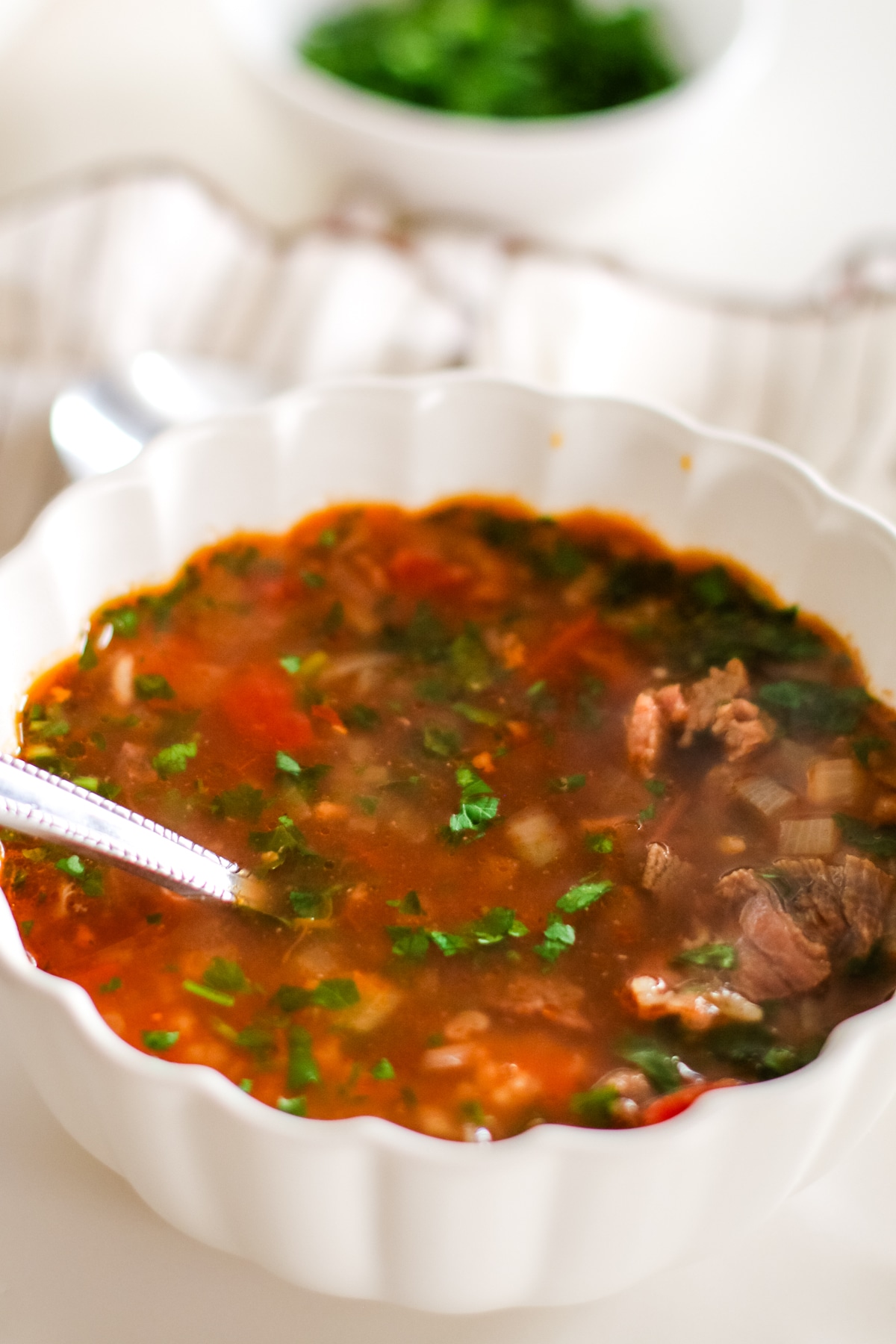
    Helpful Tips

    1. Slice onions uniformly. To ensure even pickling and quicker absorption of flavors, make sure to cut the onions to an even thickness. A mandoline is helpful but not necessary. 
    2. Use a glass jar. I like using a wide-mouth, pint-size mason jar for pickling red onions since they won't react with the vinegar to preserve the taste, and it is the perfect size for this recipe. 
    3. Press down the onions. After pouring the vinegar, gently press the onions down with a spoon to fully submerge them. You can also add a glass fermentation weight if you have the space. 
    4. Flavor variations. Experiment with other flavorings. Try adding a smashed garlic clove, whole peppercorns instead of pickling spice, and a bay leaf or two for extra flavor. 

    Troubleshooting

    • Mushy onions? This can happen if the onions are sliced too thin or left in the brine for too long. Try to consume within 4 weeks for best flavor and texture. 
    💭Meal Prep Suggestion!
    Because this recipe requires no heating, it comes together in minutes and easily fits into your regular meal prep routine. You can whip it up while prepping other ingredients—no need to wait for anything to cool down or boil. It’s a low-effort, high-impact addition that complements everything from tacos and burgers to grain bowls and egg dishes.

    Serving Suggestions

    Quick pickled red onions add a tangy, crisp bite to everything from tacos to salads and sandwiches. Here are some options to get you started:

    Tacos: Add a bright crunch to any taco night like the beef tongue tacos and chuck roast tacos - especially good with pork carnitas,

    Salads: Swap the fresh onion with the pickled red onions in this chopped Mediterranean salad or the Asian cucumber salad.

    Meats: Pile them high on any of your favorite roasted meats like oven roasted whole chicken, slow cooker duck, or oven-baked sausage and peppers.

    Pickled red onions in a white bowl and in a clear jar beside it.

    Frequently Asked Questions

    How do I store and reheat pickled red onions?

    Store pickled red onions in a glass container like a pint-size mason jar for up to 4 weeks. The flavor deepens the longer they sit, so they taste better over time. Always use a clean utensil to pull more onions from the jar to prevent contamination. 

    Can I freeze pickled red onions?

    No, I don't recommend freezing pickled red onions. The vinegar brine can alter the texture when frozen and thawed, turning them soft and mushy instead of crisp. For best quality and crunch, it's best to store them in the fridge and enjoy within 2-4 weeks.

    Can I reuse the pickling brine?

    You can reuse it once or twice within the same month for another batch of onions, but note the flavor will be slightly milder. Always add fresh onions and refrigerate promptly.

    Looking for more easy staple recipes? Here are some ideas:
    • roasted and peeled peppers in a jar.
      Roasted Jalapeño Peppers
    • herby seasoning in a small glass dish with gold spoon.
      Homemade Ranch Seasoning (Dairy-Free)
    • sliced onions in a white bowl with sumac seasoning and parsley.
      Easy Sumac Onions (Marinated Turkish Onion Salad Recipe)
    • garlic in olive oil in baking dish.
      Easy Garlic Confit Recipe
    Did you make this pickled red onions? Please leave a ⭐⭐⭐⭐⭐ recipe rating in the recipe card below and leave a review in the comments. Thank you!💚

    Printable Recipe

    Pickled red onions in a white bowl and in a clear jar beside it.
    Print Recipe
    5 from 1 vote

    Quick Pickled Red Onions

    No-heat quick pickled red onions with apple cider vinegar and pickling spices - tangy, crunchy, and ready fast. Perfect for topping everything!
    Prep Time5 minutes mins
    Pickling Time30 minutes mins
    Total Time35 minutes mins
    Course: Condiment
    Cuisine: American
    Keyword: pickled red onions, quick pickled red onions
    Servings: 12 servings
    Calories: 10kcal
    Author: Anya @ Prepare & Nourish

    Ingredients

    • 1 red onion thinly sliced
    • 1 teaspoon pickling spice
    • 1 teaspoon sea salt
    • 1 teaspoon hot honey
    • 1 cup apple cider vinegar

    Instructions

    • Pack a pint-size mason jar with sliced 1 red onion.
    • Add the 1 teaspoon pickling spice, 1 teaspoon sea salt, drizzle 1 teaspoon hot honey if using.
    • Pour 1 cup apple cider vinegar over the onions until fully submerged.
    • Cover the jar and give it a quick shake to distribute everything. Let it sit at room temperature for 30 minutes. Then refrigerate for at least an hour.
    Notes

    Storage: Store pickled red onions in a glass container like a pint-size mason jar for up to 4 weeks. The flavor deepens the longer they sit, so they taste better overtime. Always use a clean utensil to pull more onions from the jar to prevent contamination. 
    Helpful Tips:
    1. Slice onions uniformly. To ensure even pickling and quicker absorption of flavors, make sure to cut the onions in even thickness. A mandoline is helpful bu not necessary. 
    2. Use a glass jar. I like using a wide-mouth, pint-size mason jar for pickling red onions since they won't react with the vinegar to preserve the taste and is the perfect size for this recipe. 
    3. Press down the onions. After pouring the vinegar, gently press the onions down with a spoon to fully submerge them. You can also add a glass fermentation weight if you have the space. 
    4. Flavor variations. Experiment with other flavorings. Try adding a smashed garlic clove, whole peppercorns instead of pickling spice, and a bay leaf or two for extra flavor. 
    Troubleshooting Tips
    Mushy onions? This can happen if the onions are sliced too thin or left in the brine for too long. Try to consume within 4 weeks for best flavor and texture. 

    Nutrition

    Calories: 10kcal | Carbohydrates: 2g | Protein: 0.1g | Fat: 0.02g | Saturated Fat: 0.01g | Polyunsaturated Fat: 0.01g | Monounsaturated Fat: 0.002g | Sodium: 195mg | Potassium: 30mg | Fiber: 0.2g | Sugar: 1g | Vitamin A: 1IU | Vitamin C: 1mg | Calcium: 5mg | Iron: 0.1mg
    • « Go to Previous Page
    • Page 1
    • Page 2
    • Page 3
    • Page 4
    • Page 5
    • Interim pages omitted …
    • Page 31
    • Go to Next Page »

    Primary Sidebar

    Anya at a farm

    Hello and welcome

    I'm Anya and it is my joy to share wholesome recipes using seasonal ingredients and simplified methods. My hope is you'll feel right at home in this online kitchen, where you'll find real food recipes for real families.
    More about me →

    In Charge of Holiday Menu?

    collage of 4 holiday recipes with text overlay

    Family Meal Planning NOW Available!

    cover page for Dinner Decoded Guide and Cookbook

    Fall Favorites

    • Braised beef chuck roast with mashed potatoes on a plate, and braised beef chuck in a baking tray with sauce.
      Braised Beef Chuck Roast Recipe
    • Roasted purple cabbage with dill and garlic on white platter.
      Roasted Red Cabbage Steaks with Garlic
    • oven roasted chicken in a cast iron skillet with serving utensils.
      Juicy Oven Roasted Whole Chicken
    • roasted carrots on white platter.
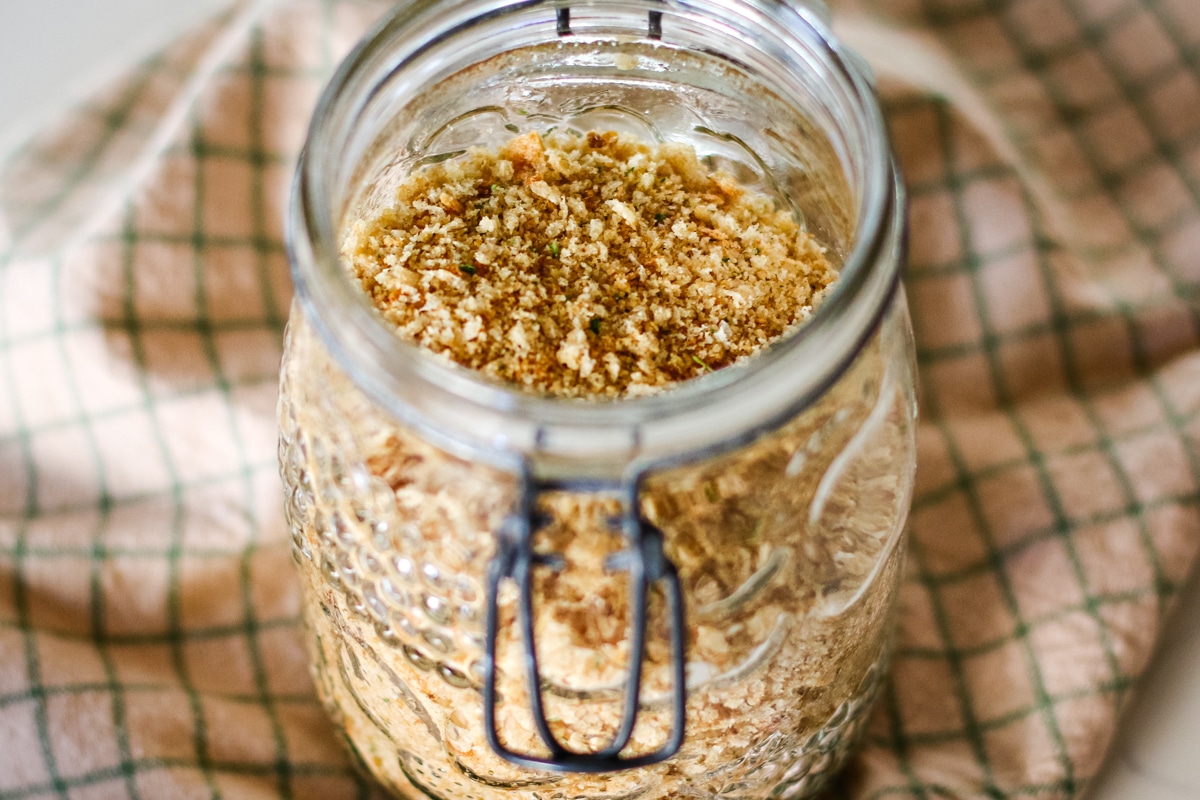
      Roasted Carrots with Garlic
    • roasted butternut squash in white bowl.
      Air Fryer Roasted Butternut Squash
    • spinach artichoke and chicken in a black baking dish with a wooden spoon.
      Healthy Spinach Chicken Artichoke Casserole Recipe

    Trending Now

    • mushrooms and chicken gravy with fresh thyme sprigs garnished on top.
      Easy Creamy Chicken Liver Recipe
    • stack of cassava flour crepes on a plate for frozen blackberries.
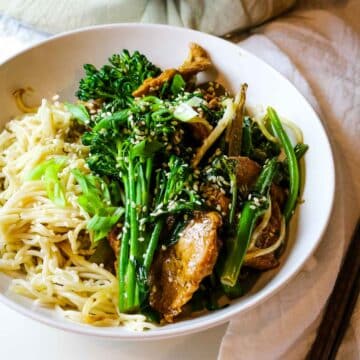
      Easy Gluten-Free French Crêpes Recipe
    • roasted cabbage with parsley garnish sprinkled on top.
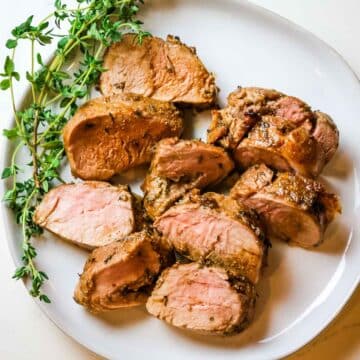
      Simple Oven Roasted Buttered Cabbage Recipe
    • Caesar salad dressing in a weck jar
      Healthy Caesar Salad Dressing Recipe
    • Pickled red onions in a white bowl and in a clear jar beside it.
      Quick Pickled Red Onions (No Cook!)
    • Chia seed puddings in clear cups, served on a white plate with a strawberry and spoon on the side.
      Protein Chia Seed Pudding

    Footer

    ↑ back to top

    Never miss a new post!

    ... Subscribe

    About

    About Me

    Privacy Policy

    Contact

    Shop

    Recipes

    Recipe Index

    Dinner Recipes

    Fermentation Recipes

    Healthy Basics

    Connect

    Instagram

    Facebook

    Pinterest

    Youtube

    Copyright © 2025 Prepare + Nourish

    Rate This Recipe

    Your vote:


    Let us know what you thought of this recipe:

    This worked exactly as written, thanks!
    My family loved this!
    Thank you for sharing this recipe.
    This recipe is a winner! Will make again.

    Or share in your own words:

    A rating is required
    A name is required
    An email is required